Plan International Cameroon Sets Innovative Approaches for Impactful Media Coverage

Plan International Cameroon Sets Innovative Approaches for Impactful Media Coverage

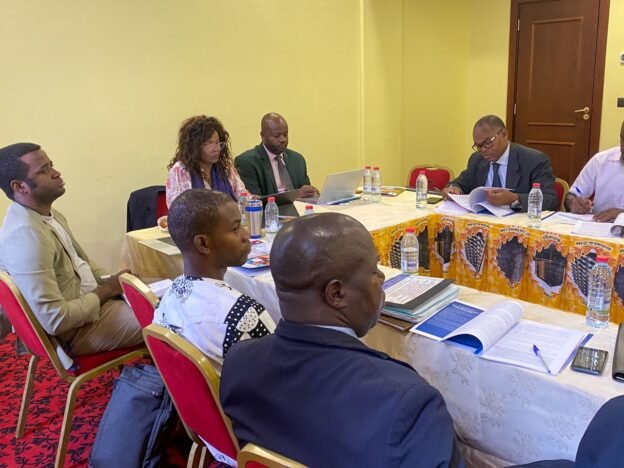
Non-Governmental Organization, Plan International Cameroon has put in place a new partnership platform to boost its media coverage nationwide. On Friday, January 13, 2023, in Yaounde, Cameroon’s nation capital, the country office of Plan International launched a new collaboration platform with media practitioners and some partner institutions such as the Ministry of Social Affairs, the Ministry of Women’s Empowerment and the Family and the Ministry of Youth Affairs and Civic Education. The event dubbed media corner and launched at the Bastos head office of Plan International Cameroon gathered close to 20 Journalists, Bloggers, influencers, and staff of some communication units identified as key partners of the Non-Governmental Organization that strives for the rights of children and equality for the girlchild. Speaking on behalf of the Country Director of Plan International Cameroon, the acting Director of Programmes, Dr. Fagnon Paul said the media corner is an initiative put in place to boost the organization’s visibility. While acknowledging the pivotal role that the media plays in highlighting untold stories, he wished the newly set up initiative will help support the objectives and missions of Plan International which has been fully engaged alongside the government for over 25 years. In his address, Dr. Fagnon equally said the hosting of the media corner will permit journalists and other partners present to have an in-depth knowledge of the various activities carried out by Plan International and by the way grant the opportunity to media practitioners present to outline some strategies to be put in place at the level of the communication and influencing department and see how to ameliorate the existing collaboration. According to Dr. Donkeng Eddy Patrick, Head of the communication and Influencing department of Plan International, the media is at the heart of activities carried out by the organization. He said the organization has been working with different media outlets for impactful results and today has established a sort of media platform that will greatly help in transmitting information to communities and all societies. Dr. Donkeng said: “At Plan International Cameroon, it is part of our strategy to work with the media. Media are enablers of change and then working with them within our communities in Cameroon is something that we prioritize this year we would like to establish a sort of bridge between the media and our institutional and financial partners as well as our programs department because what we are doing on the field should be seen. And most of the time the problem is that people on the field are doing a lot but nothing is shown. We, therefore, decided to have this sort of gathering and agree on a road map to know how we can work better and impact and to show the impact we have in our society…” He added that such gatherings will be multiplied as they henceforth enter within the framework of a collaborative move which is crucial to Plan International. Institutional Partners as a support Even though Plan International collaborates with the government and various institutions, the organization has invited to the media corner some key ministries which are in charge of children’s rights. The Ministries of Social Affairs; Women’s Empowerment and the Family; and Youth Affairs and Civic Education were part of the session and the staff representing these communication units praised the initiative which to them will accentuate actions carried by the government and advocacy campaigns launched by Plan International. Mrs. Mbakong Edwige Grace, Head of the communication unit of the ministry of women’s empowerment, MINPROFF expressed the will to see the collaboration link established and consolidated by concrete programmatic actions and called on Plan International Cameroon to keep organizing joint activities with its institutional partners as a way to support them mostly at the financial level. Mrs. Mbakong said: “We have a series of activities that we organize and which necessitate media coverage but due to lack of financial resources most of them are underreported. We hope with this initiative that takes off that we shall at an extent try to solve this issue and the different media partners will build more interest in reporting some thematics highlighted.” On his part, the representative of the Head of the communication unit of the ministry of social affairs, MINAS said they have a good number of media partners with whom they have been collaborating for several years now and this has been fruitful. Reason why he equally applauds the move of Plan International Cameroon. Mr. Awana said the communication unit of MINAS is open to any collaborative action and equally seized the occasion to inform participants at the media corner of the existence of a toll-free number (1503) for reporting child abuse and trafficking. Just like the institutional partners who highly welcomed the new collaboration platform, spokesperson for the communication unit of the ministry of youth affairs and civic education, Rick Assyla said MINJEC is in the process of revising a Youth Plan that has been dormant for several years and Plan International’s role will be vital in defining some of its lines according to its mandate and missions. The Media, a key player During discussions, journalists, influencers, and bloggers present at the first-ever held media corner of Plan International Cameroon posed a chaplet of demands and said they hope to see this initiative as long-lasting. Media partners who accompany Plan International on daily basis through their activities have equally expressed the need to be more involved in field visits to palpate realities and report with live testimonies. Moreover, they expressed the will to receive on regular basis newsletters, information notes, images, events, etc. from Plan International. Media men underscored its commitment to intensify its collaboration with Plan International as media partners of Plan International Cameroon and accepted the safeguarding policy which is already part of their good practice in terms of verification and publication of information. To close the media corner session, Dr. Kwake Simon, chief of party in Plan International Cameroon thanked the media invited and said this innovative approach

Read More
 MINAS-SESES:  Extension phase of the Unified Social Register in Cameroon Reviewed

MINAS-SESES:  Extension phase of the Unified Social Register in Cameroon Reviewed

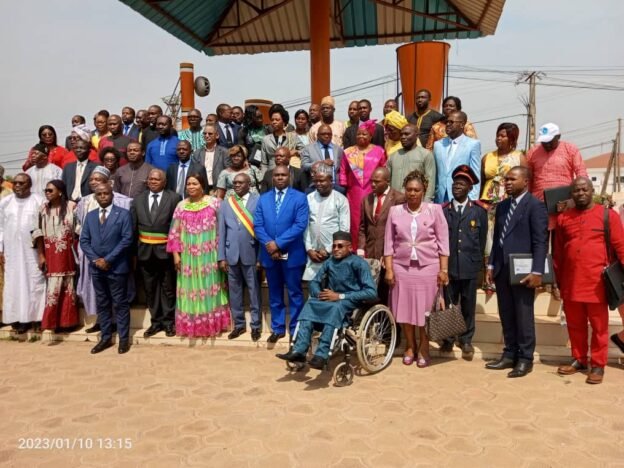
Within the framework of the 6th edition of the National Solidarity and Social Entrepreneurship week, a workshop to prepare the extension phase of the Unified Social Register took place on January 11, 2023, in the Conference Hall of the East Regional Council under the chairmanship of the Minister of Social Affairs Mrs. Pauline Irene Nguene. The Director of National Solidarity and Social Development, Mr. Nyambi III Dikosso presented the project of the Unified Social Register. His presentation highlighted the National policy on social protection, issues of universal health coverage, mechanisms for registration and management of information on socially vulnerable persons, vulnerability mapping approaches, and methodology of the Unified Social Register in Cameroon.  Mr. Aboubacar Guindo, Deputy Director of the World Food Program highlighted the importance of international solidarity and cooperation in order to strengthen social protection in Cameroon as well as some of their works in line with the social protection of vulnerable persons. Mr. Mohammed Aly Hamana, Head of the UNICEF sub-office in Bertoua talked about issues and challenges of vulnerable persons such as lack of birth certificates and potable water.  Pauline Irene Nguene, Minister of Social Affairs in her opening speech reiterated that 2023 is a year that opens in a context marked by national and international economic hardships with social repercussions that will bring new social vulnerabilities thus there is an urgency to have good information system and database for social resilience.  For efficiency, the social protection system has to rely on a national vulnerability map and an accessible information system for all national and international actors that will bring adapted responses to socially vulnerable persons all over the 360 municipalities of the Republic. The Unified Social Register is the solution to these pressing problems. She emphasized on the importance of the availability of reliable data and information for the planning and implementation of social protection policies in Cameroon. Cellcom MINAS

Read More
 MINAS-SESES: Regional & Local Councils Called on to Contribute to Socio-Economic Reinsertion of Socially Vulnerable Persons

MINAS-SESES: Regional & Local Councils Called on to Contribute to Socio-Economic Reinsertion of Socially Vulnerable Persons

Bertoua, regional headquarters of the East region played host to the 6th edition of the National Solidarity and Social Entrepreneurship week from January 10 to 14, 2023. The 6th edition of the national solidarity and social Entrepreneurship week, known by its French acronym as SESES took place from the 9th to the 14th of January 2023 in the town of Bertoua, East region of Cameroon. This year’s edition placed under the theme: “Stakes and challenges of social protection in Cameroon” was mainly aimed at mobilizing all national actors and development partners around the need to set up a public and private partnership-based answer to decentralized social protection system in order to respond collectively, effectively and efficiently to social protection needs of socially vulnerable persons. As underscored by Minister Pauline Irène Nguene, Social Affairs Patroness in Cameroon, the SESES is a major activity included in Programme 71-Social Protection of Groups with specific vulnerabilities and National Solidarity.” This program just like many which are of high importance in the ministry of social affairs is to facilitate the reduction of social vulnerabilities and effectively transform generally excluded categories into true citizens who are aware of their obligations and capable, according to their capacities, of contributing to the achievement of the growth objectives set out in the Development vision “Cameroon, an emerging democratic country united in its diversity by 2035”. In her key address, the Minister stressed on the fact that 2023 will be quite challenging and difficult due to health and security crises nationwide and worldwide. “Climatic risks such as floods or landslides and human disasters like the recent agro-pastoral conflicts in the northern part have in turn contributed to the displacement of populations and their precariousness. This situation of social fragility has been further exacerbated by the negative impact of the covid-19 pandemic on the daily lives of Cameroonians and particularly Socially Vulnerable People known as PSV (children including those in difficult situations, disabled people, elderly, internally displaced persons, women, young people, etc.).” She outlined. Minister Nguene equally underscored the urgent need to support socially vulnerable people who are greatly affected by some impacts in our society. The Minister stated: “It should be remembered that the said categories constitute more than 2/3 of the total population of Cameroon estimated in 2017 at 23,248,044 inhabitants. Indeed, the proportion of dependents, that is children under 15 and people over 60, represents 49% of the population. To this, must be added persons with disabilities 15% (according to the United Nations ratio), internally displaced persons and refugees, indigenous populations within the meaning of the United Nations, and all the indigent and needy whose request for assistance received in the Units Operational Techniques of MINAS is increasing.” In her closing remarks, she added: “The National Solidarity and Social Entrepreneurship Week appears then as a forum for advocacy, partnership building, and commitment taking aimed at promoting social inclusion of socially vulnerable persons. For this reason, I urge The Regional and local Councils and all of the stakeholders to adhere to this action of beneficial social work and give their maximum support and necessary synergy to it, by taking the commitment to reserve every year a permanent contribution for national solidarity in collaboration with the Ministry of Social Affairs in order to ensure the socio-economic reinsertion of socially vulnerable persons.” One key issue outlined during the 6th edition of SESES in Bertoua was that of Cameroon’s commitment to achieving the 2030 Sustainable Development Goals which are part of strategies mapped out by the government in the National Development Strategy (NDS30). Elise Kenimbeni

Read More
 Manifesto of Cedrick Moukoko Penda: With Calls to Prioritize & Invest in Bakassi

Manifesto of Cedrick Moukoko Penda: With Calls to Prioritize & Invest in Bakassi

With a surface area of ​​1000 km2, Bakassi which is an integral part of Cameroon, is a territory with an extension to the Calabar Peninsula in the Gulf of Guinea. The territory has been the subject of disputes between Cameroon and Nigeria. In 1994, the Bakassi border conflict almost led to a war between the Nigerian and Cameroonian armies. In 2002, the International Court of Justice in The Hague delivered its verdict. In its judgment, the Court attributed the sovereignty of the Bakassi Peninsula to Cameroon and which was considered Cameroon’s greatest victory. The State of Cameroon and of Nigeria through their Ministers of Justice signed the retrocession agreement on August 14, 2008, in Calabar. The Calabar agreement provided that the 30,000 to 40,000 inhabitants of Bakassi, mainly families of Nigerian fishermen, had the choice between returning to Nigeria or remaining there with or without the adoption of Cameroonian nationality. The Nigerians have opted to remain in place and retain their nationality. The Bakassi area remains subject to the actions of groups of Nigerian rebels hostile to the handover. On November 12, 2007, 21 Cameroonian soldiers were killed during an assault on Isanguele Creek and investigations carried concluded that an act of terrorism was perpetrated by the “MEND”. This attack was carried out following the arrest of 7 individuals claiming to be from the movement. The action of these groups seems to be linked to oil trafficking but also undoubtedly to arms trafficking in the Bakassi region. On November 22, 2007, the Nigerian Senate declared the sale of Bakassi illegal. Seized by inhabitants of the peninsula, a judge of the Nigerian Federal High Court in Abuja ruled on July 31, 2008, in favour of freezing the transfer of sovereignty. Nigerian authorities handed over the Bakassi Peninsula on August 14, 2008. The waters of Bakassi are full of fish and its subsoil is rich in oil. In 2010, Bakassi was declared a priority development zone by the government. Cameroon’s journal of projects in 2010 listed 132 actions. These are essentially the opening and reshaping of roads, the construction and equipping of public buildings, the financing of agriculture, the development of fishing sites, and the construction of community centers classics or multimedia. Yet, the development actions expected have not given fruit. The development plan for the Bakassi peninsula seems to come up against the dilettantism of its initiators. The statistics differ depending on the sources. The Bakassi Integrated Participatory Management Plan for Ecosystem Services for Post-Conflict Ecosystems states out that the Bakassi peninsula covers an area of ​​approximately 665 km². Make Bakassi a Division As described, the Bakassi area has some 115 mangrove villages with a total population of 250,000, of which about 90% are from Nigeria. The Bakassi Peninsula is abandoned, yet its waters are full of fish and its oil-soaked subsoil are some points of attraction. With the outbreak of the crisis that erupted in 2016 in the North-West and South-West regions, Bakassi’s chances of development have considerably diminished. Despite the presence of the Rapid Intervention Battalion known by its French acronym as BIR, the projects did not advance unfortunately contrary to what many thought of Bakassi. Bakassi is fortified by Nigerians. Let us not abandon Bakassi, an area beyond our control. An area where the rights of Cameroonians are violated. Let’s not give up on our Bakassi, we have to invest in it! Let us incite people to settle through the development of projects and security.  We call on Cameroon’s government to reconsider the development of the Bakassi area.  We call on the supreme hierarchy of our country to make Bakassi a division. The successful outcome of the Cameroon-Nigeria land and maritime border affair, thanks to the mediation of Kofi Annan, is the crowning achievement of the will of Presidents Olusegun Obasanjo of Nigeria and Paul Biya of Cameroon, to settle this dispute peacefully. Nairobi, January 9, 2023

Read More
 Projet SDG Fund : Validation Technique des Etudes de Faisabilité pour un Renforcement des Synergies de la SND 30 au Cameroun

Projet SDG Fund : Validation Technique des Etudes de Faisabilité pour un Renforcement des Synergies de la SND 30 au Cameroun

Un atelier de validation technique de certaines études relevant de la phase 2 du projet SDG Fund au Cameroun s’est tenu du 28 au 29 décembre 2022 à Yaoundé. D’entrée de jeu, le projet SDG Fund est un mécanisme de financement du développement international créé en 2014 par les Nations Unies, dans l’optique de favoriser l’atteinte des objectifs du développement durable (ODD) d’ici 2030 par des programmes conjoints, multidimensionnels et intégrés. Le projet conjoint SDG Fund au Cameroun, est finance par le Fond des Objectifs du Développement Durable (Sustainable Development Goals Fund-SDG Fund) pour une durée préalable de deux ans(2021-2022) et mis en œuvre sous le leadership technique du Programme des Nations Unies pour le Développement (PNUD) accompagné par le Fonds des Nations Unies pour l’Enfance (UNICEF) et l’Entité des Nations unies pour l’égalité des sexes et l’autonomisation des femmes (ONU Femmes) qui ont préparé un programme conjoint avec le Ministère de l’Economie, de la Planification et de l’Aménagement du territoire (MINEPAT) pour la mise en œuvre des principales recommandations du Document de l’évaluation du financement du Cameroun(DFA) et en visant une augmentation de la mobilisation des financements de diverses sources en direction du pays. Ledit projet vise principalement à accompagner la conception, le développement et l’opérationnalisation d’un Cadre National de Financement Intégré (CNFI/INFF) pour une meilleure synergie d’action entre les différents acteurs de développement en vue d’optimiser les activités de mobilisation des ressources et leur utilisation optimale pour la mise en œuvre de la Stratégie Nationale de Développement (SND 30) alignée sur les Objectifs de Développement Durable (ODD). Et dans le cadre de la poursuite de la mise en œuvre des activités de la phase 2, le MINEPAT à travers l’initiative SDG Fund Cameroon a recruté avec l’appui PNUD, des consultants en vue de la réalisation de certaines études de la phase 2 d’où la tenue durant deux jours à Yaoundé, capitale du Cameroun cet atelier technique. Mécanismes de financements innovants Il était question pour les soixante participants regroupés en équipes de 15 dans quatre sessions de travail, de se pencher sur :la validation de l’applicatif informatique pour le suivi des politiques et des financements des ODDs au niveau National, Régional et Local ; la validation du rapport de faisabilité relative à la création du « Cameroon SDG one Platform » pour le financement des TPME du secteur Agricole et Agro-industriel ;la validation du plan stratégique de mobilisation des financements innovants et des fonds verts et la validation du Document cadre sur le fonctionnement du Cadre National de Financement Intégré (CNFI). Ces participants triés sur le volet étaient des personnels et cadres des administrations publiques et privées, des entreprises bancaires et du système des Nations Unies. Selon Madame Mondongou Camara Ginette, Economiste Principale au PNUD bureau du Cameroun, la phase 2 de ce projet en 2023 est plus dédiée aux études diagnostiques sur la situation du secteur poisson, qui est un secteur important pour la Stratégie Nationale de Développement (SND 30) par exemple. « Après qu’on ait fait le diagnostic du financement du développement au Cameroun dans la première phase, cette deuxième phase a proposé une version provisoire de stratégies de financement intégré qui permet de voir comment est-ce qu’on peut exploiter d’autres types de financements au Cameroun ou renforcer les financements existants. Il ya ce draft qui est la et qui doit être complété sur la base des recommandations du comité du pilotage… »  Dit-elle. Madame Mondongou Camara a souligné le fait que ces rencontres permettent de valider entre autres la faisabilité relative à la création du « Cameroon SDG one platform » pour le financement des Très Petites et Moyennes Entreprises du secteur Agricole et Agro-industriel. Elle dit :« Une étude sur un instrument financier qu’on voudrait voir promu au Cameroun, et qui est un genre de plateforme one, SDG PLATFORM FUND. Un genre de plateforme ODD qui permet d’aider à accompagner et à améliorer le financement des Très Petites et Moyennes Entreprises (TPME) du secteur agricole et du secteur agro-industriel, qui représentent plus de 95% de l’économie camerounaise et qui sont peu ou mal financés. On le sait, le secteur agricole est insuffisamment financé pour diverses raisons. Donc l’idée c’est de mobiliser tous les acteurs autour du financement de ce secteur-là, en mettant en place peut être des produits adaptes, en mettant en place peut être une gouvernance adaptée. Ce sont des propositions de ces études-là que nous examinons dans le cadre de nos travaux. » Elle ajoute que cette deuxième phase permet non seulement de proposer des outils de financements mais aussi de voir comment le Cameroun peut davantage exploiter les fonds innovants et les fonds verts ou climatiques. L’Economiste Principale indique également que d’après les études faites dans le rapport de l’un des consultants et qui porte sur le Plan stratégique de mobilisation des Financements innovants et des fonds verts, il a été dévoilé que le Cameroun qui a beaucoup de forêts et d’éléments environnementaux à mettre en exergue n’arrive pas encore à bénéficier de ces fonds qui sont énormes et cette étude propose comment le Cameroun peut capter plus de fonds innovants, plus de fonds verts. Elle ajoute que cette phase 2 s’appuie également sur le suivi des financements à travers un applicatif informatif. Il est question d’après les explications de Madame Mondongou Camara de faire un suivi des financements dans le cadre de ce projet et son impact pour une attractivité accrue d’autres partenaires. SDG Fund, catalyseur de la SND 30 Il en ressort que le projet conjoint SDG Fund au Cameroun apparait aujourd’hui comme un catalyseur pour le renforcement des synergies pour la mise en œuvre de la Stratégie Nationale de Développement 2020-2030(SND30). Le Coordonnateur du projet SDG Fund au MINEPAT, Pierre Nguetse a indiqué qu’il ya plusieurs initiatives qui sont conduites dans le cadre de ce projet et qui vise également à assurer une meilleure mise en œuvre de la SND 30. « Dans la SND30 afin de favoriser la transformation structurelle, nous avons identifié un certain nombre de filières porteuses notamment celles relatives a : l’agriculture ; l’élevage des poissons ; aux farines locales

Read More
 Reproductive Health: Gov’t & UNFPA Seal Partnership Agreement to Finance, Supply & Distribute Commodities as Effective Response to Unmet Needs

Reproductive Health: Gov’t & UNFPA Seal Partnership Agreement to Finance, Supply & Distribute Commodities as Effective Response to Unmet Needs

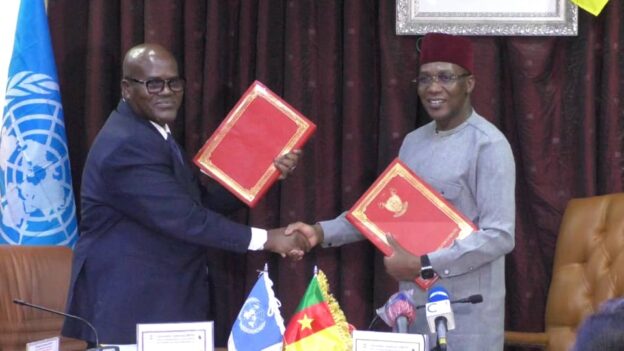
Cameroon’s Public Health Minister and UNFPA’s Resident Representative officially signed on Wednesday 21st December 2022 in Yaounde a partnership agreement that will ease the supply chain of reproductive health commodities. On Wednesday 21st December 2022 in Yaounde, Cameroon’s capital, the United Nations Population Fund, UNFPA reaffirmed its support to the Cameroon government in curbing the multiple needs and gaps in the domain of sexual and reproductive health and rights, SRHR. The government, represented by the Public Health Minister, Dr. Manaouda Malachie sealed a fruitful partnership with UNFPA’’s Resident Representative, Dr. Justin Koffi. The signing of this new partnership agreement is aimed at financing, supplying, and distributing reproductive health commodities. Both parties are committed to reinforcing communication and strengthening stakeholders’ capacities, including community and civil society actors. A fresh impetus in Reproductive Health Speaking at the ceremony in the main conference hall of the Ministry of public health, UNFPA’s Resident Representative, Dr. Justin Koffi said thanks to the UNFPA supplies newly signed partnership, the population will easily obtain quality and secured products. “Since 2017, the date of its launch, Cameroon has benefited from total support of more than Twelve Million US dollars, or just over 8 billion FCFA for the acquisition of contraceptives and other vital maternal health products. And since January 2022, the program has adopted a new operating model, which promises to strengthen performance and accountability toward the program’s strategic objectives. One of the features of the Phase III model is the ”Country Compact”, or simply ”Partnership Agreement,”  He said. Moreover, as indicated by UNFPA’s Country Representative, Dr. Koffi, this partnership highlights above all the commitment of the Government to participate in the financing of reproductive health products through domestic funds, a guarantee of financial sustainability for the availability of these products at the last mile. Dr. Koffi stated that in a recent publication released by UNFPA, it is shown that investments in maternal health and family planning can achieve returns on investment. Also, for 1 USD invested in maternal health and family planning, a gain of 8.4 USD is achieved. Curbing maternal & Infant mortality rates On his part, Public Health Minister, Dr. Manaouda Malachie saluted the fruitful and long-standing cooperation ties between Cameroon and UNFPA and which has recorded strides over the past years. Minister Manaouda said this is visible through 2018 Demographic and Health Survey, DHS, which shows a decrease in the rate of maternal mortality ratio standing at 406 deaths out of 100.000 lives births, and which today stands at less than 300 deaths per 100.000 live births.  Even though the Minister praised the palpable results observed in SRHR since 2018, he admitted a lot of efforts are still to be carried out by different actors in the health sector. He said the capital gain of a society is measured through the well-being of women and men and in a healthy society, development is easily achieved. In his keynote address, the Public Health patron did not fail to mention the fact that Cameroon is fully engaged in achieving its National Development Strategy Plan by 2030 for more transformative and inclusive development. This partnership signed stems from the government’s 2020-2030 Health sector strategy and UNFPA’s Three Transformative Results to be achieved by 2030.  UNFPA’s Three Transformative Results UNFPA embraces the vision outlined in the 2030 Agenda for Sustainable Development and the targets contained in the 17 Sustainable Development Goals. UNFPA has organized its work around three transformative and people-centered results in the period leading up to 2030. The Three Transformative Results are: Ending preventable maternal deaths; ending the unmet need for family planning; and ending gender-based violence and all harmful practices, including female genital mutilation and child, early and forced marriage. Elise Kenimbeni

Read More
 16 Days of Activism: Through 16 Key Activities, RADD Denounces Violence & Exploitation of Women Living Near Agro-Industries

16 Days of Activism: Through 16 Key Activities, RADD Denounces Violence & Exploitation of Women Living Near Agro-Industries

During the 16 days of Activism against Gender-Based Violence, an annual campaign that takes place from November 25 to December 10, RADD organized a series of activities with women, actors affected by agro-industries, and major projects in Cameroon. The Network of Sustainable Development Actors known by its French acronym RADD, the Journalists for Earth Association (J4E), the Association for the Defense of Human Rights (APPDH-Assistance and eight (8) associations of women living around industrial plantations in Cameroon say STOP!!! As part of activities to mark 16 days of activism against Gender-Based Violence, GBV coupled with the international day on the elimination of violence against women, on November 25, 2022, under the theme: “Ending violence against women and girls in the context of climate change”, RADD and its various partners launched series of activities for the 16 days of activism against GBV. On day one, RADD, J4E, APPDH-Assistance, and 8 neighborhood women associations living around industrial plantations took an active part in the activism campaign against violence. The campaign launched was aimed at raising awareness and denouncing different abuses and outrages suffered by women and girls living near large monoculture tree plantations. The objective of this campaign, which begins on November 25, 2022, is to encourage women to continue the fight to safeguard their fundamental rights and their vital resources; to take public opinion to witness and call on governments and donors to increase measures and means to protect women and young girls living near major projects, the precariousness of which is increasing with climate change. The call made was to provide local residents with tree monoculture plantations in Cameroon. They said extractive industries such as dam projects, extraction of natural gas, coal, and oil, major deforestation for large monoculture tree plantations, infrastructure projects, etc. which are carried by our states and are the main culprits of climate change. These large projects in villages monopolize most of the time essential resources (land, forests, water, air, etc.) used by women and young girls to develop their means of living and to be autonomous, and sheltered from violence. of all kinds and particularly economic violence. RADD and partners denounce the fact that the State does not guarantee these local women deprived of their resources substantial lasting compensation. As a result, women find themselves abandoned to themselves, risking the worst violence and frustrations of all kinds that undermine their dignity. Activities marking Day two were focused on the theme: “My land, my life, my workplace” According to these networks and associations, large-scale plantation development involves the grabbing of traditional customary lands and the destruction of forests and resources that rural women and girls have in their families’ livelihoods. To stop this: We, the neighborhood women say STOP to grabbing by agro-industries and major projects! Respect the minimum strip of 5km around our villages On Day three focused on the theme: “My water, my life”, it was outlined that Agro-industrial plantations and major projects consume more than half of the world’s drinking water resources, and are responsible for the pollution of surrounding water and groundwater, causing suffering and disease to small farmers and their families. Women and young girls are particularly affected by the consequent violence of this scarcity of drinking water around industrial plantations. This situation is worsening with climate change. To stop this: “We, the women living near agro industries and major projects, say STOP to the grabbing and pollution of water!!!” That the agro-industries build boreholes for the benefit of the neighbouring villages and that the polluter pays principle applies. “My health, My life” was theme highlighted on day four by these networks which said large-scale plantations and large projects have a negative impact on women’s health. Companies do not keep the promise to provide efficient health services to local residents. However, many diseases arise as a result of soil and water pollution by chemical inputs from business activities. To stop this: We, neighbourhood women of agro industries and major projects say STOP to the destruction of the physical and mental health of local women and girls. That agro-industries build and equip health centers for the benefit of local residents. Activities of day 5 centered on the theme: “My good, My life” as stated by these various associations and networks who believe that the implementation of large-scale plantations and major projects are, because of the destruction of goods and resources and the monopolization that it entails, the cause of famines, economic shortages and poverty of the local populations. To stop this: We, the women living near agro-industries and major projects, say STOP to famine and the impoverishment of our families and YES to inclusive and sustainable development. Day six’ theme was on: My freedom, My life. The agro-industrial companies disseminate barriers and enclosures in the public passageways, dig trenches 4m long and deep in the village said RADD and partners. These restrictions on freedom of movement are amplified by incessant and outrageous checks. The people living near these plantations are forced to travel long distances to access their traditional activities. They end up in green prisons. These numerous attacks on individual freedoms result in the frustration, misery and economic dependence of women and young girls. To stop this: We, the women living near agro industries and major projects, say STOP to attacks on individual freedoms! Freedom of movement is a fundamental Human right.  “Violation of religious and cultural places”, it was the theme chosen to highlight day seven activities. It is said the establishment of agro-industries has taken place without taking into account worship and cultural sites. It literally destroyed the sacred sites, the trees planted on the graves and the places of worship, all this in defiance of the attachment of these citizens to their cultural values. To stop this: We, the women living near agro industries and major projects, say STOP to the violation of religious and cultural sites in these industrial plantations. The cultural and natural heritage of a people is an inalienable good, necessary for its social

Read More