Combating Disinformation, Misinformation in Cameroon: UNCHRD, UNESCO & Partners Show Concern Ahead of Elections

Combating Disinformation, Misinformation in Cameroon: UNCHRD, UNESCO & Partners Show Concern Ahead of Elections

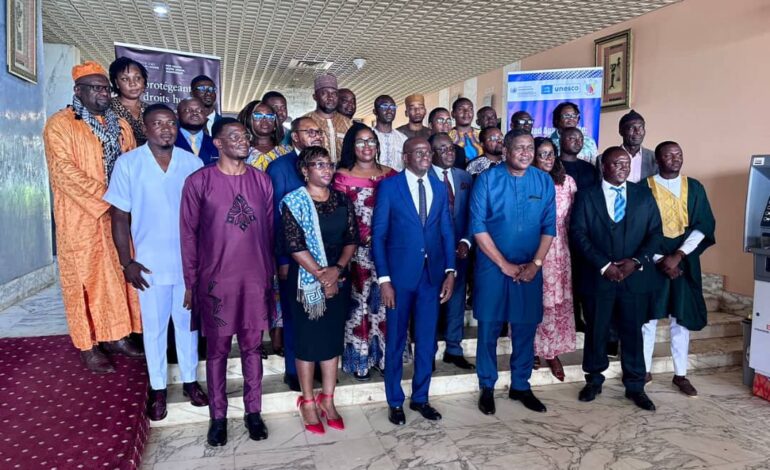
A national stakeholder consultation and coordination session on misinformation and disinformation in the context of elections took place in Yaounde from May 14 to 15, 2025. The two-day national stakeholder consultation meeting, organized in Yaounde from the 14th to 15th of May, 2025, aimed to promote a collaborative approach among key actors in Cameroon to counter disinformation, misinformation, and hate speech, thereby fostering social cohesion and democratic integrity. Organized by the United Nations Centre for Human Rights and Democracy in Central Africa, together with its partners—UNESCO, Civic Watch, Local Youth Corner, and WILPF, this initiative brought together various stakeholders invited to share their collective expertise, develop a robust and coordinated response to the challenges of disinformation, misinformation, and hate speech in Cameroon. A Call for Collective Responsibility Speaking on behalf of the Director of the United Nations Centre for Human Rights and Democracy in Central Africa, the acting Deputy Director said the digital sphere is spreading dangerously and sometimes insidiously in the communities, with real consequences on social cohesion, security, and integrity of the electoral process. Dr Akobi Laurent, acting Deputy Director of the UNCHRD, stressed the importance of binding forces to combat these social scourges that affect living together. “In the face of this situation, our collective responsibility is clear. We must join forces to promote a culture of truth, a culture of tolerance, mutual respect, and shared responsibility. It is in this spirit that the present National Consultation is being held to build a concerted and structured response to these major challenges. This National Consultation does represent a privileged opportunity to build a coherent and concerted response to these major issues. The United Nations Centre for Human Rights and Democracy in Central Africa, in partnership with its several stakeholders, has placed this issue at the heart of its priorities. This commencement was reflected in January 2024 by the pre-adoption of a regional strategy and action plan to combat hate speech, which is currently pending endorsement by the Head of State of the region. As we gather here today to address this critical issue, it is important to acknowledge Cameroon’s instrumental role in the regional strategy to combat hate speech in Central Africa.” According to Dr. Akobi Laurent, this comes together appears as a main challenge in the face of the world with regard to the stakes of upcoming elections in Cameroon. He said: “Cameroon has demonstrated commendable leadership, including by hosting high-level consultations and advancing national measures aligned with regional and global standards. As the country prepares for the election this year, this is a pivotal moment to reaffirm and further demonstrate our leadership by fostering a media and information landscape that is rooted in truth, rooted in inclusion, and respect for diversity. The region, the world are watching, and Cameroon can once again set a positive example.” In his keynote address, the Acting Deputy Director of the UN Centre for Human Rights and Democracy in Central Africa, did not fail to outline the crucial role of the media who is a director actor in changing the narratives. Dr. Akobi Laurent stated: “To our partners in media, your participation in this consultation is crucial. It marks an important step toward the development of a national strategy framework and an inclusive roadmap to effectively combat misinformation, disinformation, and hate speech. Your expertise, your contribution, and your commitment will be decisive to the success of this initiative. We must work hand-in-hand, share our resources, connect our capacities, and strengthen public awareness through targeted campaigns and appropriate mechanisms, always placing the most vulnerable at the centre of our concerns. In this regard, the media play a central role. Their sustainable commitment to professional ethics, records, fact-checking, and steadfast defence of the public interest remains essential in safeguarding our democratic space.” Preaching social cohesion Chairing the official opening ceremony of this national stakeholders’ consultation, Secretary General in the Ministry of Communication, Pr. Felix Zogo praised the timely initiative of the UNCHRD-CA and partners, which comes at a moment when Cameroon is set to go for the presidential election. He underscored the need to combat at all means the growing threats of disinformation and misinformation, not leaving on the side hate speech spread all over social networks. Pr. Zogo Felix said: “This issue is all the more important that we are only a few months away from the major political deadline that the presidential election can constitute for the future in the canals. To the observation and analysis of the exchanges that are already manifesting through the debates of the media, on the radio and television platforms, or the interventions that are brewing on social networks such as Facebook, TikTok, WhatsApp, and many others. We are already taking into account the extent to which such practices could generate as we move towards the end of 2025. It is therefore time for us to inscribe these dangers in the national agenda of our priorities, to prevent the harmful effects and the ongoing case of annihilation.” The occasion was also well seized by Pr. Zogo Felix to outline some legal measures set up by the government to tackle hate speech, misinformation, and disinformation. “Cameroon has an appropriate arsenal to this effect, constituted by the penal code that reprisals the for outrage against a race or a religion to which one or more citizens or residents belong, implying that these penalties are doubled when the infringement is committed to arouse hatred or contempt between citizens and residents. Other provisions of the penal code directly apply to anyone who holds hate speech or commits violence against people for their tribal or ethnic affiliation. When the author of the hate speech is a public agent, an information officer, a politician, a media, or a religious institution, the penalties are doubled and the diminishing circumstances are not admitted. Moreover, since December 21, 2010, the Cameroonian legislation has been endowed with a legal tool repressing misinformation and hate speech by electronic means. This is the law number 2010-12 of

Read More
 SAFVIS, Entreprise de Fabrication des Vins et Spiritueux Met en Place un Press Club

SAFVIS, Entreprise de Fabrication des Vins et Spiritueux Met en Place un Press Club

L’entreprise SAFVIS a officiellement lancé le 7 mai 2025 à Yaoundé un « press club » regroupant journalistes et communicateurs camerounais. Le SAFVIS Press Club, une initiative de la Société Africaine de Fabrication de vins et spiritueux (SAFVIS) a été officiellement lancée le Mercredi 07 mai 2025 à l’hôtel Merina de Yaoundé. Cette nouvelle plateforme qui regroupe journalistes, animateurs de radios et télévisions et communicants, a pour objectif principal de travailler à l’accompagnement des efforts citoyens pour une nation au savoir-faire et une compétitivité économique respectable. SAFVIS renforce sa communication L’entreprise SAFVIS par la mise sur pieds de cette nouvelle plateforme des communicants souhaite également se démarquer en tant qu’institution. Tel que l’ont indiqué les responsables de l’entreprise, il est question à travers les hommes et femmes de médias d’informer davantage la clientèle des produits SAFVIS. Et tel que le slogan de SAFVIS le souligne : « Au Cœur de Vos Cérémonies », cette entreprise citoyenne veut davantage satisfaire et communiquer sur la variété de ses marques mises à la disposition de sa clientèle. Prenant la parole, Michel Lehche, Représentant du Directeur Général a souligné d’entrée de jeu que, SAFVIS a mis cette initiative dans le but de communiquer avec sa clientèle et le grand public sur les différents produits qui sont fabriquées dans ses usines de Yaoundé, dans la zone industrielle du quartier Mvan. Et pour édifier davantage les hommes de médias, désormais nouveaux ambassadeurs de cette entreprise, le Directeur Marketing et communication de SAFVIS a pris la parole à son tour. Louis Albert Bikele révèle aux journalistes et communicants présents que l’entreprise a plus de 2 000 hectolitres en termes de production et un peu plus de 150. 000 cartons stockés dans ses magasins. « Avec vous, nous allons faire le pas vers la communication institutionnelle. Et, avec vous, nous avons mis en place ce moment, qui sera un moment de choix aux multiples opportunités, qui vont nous aider à mieux nous connaître. Aujourd’hui, on se retrouve ici mais on va apprendre à faire chemin ensemble. Cette session marketing et communication des services est sous l’impulsion de la direction générale. Ceci est de son image et de son autorité à faire grandir après l’initiative qui s’arrime à ses ambitions, celle de tout un groupe par lequel nous allons mener la communication ou alors nous allons faire connaître l’ensemble de nos produits, comme le Mega Food qui fait dans le sucre, comme Sassel qui fait dans le sel, et comme cet hôtel qui nous accueille… » Il ajoute que cette initiative qui se veut pérenne vise également à permettre aux hommes de médias et tous les communicants d’avoir des prix préférentiels pour leurs clientèles. « Nous avons choisi de communier de façon régulière avec les hommes, les femmes, les médias, les responsables que vous êtes. Nous sommes ici aujourd’hui, parce que nous ne pouvons pas exister sans le soutien des consommateurs, des prescripteurs que sont les communicateurs et les communicants. Donc, c’est vous qui faites la force de nos marques, dans les grands moments, dans les mariages, dans les cérémonies comme les funérailles, dans vos fêtes et dans vos regroupements, qui sont des regroupements de notoriété. Nous vous savons existants comme étant de bons prescripteurs, c’est pour ça que nous avons mis en place ce forum, pour l’intérêt de nous tous… » Dit-il. Au cours de la rencontre d’échanges, les hommes de médias ont pu poser des questions techniques leur permettant d’avoir des informations diverses sur l’entreprise. Ils ont également été outillées sur les différents produits de SAFVIS hormis son vin phare et très connu du public camerounais, et qui est :« El Vino », les nouveaux ambassadeurs du « SAFVIS Press Club » ont aussi pris connaissance avec certains produits tout en les dégustant et appréciant la qualité et la saveur des « Made in Cameroon ». Les produits SAFVIS Plusieurs consommateurs des vins et spiritueux au Cameroun ne savent pas que c’est grâce à l’entreprise SAFVIS qu’ils ont la qualité au quotidien sur leurs tables et durant des grandes cérémonies. Les produits de la Société Africaine de Fabrication de vins et spiritueux (SAFVIS) sont pour ce qui est des vins en gammes blanches et rouges : El Vino ; le Penasol ; Fiesta ; Vieux Moulin ; le Vino Real ; Refuge de la comtesse ; Baron Ribera. En ce qui concerne les spiritueux ou encore whisky, il ya Hot lands ; Milhson’s et Blue Region’s-qui est très apprécié sur le marché. A propos de SAFVIS La Société Africaine de Fabrication de vins et spiritueux (SAFVIS) est une entreprise du tissu industriel camerounais, qui à la suite de ses années comme entité d’importation s’est installée depuis 2017 comme productrice et distributrice des produits vins et spiritueux au Cameroun et en Afrique. Rédaction TimesNews2.info

Read More
 Cameroon: Stakeholders Review United Nations Guiding Principles on Business & Human Rights

Cameroon: Stakeholders Review United Nations Guiding Principles on Business & Human Rights

A two-day workshop focused on prioritizing sectors for the baseline study on the guiding principles on business and human rights in Cameroon took place from April 29 to 30, 2025, in Mbankomo, on the outskirts of Yaounde.   From reports, Cameroon has been described as one of the countries in Africa with a high rate of human rights abuses and violations in the business and entrepreneurial sectors. This is why the technical workshop held from the 29th to the 30th of April 2025 in Mbankomo was highly applauded by the different stakeholders who took part in discussions. The main objective of this two-day workshop was to identify and analyze economic sectors with significant risks of human rights violations to target priority areas for implementing the United Nations Guiding Principles on Business and Human Rights. It was also aimed at strengthening participants’ capacities regarding the United Nations Guiding Principles on Business and Human Rights. In his welcoming address, Mr. Nouhoum Sangaré, Regional Representative of the office of the High Commissioner for Human Rights and Director of United Nations Centre for Human Rights and Democracy in Central Africa thanked the government of Cameroon for its active role in the elaboration of the baseline study that sets the pace for the effective implementation of the United Nations guiding principles on business and human rights. Speaking on behalf of the government, Jean de Dieu Momo, Minister Delegate in the Ministry of Justice, said the respect of human rights is not only an affair of the government but it is the duty of every citizen. Everybody has a right, and the rights of human beings must be respected at all costs. He lauded the efforts of various society organizations that, in one way or another, fight daily for the respect of human rights in enterprises. He said enterprises are a milestone in the development of a country and also have a crucial role to play when it comes to the respect of human rights. Minister Momo Jean de Dieu said the respect of human rights in the entrepreneurial sectors starts with General Managers who have to implement good rules of conduct and regulations within their companies. He stated: “Take, for instance, in the mining sector, you all know the hard conditions under which people work in these companies. Yet, many companies hide violations of human rights. We have to make them know that the government of the Republic is watching them. We are the watchdogs of human rights in Cameroon, and we are striving for its respect.” As one of the participants, His Royal Majesty Mfaw Robinson Tanyi of Tinto in the South-West region said: “As a traditional leader, I take part in this workshop to represent communities. It is the communities that toil day and night and are not been respected by the various enterprises and entrepreneurial codes. This particular workshop is very welcome because it reminds all those concerned by Human Rights issues how relevant some aspects need to be taken into account. The State, the enterprises themselves that employ, and we the communities as watchdogs, have to be very careful about giving the best of the people to develop our communities without respecting their rights…” As underscored by the United Nations Centre for Human Rights and Democracy in Central Africa, this technical workshop comes in after a dialogue on National Action Plans on Business and Human Rights in the Central African sub-region, held in Mbankomo, Cameroon on the 22nd of June 2023. And jointly organized with the United Nations Development Programme (UNDP), the Network of African National Human Rights Institutions (NANHRI), the Deutsche Gesellschaft für Internationale Zusammenarbeit (GIZ), and the African Union (AU). This hybrid event brought together representatives from governments, businesses, civil society, and national human rights institutions (NHRIs) of Member States of the Economic Community of Central African States (ECCAS) – that is: Cameroon, Chad, the Democratic Republic of Congo (DRC), the Republic of Congo, and Rwanda, in a bid to advance the multi-stakeholder discussion on the development, adoption, and implementation of National Action Plans (NAPs) on Business and Human Rights.   During the workshop, Cameroon emphasized the need to conduct a study assessing the opportunities, challenges, and human rights risks associated with business activities in Cameroon. A baseline study is considered an essential strategic tool to guide Cameroon’s efforts toward building a human rights-respecting economy. It represents the indispensable starting point for any serious reform aimed at integrating the United Nations Guiding Principles on Business and Human Rights into national frameworks. The Guiding Principles are grounded in recognition of: States’ existing obligations to respect, protect and fulfil human rights and fundamental freedoms; the role of business enterprises as specialized organs of society performing specialized functions, required to comply with all applicable laws and to respect human rights; the need for rights and obligations to be matched to appropriate and effective remedies when breached.   Elise Kenimbeni  

Read More
 Cameroon Parliamentarians Join Move to Advocate for Immunization Financing in Africa & Asia

Cameroon Parliamentarians Join Move to Advocate for Immunization Financing in Africa & Asia

A delegation of MPs and Health Experts from Cameroon took active part in the Istanbul Parliamentary Forum held from April 15 to 16, 2025, and organized by the Global Health Advocacy Incubator (GHAI) with support from GAVI, the Vaccine Alliance. A few days after the Parliamentary Forum held in Istanbul, Turkey’s largest city, Members of Parliament in Cameroon and the Global Health Advocacy Incubator (GHAI) organized a press conference in Yaounde. The press conference held on Tuesday 22nd of April 2025 was aimed at sharing best practices of the Parliamentary Forum in Istanbul and to reiterate calls to action for immunization financing in Cameroon. Honorable Essomba Bengono Engelbert, Vice-President of the Committee in charge of Cultural, Social and Family Affairs at the National Assembly, alongside Honorable Ngo Issi Rolande Epse Mbock, member of the same committee, represented Cameroon at this high-level meeting. The two MPs were accompanied by GHAI’s Country Coordinator, Dr. Ename Harmelle Epse Ekoman, and Mrs. Teguia Viviane, Head of Project Advocacy at the Support Service for Local Development Initiatives (SAILD). Taking the floor to address media practitioners, Dr Ename Epse Ekoman started by underscoring some key benefits of vaccination. She outlined the crucial importance of vaccination for a human being. Dr Ename Epse Ekoman stated: “Vaccination is one of the essential pillars of health security; it saves more lives than any other medical intervention.” Speaking to the media at the presser, the MPs expressed their willingness to push forward talks with some top officials and their peers during upcoming sessions. Honorable Essomba Bengono Engelbert said: “Vaccination is a public health issue, given the positive externalities that a vaccinated population, thus immunized against disease, provides to a country’s human capital. Talking about sovereignty of vaccination means first assessing, and then putting into perspective the country’s capacity to address disease prevention in its health system.” The Vice-President of the Committee in charge of Cultural, Social, and Family Affairs at the National Assembly disclosed to the press the various initiatives undertaken so far to accentuate their advocacy for immunization financing. Honorable Essomba Bengono said, apart from delivering a post-forum report to the Speaker of the National Assembly, they have initiated a series of conclaves with key officials. On her part, female MP, Hon. Ngo Issi Rolande, said the government should set up some mechanisms that will help boost immunization coverage. “The government of Cameroon must work to put in place appropriate mechanisms not only to guarantee optimal coverage for national vaccination, but also to work harder to enable Cameroon to control the vaccination chain, namely the production and efficient distribution of vaccines; this is very important. The Istanbul meeting provided us with a wealth of information and certain tools to conduct timely advocacy…”  As indicated by Honorable Ngo Issi Rolande, the Parliamentary Forum in Istanbul was an added value to the current actions carried out by their committee. Thanks to this gathering, Cameroon has learnt from other countries, and with these best practices, the MPs are ready for a practical implementation with the government.  She added: “Sharing experiences helped us to understand how to address certain public health issues. For me, the vaccination law is a law that will resolve and regulate the problems Cameroon is experiencing in terms of vaccine sovereignty.” The forum held from the 15th to the 16th of April, 2025, gathered a total of 21 Members of Parliament from Cameroon, Côte d’Ivoire, Kenya, Ghana, Liberia, Madagascar, Nigeria, Sierra Leone, Laos, and the Zambia. The Istanbul gathering was aimed at fostering collaboration; sharing effective strategies, developing actionable plans, and establishing a parliamentary network dedicated to increasing political will and domestic resources for sustainable immunization financing. With many countries navigating Gavi transitions and the Alliance’s crucial 2026-2030 replenishment on the horizon, the timing couldn’t have been more critical. According to the final release issued by Gavi, the Vaccine Alliance, the forum culminated in the adoption of the Istanbul Parliamentary Call to Action for Immunization Financing – a declaration that outlines specific commitments and appeals to multiple stakeholders. Parliamentarians called upon their governments to: Rapidly adopt policies to mobilize domestic resources for immunization and primary health care. Meet Gavi co-financing obligations, demonstrating commitment and ensuring program continuity. Establish transparent, sustainable long-term financing mechanisms for increased country ownership. Support high-quality regional vaccine manufacturing to strengthen supply resilience. The Call to Action also urged international partners and donors to continue robust investment in immunization, including supporting Gavi’s ambitious goal to raise $9 billion for its 2026-2030 period. These funds are vital to protect 500 million more children, enable responses to 150 disease outbreaks, and support the introduction of new life-saving vaccines. The GAVI press release also indicates that the 21 parliamentarians present at the forum constituted themselves into an Africa-Asia Parliamentary Network. This dedicated body aims to amplify advocacy for increased domestic health budgets, strengthen parliamentary oversight of immunization programs, and facilitate the sharing of best practices across continents.   Elise Kenimbeni  

Read More
 RDPC/Sud : Les Nouveaux Membres du Comité Central Accueillis en Fanfare

RDPC/Sud : Les Nouveaux Membres du Comité Central Accueillis en Fanfare

Ils ont été officiellement présentés le lundi 28 avril 2025 à Ebolowa, par Pr. Jacques Fame Ndongo, Chef de la Délégation Permanente Régionale du Comité Central du Sud. Le lundi 28 avril 2025, à la place des fêtes de Nko’ovos, dans la ville d’Ebolowa, capitale régionale du Sud, les populations ont pris d’assaut tout le long du boulevard dans le but de célébrer leurs élites nommées récemment au sein du comité central du Rassemblement Démocratique du Peuple Camerounais (RDPC). Les populations et militants sont venus des départements du Dja et Lobo, de l’Océan, de la Vallée du Ntem, et la Mvila, qui a accueilli ladite cérémonie. La cérémonie présidée par le Ministre d’Etat, Ministre de l’Enseignement Supérieur, Pr. Jacques Fame Ndongo qui est à la tête de la délégation permanente régionale et par ailleurs Secrétaire à la communication du RDPC, a permis tout d’abord : de présenter ces nouveaux membres titulaires du Comité Central nommés par des décisions n°001/RDPC/PN du 25 mars 2025 et n°001/RDPC/PN du 26 mars 2025 de Son Excellence Paul BIYA, Président National du RDPC ; et d’installer officiellement la nouvelle chef de délégation permanente départementale dans la Mvila. Une nouvelle locomotive au Sud Les trois élites et responsables politiques que sont : Monsieur EDOU ALO’O Cyril, Madame MOAMPEA MBIO Véronique et Madame LIBOM LI LIKENG Minette ont été présentés aux populations et militants qui ont pris part à l’évènement. Danses et cris de joie ont retentit. Les militants ont célébré leurs élites en fanfare et dans une euphorie totale.  Au cours de son discours de circonstance le patron régional du comité central du RDPC a souligné que l’heure est à de nouveaux défis alors que le RDPC par son champion national prépare les échéances électorales d’Octobre 2025 pour une victoire sure et rassurante. Pr. Jacques Fame Ndongo a également saisi l’occasion de cette cérémonie pour rappel aux nouveaux membres et militants, les missions fondamentales du parti : consolidation de l’unité nationale ; promotion de la démocratie ; développement économique ; sauvegarde des libertés et valorisation de nos riches cultures. Sur sa page officielle, le Ministre d’Etat, Pr. Fame Ndongo indique que : « un vibrant appel a été lancé dans l’optique du ralliement derrière notre leader incontesté, Son Excellence Paul BIYA, candidat statutaire du RDPC aux élections présidentielles de 2025, conformément à l’article 27 des textes de base du parti. C’est ainsi que les militants ont été sensibilisés sur l’impérieuse nécessité d’une mobilisation générale et d’une inscription massive sur les listes électorales, condition indispensable pour assurer une victoire éclatante du RDPC » A la fin de son discours, il a par la suite procédé à l’installation officielle de Madame LIBOM LI LIKENG Minette, Ministre des postes et télécommunications qui au titre politique arbore désormais la casquette de Chef de la Délégation Permanente Départementale du Comité Central du RDPC pour la Mvila. Edou Alo’o Cyril, paré pour des nouveaux défis Parmi les trois nouveaux membres titulaires du Comité Central du RDPC nommés par Paul Biya, le Président national de ce parti, il y’a un as de la politique qui a jusqu’ici su manier ses militants sur le terrain dans le département de la Vallée du Ntem. En effet, il s’agit de Cyril EDOU ALO’O, le Directeur General du Budget, élite très engagée et proche de ses populations. Le nouveau membre titulaire du Comité Central du RDPC voit ainsi le fruit de son dur labeur être récompensé par le Président national du parti de la flamme, à qui, il a toujours démontré son dévouement et sa détermination à le servir. Cyril EDOU ALO’O dit :« Je voudrais exprimer une profonde gratitude à Son Excellence, Paul Biya, président national de notre grand parti, le RDPC, pour sa confiance et sa désignation. C’est un très grand honneur d’être membre titulaire du Comité central. Vous voyez toute l’effervescence, toute la joie qui entoure cet évènement, et combien de fois le récipiendaire lui-même. Je profite également pour féliciter tous les militants du RDPC des quatre sections que compte le département de la vallée du Ntem, c’est eux aussi qui sont à l’honneur, parce que cette désignation récompense le militantisme actif et leur attachement au RDPC, et c’est cette symbiose que nous fêtons tous ensemble et nous disons merci à Son Excellence, Paul Biya. » Il a aussi souligné le fait que cette désignation qui arrive à quelques mois de l’élection présidentielle au Cameroun est un appel à de nouveaux défis et à booster sur le terrain les militants et populations pour une victoire du champion national. « Naturellement cette désignation est un message qui nous invite à faire plus que par le passé dans la mobilisation et dans l’animation du parti surtout, et à servir de relai entre la haute hiérarchie du parti et la base militante afin que nous assurons un vote à 100% lors de l’élection présidentielle en faveur de notre candidat qui n’est autre que Son Excellence, Paul Biya. Donc nous sommes déterminés à gagner ce défi comme par le passé pour soutenir le parti et l’action du RDPC ainsi que son candidat dans la Vallée du Ntem que nous représentons. » Elise Kenimbeni

Read More
 New Executives Elected to Lead Cameroon National Association of Social Workers

New Executives Elected to Lead Cameroon National Association of Social Workers

A new bureau led by Douglas Achingale was officially elected on Sunday, 27th of April 2025, in Yaounde. The election of new executives to lead the Cameroon National Association of Social Workers marks a turning point in the profession of social work in Cameroon. Boosting social work in Cameroon Douglas Achingale, incumbent candidate, was elected with 88 votes and challenged Annie Pascaline Sandjo, who secured 33 votes out of the 123 voters registered. After the elective general assembly held at the National School of Magistracy (Enam), the new leader expressed his willingness to overcome all the various challenges faced by social workers in the country. Douglas Achingale said: “Our aim has been to lay down a concrete foundation for the Cameroon National Association of Social Workers, that exists since 2012, and we have been able to work for six months already. We organized an extraordinary assembly on the 5th of October 2024, and we had a small mandate to prepare this elective general assembly…We have a lot of work to do. We know that our association has been sick for many decades, and so this is the time real work begins with the new executives. We should not only be glad that we have won, but we should instead be serious and focus on the objectives assigned and make strong decisions to work harder.” He added: “We should work so that the social work corps in Cameroon should become dependable in the future.” The national executive committee put in place is made up of 16 members. The various positions are those of a president, four vice-presidents, one Secretary General, one deputy Secretary General, one treasurer, two statutory auditors, a communication and public relations officer, a project manager, and four advisers. The elective general assembly, chaired by Rodolphe Soh, Technical Adviser number 1 in the Ministry of Social Affairs, said this organ is out to boost efforts dedicated to social workers. Acting as spokesperson of the Minister of Social Affairs, Mr. Soh said a social worker is someone devoted to the well-being of vulnerable persons and who works for the interest of social development. Social work, key asset of development Social work is a profession based on the principles of Human Rights and social justice. It works for social change through the resolution of problems of human relations, autonomy, and freedom of individuals with a view to improving their lives. A social worker is any professional practitioner of the social action professions who has completed at least 2 years of training in a public school or an approved institution for professional training in social service and holds a diploma in the following specialties. It has been clearly outlined that social work aims to promote social change, solving problems in the context of human relationships, to improve the well-being of the individual, the family, the group, and society as a whole. According to the general provisions, the Cameroon National Association of Social Workers is a corporatist, non-political, secular and non-profit-making organization governed by Law N°90/053 of December 1990 on freedom of association in the country, as well as by the articles that were put in place for its smooth functioning. As indicated, the association proscribes all forms of discrimination within its ranks. The General Elective assembly held within two days brought together officials from the Ministry of Social Affairs, Women’s Empowerment and the Family.   Elise Kenimbeni

Read More
 Tackling HIV/AIDS: Gov’t, Stakeholders Seek New Funding to Boost Response

Tackling HIV/AIDS: Gov’t, Stakeholders Seek New Funding to Boost Response

As Cameroon strives to effectively achieve the 95-95-95 targets by December 2025, several challenges were highlighted during the first statutory meeting of the National AIDS Control Committee for 2025. One of the major and crucial challenges outlined during discussions was that of searching for new sources of financing, both at the local and international levels, as Cameroon is among African countries affected by the suspension of USAID funding from the United States of America. The first statutory meeting of the National AIDS Control Committee(NACC), chaired by the board chair and Public Health Minister, Dr Manaouda Malachie, took place on Wednesday, April 23, 2025, at the conference hall of the Red Cross. As per tradition, a review of activities carried on during the previous year was highlighted, and the new plan of action for 2025 was unveiled to various officials, community-led networks, and partners present at the session. In his keynote address, Public Health Minister, Dr Manaouda Malachie said this first statutory meeting is a call to remobilization and concerted efforts aimed at seeking new funding for HIV/AIDS in Cameroon. Public Health Patron stated that, despite the current threats faced by the suspension of subventions by the new American administration, there is a need to salute the results of the national response, which are encouraging and still stand at around 2.7%. He said thanks to the newly implemented initiative dubbed “Pediatric Surge”, which helped to have 3.102 persons tested HIV positive and 1.188 new cases of pediatric HIV identified (782 children and 406 adolescents), there has been a great move in the search and monitoring of new cases. Dr Manaouda Malachie also hailed contributive efforts and the synergy that was put in place with all community-based organizations, networks of people living with HIV/AIDS, and International Partners, which are a strong force in the fight against the pandemic. Taking the floor to make a balance sheet of the year 2024, Permanent Secretary of the National AIDS Control Committee, Dr. Fokam Joseph, said the previous year was marked by a good number of activities that positively impacted on the strides made in the fight against HIV/AIDS. He cited the first scientific days organized by NACC, the launch of the CAMPHIA reports whose results highly expected in the days ahead and laid emphasis on the Pediatric Surge initiative. Dr. Fokam said that despite multiple efforts to tackle HIV/AIDS in Cameroon, one of the main hindrances faced by patients remains stigmatization and discrimination. He said a drop in these two core scourges will greatly help in reducing the rate of the disease in our community especially among the Key Populations (KPs). He said the right to health is not negotiable, it is a must. Reason why government has set up incentives such as the Universal Health Coverage for the benefits of every citizen. Speaking to media practitioners at the end of the one-day held statutory meeting, NACC’s Permanent Secretary once more emphasized some key figures. Dr Fokam Joseph said: “We conducted routine testing with our health facilities and in the community during the year 2024, and we were able to detect close to 46.000 cases of HIV positive, and among these 46.000 cases, about 36.000 of them were newly tested positive persons. So, this represents a number of new clients whom we linked to antiretroviral therapy within the first days after the disclosure of their status. And this permits us to emphasize that testing is done free of charge, as well as linkage to treatment and the follow-up for viral load testing are also done free of charge. He added: “At least 9 out of our 10 clients who received antiretroviral drugs have control of the virus. In this context, most of our clients, even without the use of condoms, can no longer transmit the disease to their sexual partners. That is why we believe in a universal enrollment of People Living with HIV/AIDS on antiretroviral therapy for us to also curb down the risk of HIV transmission in our communities, but at the same time also to prevent the risk of mortality due to HIV/AIDS. Reaching the 95-95-95 targets by 2025 as established by the Joint United Nations Programme on HIV/AIDS (UNAIDS), implies that 95% of people living with HIV know their HIV status, 95% of people who know their status are receiving HIV treatment, and 95% of people on treatment are virally suppressed. This declaration reinforces and accelerates the UNAIDS Fast-Track strategy to end the AIDS pandemic by 2030, adopted on 18 November 2014, which included achieving the 90-90-90 testing and treatment targets by 2020.   Elise Kenimbeni

Read More
 Afrique Centrale : Marion Obam, Présidente du SNJC Elue à la Tête de la FEJAC

Afrique Centrale : Marion Obam, Présidente du SNJC Elue à la Tête de la FEJAC

La dynamique présidente du SNJC ajoute une corde à son arc avec de nouvelles responsabilités dans la Sous-région, Afrique Centrale. Marion OBAM, Présidente du Syndicat National des Journalistes du Cameroun (SNJC) a été portée à la tête de la Fédération des Journalistes d’Afrique Centrale(FEJAC). Élue via un consensus ce 4 Avril 2025 à Yaoundé, elle devient la toute première présidente à prendre les rênes de cette nouvelle fédération qui va regrouper toutes les organisations syndicales qui militent en faveur des droits des Journalistes et travailleurs des médias dans la Sous-Région. La FEJAC a pour objectif principal de : promouvoir les droits, la sécurité et les normes professionnelles des Journalistes. En tant qu’organisation régionale de la Fédération Africaine des Journalistes(FAJ), dans la région d’Afrique Centrale, elle vise à défendre la liberté d’expression, la liberté de la Presse et la Protection des Journalistes, tout en renforçant la solidarité entre ses membres. Pour mener à bien les missions qui lui ont été assignées, Marion Obam, journaliste camerounaise et patronne du SNJC, va travailler avec le journaliste et leader de l’Union nationale de la presse du Congo (UNPC), Baudouin Kamanda Wa Kamanda, élu au poste de Vice-Président et le journaliste-leader Tchadien, Serge Manassé Gotingar qui occupe le poste de Secrétaire-Trésorier. Cette nouvelle équipe qui a un mandat de trois ans aura plusieurs défis à relever. Ces trois soldats des médias qui ont une expérience avérée dans le paysage médiatique en Afrique et même sur le plan international ont comme feuille de route, porter plus haut les couleurs de l’Afrique Centrale en faisant rayonner la FEJAC, organisation de la FAJ. Ils devront prêcher uniquement la solidarité et l’unité pour que tous les pays de la Sous- région se regroupent désormais au sein de cette nouvelle fédération, afin que les journalistes et travailleurs de médias plaident ensemble et sur une seule même voix. Nul doute qu’avec l’expérience de Marion Obam, qui continue de positionner le SNJC comme le seul syndicat camerounais ayant une notoriété et une image respectable, plusieurs actions seront menées dans les tous prochains jours pour la FEJAC embrasse tous les autres mouvements syndicaux de l’Afrique Centrale. La FEJAC, organisation de la FAJ a été créée en marge d’un atelier sous régional organisé du 4 au 5 avril 2025 par l’UNESCO et la FAJ. Le processus des élections a été conduit par son président, Omar Faruk de nationalité Somalienne. Il faut dire que l’atelier de deux jours organisé à Yaoundé par l’UNESCO et la FAJ s’est tenu sous le thème : « renforcement des capacités des journalistes en éducation aux médias et a l’information (EMI) pour lutter contre la désinformation et la mésinformation en faveur d’un journalisme de qualité en Afrique centrale ». Elise Kenimbeni

Read More
 Cameroun : Dr Ngae Denis Présente officiellement son livre, “Les technologies numériques : Nouvel allié de la Couverture santé universelle (CSU) au Cameroun”

Cameroun : Dr Ngae Denis Présente officiellement son livre, “Les technologies numériques : Nouvel allié de la Couverture santé universelle (CSU) au Cameroun”

La présentation officielle de cet ouvrage s’est tenue le jeudi 3 avril 2025 à l’hôtel Franco de Yaoundé. Pour la présentation officielle de ce nouvel ouvrage intitulé : “Les technologies numériques : Nouvel allié de la Couverture Santé Universelle (CSU) au Cameroun”, c’est la grande salle des banquets de l’hôtel Franco qui a été choisie pour accueillir le parterre d’invités et partenaires conviés pour la circonstance. Les Représentants des Ministres de la Santee Publique et des Postes et Télécommunications ont pris part à cette rencontre dédicace. Une vision claire des défis et des opportunités à relever   Dans sa prise de parole, l’auteur principal, Dr Ngae Denis, a souligné le fait que ce nouveau livre vise à explorer le rôle crucial des technologies numériques dans la réalisation de la Couverture santé universelle (CSU) au Cameroun. À une époque où l’accès aux soins est fondamental pour le développement socio-économique, cet ouvrage s’adresse aux décideurs politiques, aux professionnels de la santé, aux chercheurs et à tous ceux qui s’engagent pour un système de santé plus inclusif et efficace Cette nouvelle galette littéraire, fruit d’un travail de longue haleine du Dr Ngae Denis et de Chevalier de Dieu Kutche Tamghe a pour objectifs d’analyser l’impact des technologies numériques sur la CSU au Cameroun ; d’identifier les défis et opportunités liés à l’intégration de ces technologies dans le système de santé et de proposer des recommandations concrètes pour optimiser l’utilisation des technologies numériques dans le cadre de la CSU. Au cours d’un échange avec les médias, Dr Ngae Denis a également relevé le fait que le livre prend en compte plusieurs défis au regards du développement du numérique dans nos sociétés, et a indiqué que des propositions ont été faites dans ce sens au gouvernement. Nouvel Allié de la CSU Dans cet ouvrage, les auteurs nous font plonger dans une lecture de six chapitres qui relatent notamment les avancées et les défis de la transformation numérique. Dans le Chapitre 1 dont le titre est : « Avancée vers la Couverture Sanitaire Universelle », l’objectif est de présenter les principes et objectifs de la CSU, ainsi que l’état actuel de la santé au Cameroun. Ce chapitre définit la CSU et identifie ses enjeux clés, notamment l’accès universel aux services de santé, la protection financière et la qualité des soins. Il démontre que la CSU peut réduire la pauvreté et améliorer la santé publique, mais souligne la nécessité d’une mise en œuvre efficace des politiques publiques.  Le Chapitre 2 qui a pour titre : « Technologies numériques en santé » a pour objectif de : définir les technologies numériques appliquées à la santé et analyser leurs avantages et inconvénients. Synthèse des résultats : Ce chapitre identifie les principaux types de technologies numériques, comme la télémédecine et les systèmes d’information sanitaire. Il met en lumière comment ces technologies peuvent réduire les barrières à l’accès aux soins et améliorer l’efficacité des services, tout en abordant les risques potentiels, tels que la fracture numérique. En ce qui concerne le Chapitre 3 : « Défis de la transformation numérique » l’objectif est d’évaluer l’état actuel de la transformation numérique dans le secteur de la santé au Cameroun et identifier les défis à relever. La Synthèse des résultats de ce chapitre souligne les obstacles à l’adoption des technologies numériques, tels que le manque d’infrastructures, de compétences et de financement. Il explore également les questions de gouvernance et de régulation qui doivent être abordées pour garantir une transformation réussie. Dans le Chapitre 4 : « Bonnes pratiques et recommandations de l’OMS », l’objectif est de présenter les lignes directrices de l’OMS sur les interventions de santé numérique. Comme synthèse des résultats, le chapitre offre un cadre de référence basé sur les recommandations de l’OMS, qui inclut des principes de qualité et d’éthique dans l’utilisation des technologies numériques. Il met en avant des exemples de bonnes pratiques qui peuvent être adaptées au contexte camerounais pour renforcer les systèmes de santé. Le Chapitre 5 qui a pour titre : « Expériences réussies », vise à illustrer, à travers des exemples concrets, comment les technologies numériques ont été intégrées avec succès dans des programmes de CSU. Et comme synthèse des résultats, ce chapitre examine divers programmes en Afrique et dans le monde, tels que le système de santé numérique au Kenya et le programme RapidSMS au Rwanda. Il démontre que ces initiatives ont amélioré l’accès aux soins et la qualité des services, offrant des leçons précieuses pour le Cameroun. Et dans le Chapitre 6 : « Recommandations pour le Cameroun », il est question de proposer des stratégies concrètes pour optimiser l’intégration des technologies numériques dans le programme de CSU au Cameroun. En synthèse des résultats, ce chapitre présente des recommandations sur le renforcement des capacités en santé numérique, l’amélioration de l’accès aux technologies, et l’élaboration d’un cadre réglementaire adaptatif. Il insiste sur l’importance d’une approche multisectorielle et de la participation des communautés pour assurer le succès du programme de CSU. En conclusion tel que l’a relevé les auteurs du livre : “Les technologies numériques : Nouvel allié de la Couverture santé universelle (CSU) au Cameroun”, est un ouvrage essentiel qui met en lumière le potentiel transformateur des technologies numériques dans le secteur de la santé. Il offre une vision claire des défis à relever et des opportunités à saisir, tout en fournissant des recommandations pratiques pour garantir que le Cameroun atteigne ses objectifs de santé universelle. En intégrant ces technologies, le pays peut espérer améliorer l’accès aux soins, renforcer la qualité des services et réduire les inégalités en matière de santé. A titre de rappel, cet ouvrage a été préfacé par Pr. Louis Richard Njock, Secrétaire Général au Ministère de la Santee Publique au Cameroun. A propos de Dr Ngae Denis Dr Ngae Denis est membre de la Société camerounaise d’Informatique Médicale. Il est enseignant d’informatique médicale et chercheur au Centre de Recherches d’études diplomatiques internationales et stratégiques et à Savoirs & Développement. Au Ministère des Postes et des télécommunications, il occupe à ce jour le poste de Chef de la Division des Projets, des Etudes et de la Prospective

Read More
 Huawei ICT 2024-2025 : Le Cameroun Décroche son Ticket Pour la Grande Finale en Chine

Huawei ICT 2024-2025 : Le Cameroun Décroche son Ticket Pour la Grande Finale en Chine

Le 22 mars 2025, la team du Cameroun a glané avec brio son ticket pour prendre part en Chine, à la compétition finale du célèbre concours des intelligences en technologies de l’information et de la communication (TIC). Après s’être démarquée le 22 mars 2025, à la phase régionale du prestigieux concours Huawei ICT Competition 2024-2025, l’équipe des génies des TIC du Cameroun a décroché la première place et par ailleurs, a validé son ticket pour la grande finale mondiale prévue à Shenzhen, en Chine du 20 au 24 mai 2025. Cette phase régionale qui s’est tenue dans les locaux de Huawei Cameroun à Douala, s’est déroulée en ligne et a réuni au total onze équipes issues d’Afrique du Nord, de l’Ouest et Centrale, parmi lesquelles le Maroc, l’Algérie, la Tunisie, l’Égypte, la Libye, le Bénin, le Sénégal, l’Éthiopie, la Guinée, la Côte d’Ivoire et le pays hôte, le Cameroun. Team Cameroun pour une compétition de haut vol Pour rivaliser d’adresse, les candidats des différents pays ont été soumis à trois catégories que sont : Network Track, Cloud Track et Computing Track. Parmi les neuf étudiants qui représentent la team Cameroun, les membres de l’équipe Network Track aux côtés de ceux de l’Innovation Track ont été combatifs. Ces derniers qui sont constitués des étudiants de l’Ecole Nationale Supérieure Polytechnique de l’Université de Douala se sont qualifiés également il y’a de cela deux semaines, ceci grâce à leur projet innovant « LINA » qui utilise les technologies Huawei avec des lunettes dotées de l’Intelligence Artificielle. Un projet innovateur pour le bien-être des personnes malvoyantes et les personnes qui ont des difficultés oculaires, et qui souhaitent se déplacer dans un environnement tout en décrivant avec précision les objets présents dans leur environnement. C’est cette victoire qui ouvre d’ailleurs les portes une fois de plus aux représentants du vert, rouge et jaune en Chine d’ici le mois de Mai 2025. Ces deux équipes camerounaises qui se distinguent parmi les plus créatives vont affronter en Chine des adversaires redoutables qui viendront des différents continents, et connus pour être les meilleurs dans différentes catégories de cette prestigieuse compétition mondiale.  De nouveaux challenges Le Cameroun une fois de plus prendra part à la grande finale de la compétition mondiale du Huawei ICT. Cette participation qui se répète au fil des années démontre à suffisance la qualité des enseignements et le niveau des études dans le domaine des TIC au Cameroun, ceci grâce au soutien de l’entreprise des télécoms, Huawei. Pour cette nouvelle édition qui s’inscrit sous le calendrier de 2024-2025 du concours, elle a été lancée en octobre 2024, et avait enregistré la participation de près de 500 étudiants camerounais. À l’issue des sélections préliminaires et nationales, neuf étudiants issus de l’Université de Douala, de SUP’PTIC, de l’ENSPY et de l’Université de Buea avaient été retenus pour représenter le pays lors de la phase régionale. Selon SOYANG Thierry, étudiant à l’Université de Buea et membre de l’équipe qualifiée, il reste optimiste quant aux performances de son équipe. Le jeune étudiant des TIC dit : « Les épreuves étaient assez abordables. On espère être dans les 600-700 points et on attend la suite avec impatience. Grâce à la préparation suivie avec nos coachs, nous sommes confiants et je peux déjà vous dire que l’équipe du Cameroun sera en Chine. » Autre étudiant interviewé au nom d’Ekane Essame Bright Epie, qui est un produit de la grande école, SUP’PTIC et membre de l’équipe Cloud Track, il a souligné la complexité des épreuves et les défis rencontrés. Il dit : « L’examen n’était pas facile, car il ne s’agissait pas seulement de réciter des concepts appris par cœur, mais aussi d’être capable de comprendre profondément de nouvelles notions avancées. Certaines questions étaient très originales et exigeaient une réflexion poussée. Il y avait aussi des défis d’accès aux ressources en raison de certaines restrictions. Malgré cela, l’épreuve s’est bien déroulée et j’attends de bons résultats, car j’ai confiance en mon niveau de préparation et en mon équipe. » Qualifiée une fois de plus donc, l’équipe du Cameroun ira compétir avec le cœur sur la poitrine afin de renverser la tendance cette année et braver au sommet le trophée de cette prestigieuse compétition des talents en TIC. Un nouveau rendez-vous qui se veut innovant et plein de défis pour la team Cameroun. A propos de la Huawei ICT Competition La « Huawei ICT Competition » fait partie des programmes de formation institués par l’entreprise numéro un des TIC, Huawei. Tout comme dans plusieurs autres pays où la filiale, Huawei est installée, il se tient annuellement cette compétition des talents en TIC. Celle-ci permet de promouvoir le développement de l’écosystème des talents TIC et de créer un pont entre l’industrie et l’éducation. Au Cameroun, le programme, Huawei ICT Competition a été lancé en 2022. Et lors de cette toute première édition, il y’a eu une participation massive d’étudiants estimée à plus de 450 étudiants camerounais qui ont successivement traversé les étapes préliminaires et nationales, suite auxquelles ces six meilleurs étudiants issus des universités et grandes écoles partenaires de la Huawei ICT Academy au Cameroun ont été sélectionnés.   Elise Kenimbeni

Read More