Infertilité chez la Femme : Stigmatisation et Tabous dans les Communautés Camerounaises

Infertilité chez la Femme : Stigmatisation et Tabous dans les Communautés Camerounaises

Au Cameroun, plusieurs femmes notamment dans certaines régions du pays comme à l’Ouest sont victimes de stigmatisation et de discrimination pour des problèmes d’infertilité. Lydie âgée de 48 ans aujourd’hui et mère de deux enfants a souffert le martyr dans sa belle-famille à cause des problèmes d’infertilité. Cette dame issue de la région de l’Ouest Cameroun s’est mariée à l’âge de 30 ans, et a du coup développé l’envie d’être maman. Malgré plusieurs essais, elle n’arrivait pas à concevoir et a dû faire recours à un gynécologue pour un suivi médical. Cependant, dans son couple, il ya quelques anomalies qui sont détectées chez son conjoint, celui-ci rejette la faute sur sa compagne, et décide de la quitter des mois après. « Il a refusé qu’il avait un problème bien que, nous avons consulté un médecin. Nous nous sommes accordés après et avions même organisé un voyage à l’étranger pour qu’il aille se soigner mais pour lui ça été une aubaine pour finalement partir. Il m’a laissé ici au pays, raison qui a été à un moment le déclic derrière notre séparation. C’est lui qui avait introduit la procédure de divorce étant de l’autre côté. » dit-elle. Lydie ajoute que la famille de son conjoint n’a cessé de jeter le tord sur elle pourtant jusqu’à ce jour ce dernier n’a pas toujours d’enfant du fait du déni qu’il a un problème de fécondité. Stigmatisation et discrimination dans la communauté Ayant nourri ce besoin d’être maman à tout prix, du fait des railleries et injures dans sa belle-famille, Lydie n’a pas perdu espoir. Elle a consulté le médecin une fois de plus afin de s’assurer qu’elle n’avait aucun problème et ensuite s’est mise dans de nouvelles relations. Celles-ci n’ont pas produit des fruits et son médecin lui propose la fécondation in vitro et Lydie décide de partager avec ses proches cette nouvelle, qui semble être son dernier recours vu l’âge avancé, mais elle est découragée. Elle dit : « Lorsque je parle de cette option à certains proches de la famille, ils me disent, non ça va aller mais entretemps je vis ma situation personnellement, c’est mon problème. Et ce que les autres savent c’est que je n’ai pas d’enfant et ils ne peuvent pas savoir quels sont les dessous. Qu’est ce qui se dit ?  Est-ce que c’est médical ? Est-ce à la suite d’un avortement ? Qu’est-ce qui s’est passé ? Quels sont les regards que certains me lancent au quotidien ? » Issue d’une communauté où l’on accorde beaucoup d’importance à la maternité, au mariage et en général aux valeurs de la tradition, Lydie nous dit qu’elle a vécu ce problème différemment dans son entourage bien qu’à un moment elle a été un sujet de railleries. « Ma famille regardait sans rien dire. Les collègues de service s’en moqueaint, j’étais parfois un sujet de railleries. Ils parlaient de leurs enfants, démontraient leur fierté. Et lorsqu’ils étaient devant moi ils évoquaient le sujet juste pour me mettre mal à l’aise. Et dans la famille, les attitudes étaient mitigées, entre ceux qui étaient désolés et par respect ne disaient rien et ceux qui se moquaient de moi ouvertement. Ils valorisaient certaines cousines qui ont des enfants. J’ai vécu le mépris à mon endroit, des agressions verbales et j’encaissais des mots déplacés. » Autre victime rencontrée c’est, adèle (nom d’emprunt) âgée de 56 ans aujourd’hui qui est également originaire de la région de l’Ouest plus précisément du département de la Mifi. Celle-ci malheureusement n’a pas eu la chance de procréer mais a été victime de stigmatisation dans sa communauté. « Je viens d’une famille royale dans la région de l’Ouest et durant plusieurs années j’ai subi des pressions de la part de mes oncles et tantes qui m’ont élevé, m’ont envoyé en mariage à l’âge de 26 ans. Durant mes nombreuses années de mariage, je n’ai pu avoir d’enfant. Mon mari a épousé deux autres femmes des années plus tard. Celles-ci ont donné naissance à 4 et 6 enfants respectivement, et je suis devenue durant des années la risée du foyer. Manque de respect et insultes ont été mes repas au quotidien. A l’âge de 38 ans, j’ai dû fuir mon foyer pour avoir la paix. Même ma famille ne m’a pas facilité la tâche, elle m’a déstabilisé et j’étais juste un arbre sans racine pour elle… » dit-elle. Adèle qui n’a pas voulu parler de son cas en profondeur du fait d’un traumatisme psychologique, nous a indiqué qu’elle a perdu goût à la vie et a coupé tout contact avec ses proches. Elle dit : « J’avais tout fait pour sauver mon mariage mais la volonté du bon Dieu n’a pas été exaucée. J’ai perdu espoir et je n’ai plus jamais eu un partenaire bien que partie de mon foyer conjugal. J’ai accepté mon destin… C’est Dieu ! Quoi d’autre ? » Attentes et Espoir Du côté de Lydie, cette dernière nous a confié que sa situation n’a pas été facile à un moment, elle a voulu se rendre en Europe aussi pour un autre suivi médical ou d’adopter des enfants lorsqu’ elle avait atteint l’âge de 40 ans. Elle indique que : « J’ai écrit un livre autobiographique : « Ma beauté, ma souffrance » dans lequel je me pose des questions. Pourquoi je n’accouche pas ? Et lorsque j’ai eu 40 ans en 2014, j’ai pris ma toute petite nièce qui vivait désormais avec moi. Je lui ai donné tout l’amour d’une mère car ma sœur me l’avait donné pour combler le vide que je vivais. Et je me suis dit, si Dieu a fait grâce de me donner un emploi assez bien rémunéré pourquoi pas accompagner un enfant qui est dans le besoin. » Une attente qui n’a pas était de tout repos selon Lydie. Entre prières et actions caritatives, et même de l’amour témoigné à sa petite nièce, ces gestes telle que le dit Lydie, lui ont porté chance. Et trois ans après, le miracle de Dieu survient, Lydie devient maman à 43 ans. Elle donne naissance à des jumeaux. Elle nous a avoué que toutes les personnes qui se sont moquées d’elle étaient

Read More

 MASO ACTE 3 : A PARTIR DE 100 FCFA OBTIENT UNE BOURSE SCOLAIRE OU ACADEMIQUE

MASO ACTE 3 : A PARTIR DE 100 FCFA OBTIENT UNE BOURSE SCOLAIRE OU ACADEMIQUE

Vous souhaitez garantir une éducation de qualité à vos enfants dans des écoles locales et internationales ? Vous souhaitez poursuivre vos études pour une carrière enrichissante ? Pas de panique, la Mutuelle d’Assistance et de Solidarité (MASO) est la solution à tous vos problèmes. La MASO de RENAPROV FINANCE S.A vous offre les options CLASSIQUE et GOLD pour l’obtention des bourses scolaires et académiques. La MASO dans son option MASO CLASSIQUE propose aux mutualistes deux bourses scolaires d’UN MILLION (1.000000) de Francs CFA pour le cycle maternel et DEUX MILLIONS (2.000000) de Francs CFA pour le cycle secondaire remboursables à taux zéro. La cotisation à MASO CLASSIQUE est de 26.000 Francs CFA par an. Pour l’option MASO GOLD, ces bourses sont de 1.000.000 de Francs CFA pour le Primaire, 2.000.000 de Francs CFA pour le Secondaire, 5.000.000 de Francs CFA pour l’Enseignement supérieur au Cameroun et 10.000.000 de Francs CFA pour l’Enseignement supérieur à l’étranger. Il faut rappeler que l’option MASO GOLD est non remboursable. Pour la bourse de 1.000.000 de Francs CFA vous cotisez 52.000 Francs CFA, pour 2.000.000 de Francs CFA c’est une cotisation de 65.000 FCFA et en ce qui concernent les bourses académiques de 5.000.000 de FCFA, c’est 91.000 FCFA et celle de 10.000.000 de FCFA c’est au total une cotisation de 130.000 FCFA. Notez également que ces financements sont disponibles par tirage au sort. Pour être parmi les nombreux bénéficiaires de ces bourses, c’est simple. Souscrivez et participez à la grande tombola du 9 juillet 2023 qui se tiendra à partir de 14heures au Palais Polyvalent des Sports de Yaoundé. Si vous n’êtes pas encore parmi les nombreux mutualistes de la MASO, n’hésitez plus, inscrivez-vous chez un agent MASO / RENAPROV FINANCE S.A ou rendez-vous dans une agence de RENAPROV FINANCE S.A ou encore à ROYAL FM 88.4 au deuxième étage de l’immeuble Binam face agence Camair Co à Yaoundé. Pour plus d’informations voici les contacts du pool gestion MASO :  (+237) 699.44.29.77/ 674.39.27.46/ 695.33.95.03/690 20 28 40

Read More
 Plan International & UNHCR’s DAFI Scholarship Programme Equips 30 Refugee Students with ICT Tools

Plan International & UNHCR’s DAFI Scholarship Programme Equips 30 Refugee Students with ICT Tools

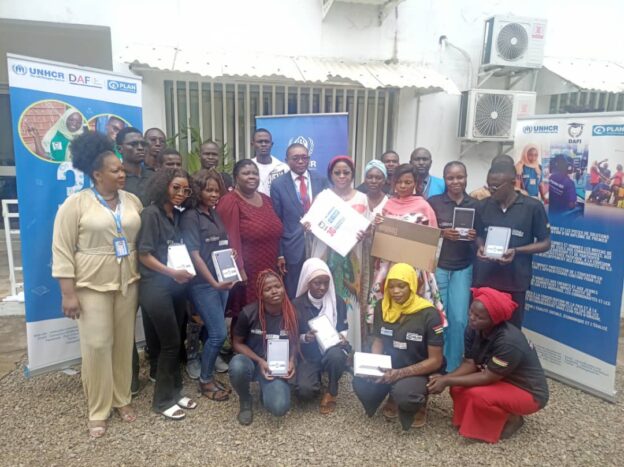
Another cohort of 30 refugee students registered under the DAFI scholarship programme piloted by UNHCR and Plan International has received brand new ICT tools in Yaounde, Cameroon. 25-year-old Abdarahman Ibrahim, from the Central African Republic and who is the current president of the group of DAFI scholarship programme beneficiaries has expressed gratitude to all donors who relentlessly vest efforts on refugee students to achieve their studies. The young student praised the initiative which to him shall improve on his research works. “With the advent of information and communication technologies, ICTs, we need kits such as these tablets that will help us to improve our research assignments because it is not easy to undertake such tasks with a smartphone. The phone is very limited and cannot help us to type our reports at the end of the month. Now, these tablets will ease us in typing and research. It will also help us to renew our scholarships as indicated by UNHCR officials, the DAFI scholarship programme will solely be done online.” Abdarahman Ibrahim said. Abdarahman Ibrahim was speaking on Friday, 5th of May 2023 in Yaounde during a ceremony to officially hand over tablets to the new cohort of 30 refugee students of the DAFI scholarship programme for 2022-2023 academic. There are in total 13 young men and 17 young women from neighbouring countries of Cameroon. Mrs. Koko Boti Felicite, Principal Administrator for Protection in the United Nations High Commissioner for Refugees, UNHCR called on the refugee students to make productive use of these brand-new tablets and challenged them to work hard to be role models for their peers. Speaking on behalf of the Country Director of Plan International Cameroon, Mr Fabien Ongono Program Implementation Manager, in his keynote address said the DAFI programme is out to accompany both female and male refugee youths who merit to follow higher education studies. This programme as he said, permits them to secure their rights and protection. Fabien Ongono stress on the fact that Plan International, partner in the DAFI scholarship programme is a major actor in promoting access to quality and inclusive education as well as entrepreneurial opportunities and decent work. The Spokesperson of Plan International Cameroon also outlined the importance of ICTs nowadays and the key role they play in socio-professional insertion. Mr Ongono indicated that one of the main challenges to address is that of enrolling in the higher education level close to 15% of refugees by 2030. The occasion was equally seized by Plan International Cameroon to salute the collaboration with the government through the Ministry of Higher Education (Minesup). About the DAFI scholarship programme The DAFI (Albert Einstein German Academic Refugee Initiative) scholarship programme offers qualified refugee students the possibility to earn an undergraduate degree in their country of asylum. Through the dedicated support of the German Government, UNHCR and private donors, the programme has supported over 15,000 young refugees to undertake tertiary studies since 1992. The strategic priorities of the DAFI programme are to: promote the self-reliance of sponsored students through opportunities for employment and entrepreneurship; empower students to contribute knowledge, skills and leadership, and facilitate peaceful coexistence with host communities during displacement and upon return; Strengthen the protective impact of education by encouraging lifelong learning; Provide role models for refugee children and youth to demonstrate the impact of education on individuals, communities and societies. The scholarship covers a range of costs, including tuition, fees, study materials, food, transportation, accommodation and other expenses. To amplify academic achievement and skills development, DAFI scholars receive additional support through close monitoring, academic preparatory and language classes based on students’ needs, as well as mentoring and networking opportunities. Elise Kenimbeni

Read More
 Lake Chad Basin: Japan-Regional Stabilization Facility Partnership Extended in Cameroon

Lake Chad Basin: Japan-Regional Stabilization Facility Partnership Extended in Cameroon

On Thursday, May 4, 2023, United Nations Development Programme, UNDP, and the government of Japan officially launched in Cameroon, the Japan-Regional Stabilization Facility partnership. Yaounde, Cameroon played host on May 4, 2023, to the signing ceremony aimed at officially launching the components funded by the Japan supplementary budget under the Regional Stabilization Facility, RSF and advancing strategic collaboration for the project’s implementation. The one-year project dubbed: “Enhancing Stabilization and Human Security in the Lake Chad Basin” is funded by the government of Japan at 3.036 million USD. To officialize this project, key actors were Japan’s Ambassador to Cameroon, Mr Takaoka Nozomu, UNDP’s Resident Representative, Mr Aliou Mamadou Dia, MINEPAT’s Representative and Governor of the Far North region, Midjiyawa Bakary who doubles as chairman of the forum of Governors of the Lake Chad Basin. Through a Zoom video call, Cela Blerta, Head of the RSF project in the United Nations Development Programme expressed the will to see more impactful results from the project prolonged notably for the internally displaced persons who are in dire need of support. UNDP’s Resident Representative in Cameroon, Mr. Aliou Mamadou Dia has praised the outstanding support of the Japanese government as a great move to advance Sustainable Development Goals. In his key address, Mr. Aliou Mamadou Dia mentioned the fact that, UNDP has been the first UN Agency to accompany the elaboration of this strategy, yet under the leadership of different governments and the help of governors of the Lake Chad region. “I wish to thank the Japanese government not only for financially supporting Cameroon with the RSF project these past three years but also for her crucial support programme that is currently underway in the North-West and South-West regions. The government of Japan is indeed standing beside African countries, Cameroon and neighbouring countries of the Lake Chad Basin and gives us the means to assist and support populations and communities affected by crises.” He added. Mr Aliou Mamadou Dia believes the funds disbursed by Japan will positively impact the livelihood of people and create better conditions for the development of affected communities whose hope was shattered. The Ambassador of Japan to Cameroon said his country has been advocating for the past 20 years for issues affecting the human security of people. Mr Takaoka Nozomu said: “We are very much concerned about issues affecting populations and we wish to cooperate, and contribute to the enhancement and promotion of the welfare of local people… Signing the previous phase of this project some one year ago was my first assignment while I arrived in Cameroon and so, I am very glad to sign this second phase, hoping it will make great progress and success as the first phase did.” On his part, the Far-North region Governor has lauded the immense support of the government of Japan. Midjiyawa Bakary said: “On behalf of the government of Cameroon I wish to sincerely express kind regards to the government of Japan for this financial support to the entire crippled regions of the Lake Chad Basin. I wish to reassure the donors that these funds will reach the beneficiaries. The first aid that was granted some two years ago, for instance, served for the reconstruction and rehabilitation of infrastructures, equipment and materials as well as in the financial empowerment of vulnerable groups affected by the Boko Haram insurgency…” Situation of the Lake Chad Basin The Lake Chad Basin region faces a multi-dimensional crisis, with the ongoing insecurity related to violence perpetrated by Boko Haram factions compounded by the climate emergency and natural disasters. This has led to the loss of lives and livelihoods, food, insecurity, forced displacement, and changes in mobility patterns, which have in turn led to competition over scarce natural resources and pressure on public services. The borderland communities in Cameroon, Chad, and Niger have a long history of socio-economic marginalization, limited state presence, and weak governance. In response, UNDP set up the regional stabilization Facility for the Lake Chad Basin area in July 2019 as a time-bound, localized and integrated mechanism to operationalize the RSS, Recovery and Resilience of the Boko Haram-affected areas of the Lake Chad Basin. Regional Stabilization Facility, RSF Going by the explanations of UNDP, the Regional Stabilization Facility (RSF) is a financing facility developed by the United Nations Development Programme (UNDP), with support from governments to facilitate the implementation of the Regional Strategy for the Stabilization, Recovery & Resilience of the Boko Haram-affected Areas of the Lake Chad Basin (RSS) of the Lake Chad Basin Commission (LCBC). The RSS seeks to restore security and bring relief to communities affected by the Boko Haram insurgency in Cameroon, Chad, Niger, and Nigeria. Elise Kenimbeni

Read More
 Abortion Care: ACAC Project Extended to 8 Months, Stakeholders Commit to Intensify Advocacy Talks

Abortion Care: ACAC Project Extended to 8 Months, Stakeholders Commit to Intensify Advocacy Talks

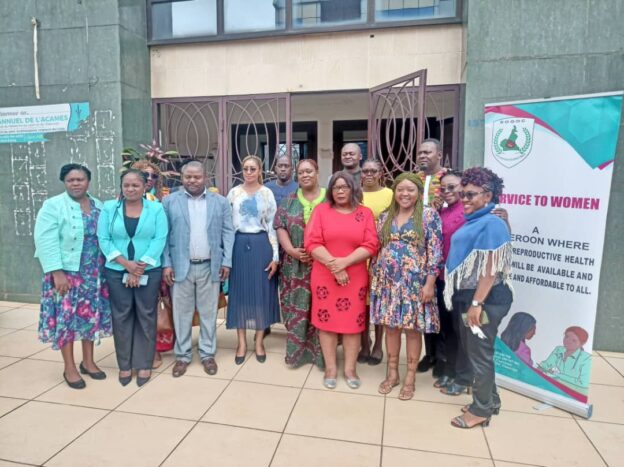
A ceremony to officially launch the next phase of the Advocacy for Comprehensive Abortion Care, ACAC project was organized on May 3, 2023, in Yaounde, Cameroon. At the official launch of the ACAC project extended to 8 months (April to December 2023), government officials, members of the Society of Gynecologists and Obstetricians of Cameroon, SOGOC, and media practitioners have expressed their commitment to intensify advocacy for abortion care services. The 4-year project implemented by SOGOC was extended to 8 months as indicated during the ceremony that took place on the 3rd of May 2023, in Nkol-Eton, Yaounde. ACAC’s Project Manager, Rita Yenjong said the extension phase will be beneficial in the sense that it will pave the way for more advocacy talks on eligible cases that are often complexified due to administrative and legal procedures. Rita Yenjong said: “We will be running from April to December 2023. And in this next phase, we are just going to continue with advocacy. Our focus is on ensuring that administrative and legal procedures for eligible cases to get abortion services are simplified because as it is now, the procedures are not very clear. And what the project has tried to do so far is to state these procedures.” According to Rita Yenjong, focus shall be laid on the timeframe granted to eligible cases to have access to abortion care services in recommended health facilities. She added: “We came up with a book, the referral part with eligible cases. We are also going to vulgarize this book and disseminate it in all ten regions so that all the stakeholders are engaged in ensuring that abortion services are being rendered to eligible cases and know exactly what to do in time. With this document, we also hope that eligible cases can have these services within 72 hours. In this next phase, we are going to strengthen advocacy and sensitization campaigns as well as to intensify our collaboration with the media which has been a fruitful partner…” Speaking on behalf of the president of SOGOC, the Secretary General of this organization, Dr. Mwadjie Darolles, first emphasized maternal mortality as a major public health problem worldwide and in particular in Cameroon, and which is an indirect indicator of the quality of the health system in a country. “The causes of maternal mortality are many and well-identified. Amongst these causes, there is abortion that occupies an important place. And in Cameroon, 1 in 4 maternal deaths are linked to abortion… Mutualizing efforts is very crucial in this endless fight, and that is why SOGOC being a network enriched with different experts working at the national and international levels, strives for the well-being and the amelioration of the reproductive health of populations by assisting the Ministry of Public health in its duties.” She said. Dr Mwadjie indicated that the 8 months extension granted to the ACAC project which is financed by FIGO (the International Federation of Gynecology and Obstetrics) ended in 2022, yet with this new prolongment, there will be a need to improve safe abortion access for eligible cases and accentuate communication. While addressing media practitioners, Dr Mwadjie Darolles, said the media as an ally of SOGOC has a key role to play. She underscored the need to inform women about the existence of legal abortion as concerns some who are victims of rape or who face complications in their pregnancies. SOGOC’s Secretary General stated that: “Legal abortion in Cameroon is possible when the pregnancy is as a result of rape, and when the health of the mother is in danger, that is when the pregnancy puts the health of the mother in danger. Yet in Cameroon, the challenges concerning the law is simply the application of the law because it is not a medical diagnosis to say that someone has been raped or not but the decision of the court of justice and the procedures are very long and strenuous.” Government officials present at this launch ceremony equally reiterated their commitment to work with SOGOC and the media for a positive output in this project. After the launch, members of the ACAC media network took active part in a one-day workshop that focused on mapping out an action plan on how the media can be proactive in reporting safe abortion for eligible cases within the framework of the project. Successes recorded by the ACAC Project Despite the numerous challenges faced by the ACAC project nationwide, several strides were recorded as stated by SOGOC. Among others, there is the creation of a network that has involved 23 member organizations working in areas of sexual and reproductive health and government ministries like public health, justice, women’s empowerment, and the family. There is the creation of a referral document for the management of survivors of rape; the creation of 10 regional offices for SOGOC which greatly helped in the implementation of the project in all the regions of Cameroon. Moreover, thanks to the ACAC project, over 15 health professionals were drilled on comprehensive abortion care techniques, and in return, these trained staff shared their learning with other colleagues. Also, the project successfully embarked lawmakers from the Senate and National Assembly. They have spearheaded discussions at the level of the parliament. In March and June 2022, during oral sessions, the situation on the MAPUTO PROTOCOL and abortion law was posed to the Minister of public health. Added to these records is the collection of abortion data through registers stationed in various district hospitals in Cameroon. And so far over 200 cases have been registered nationwide. The project also funded research focused on morbidity and mortality linked to unsafe abortions in Cameroon-Difficulties in accessing safe abortion. Elise Kenimbeni

Read More
 Scolarisation des Enfants Handicapés : Le MINAS et ses Partenaires Sensibilisent les Familles et les Communautés

Scolarisation des Enfants Handicapés : Le MINAS et ses Partenaires Sensibilisent les Familles et les Communautés

A travers la campagne « We ring the bell » en anglais et « Tirer la sonnette » en français, les cinq départements ministériels et l’ONG entendent mobiliser les acteurs sociaux à envoyer à l’école les enfants en situation de handicap. Le lancement officiel a eu lieu le 04 mai 2023. Mme Abang Grâce Larissa, maman d’un enfant vivant avec handicap, plus précisement un autiste, dans un témoignage poignant a représenté le prototype des efforts déjà fournis pour une meilleure inclusion des personnes vivants avec handicaps. Elle a en effet contacté la Cameroon Baptist Convention Health Service (CBCHS) pour qu’on l’aide dans la prise en charge de sa fille. Aujourd’hui, son enfant peut préparer. Elle a obtenu son diplôme. Elle accomplit d’autres tâches. Malheureusement, de nombreuses femmes dans cette situation n’ont pas eu cette opportunité d’offrir un avenir peu stigmatisant à leurs enfants. Du coup, la campagne « We ring the bell » en anglais et « Tirer la sonnette » en français, qui a officiellement pris son envol le 04 mai 2023 dans les locaux de la mairie de Yaoundé VI, vient à point nommé, selon l’ensemble des acteurs impliqués dans son opérationnalisation. Elle est d’ailleurs placée sous le thème « De la politique à la pratique : éducation inclusive pour les enfants handicapés au Cameroun ». Le but est en effet : « d’accroître le taux de scolarisation des enfants vivants avec handicaps en créant une société où chaque enfant, en particulier les personnes handicapées, ont accès à une éducation de qualité » l’idée étant « d’accélérer l’atteinte de l’ODD4 au Cameroun et de poursuivre la mise en œuvre de l’éducation inclusive ». Le Cameroun engagé pour l’inclusion Pauline Irène Nguéné, ministre des affaires sociales (MINAS), rappelle à ce propos que depuis 2016 le Cameroun participe à la campagne « We ring the bell » et « Tirer la sonnette », une initiative de Liliane Funds à travers la Cameroon Baptist Convention Health Services. Mme la ministre a d’emblée pris l’engagement dans ce sens de mettre en œuvre la politique du chef de l’Etat en matière inclusive. « Dans le monde, a-t-elle indiqué, 90% des enfants handicapés ne sont pas scolarisés ». Soit 33 millions d’enfants « en termes absolus » dans un contexte où 15% environ de la population mondiale vit avec un handicap. Plus loin, la ministre souligne que la problématique de la prise en charge de l’enfant handicapé au Cameroun fait l’objet des politiques publiques dont l’objectif est d’assurer « le continuum » de l’éducation pour cette catégorie d’enfant. C’est à ce titre qu’elle salue la co-organisation de cet événement avec les ministères en charge de l’éducation de base (Minedub), des enseignements secondaires (Minesec), de l’enseignement supérieur (Minesup) et de l’emploi et de la formation professionnelle (Minefop). La ministre de la promotion de la femme et de la famille (Minproff) a également pris part aux travaux. Mais d’après la MINAS, beaucoup reste encore à faire quant à cette préoccupation à caractère mondial. Les personnes vivants avec handicaps font face à « certaines barrières et obstacles multiformes ». Certains sont liés aux coûts et méthodes d’enseignement, d’autres à l’accès aux technologies de l’information et de la communication tandis qu’on en trouve qui sont propres à l’accessibilité aux infrastructures scolaires. La conséquence directe est « l’exclusion sociale des personnes handicapées », dénonce la ministre car celles-ci « font l’objet de discrimination » et ne bénéficient pas toujours « d’une éducation et d’une formation professionnelle appropriées », retient-on de la MINAS qui a « tiré la sonnette » pour l’éducation inclusive. Lui emboitant le pas, le maire de la Commune de Yaoundé 6 a rappelé que « l’éducation est à la base du développement ». Pour Yoki Onana, « les conditions d’existence des personnes demeurent encore difficiles » d’autant plus qu’elles les « empêchent de jouir de nombreux droits, donc celui de l’éducation. » La première barrière est l’accès à l’éducation, a-t-il réitéré. Pour lui, des initiatives de cette nature supposent assurément une action collective surtout dans l’optique de l’émergence du Cameroun à l’horizon 2035. Cela passe clairement par l’inclusion prônée par le président de la République, a soutenu l’exécutif communal notamment en contexte de décentralisation. Une lutte commune L’accès à l’école pour les enfants handicapés connait des avancées, selon le directeur de la protection sociale des personnes handicapées et des personnes âgées au MINAS. Aussi, au-delà de l’existence d’un cadre légal, le Cameroun abrite de nombreuses institutions publiques et privées qui travaillent à promouvoir l’inclusion des personnes en situation de handicap et qui soutiennent l’éducation puis la formation professionnelle via les départements ministériels sollicités. Le pays a par exemple signé et ratifié des conventions internationales relatives à l’inclusion des personnes en situation de handicap dont l’une des manifestations est le Décret N°2021/250 du 27 avril 2021 portant ratification du Traité de Marrakech visant à faciliter l’accès des aveugles, des déficients visuels et des personnes ayant d’autres difficultés de lecture des textes imprimés aux œuvres publiées. Toujours dans la même veine, des écoles essentiellement inclusives ont été créées par le ministère des affaires (MINAS) à côté de celles qui ont été réadaptées pour les besoins de la cause. Avec les organisations de la société civile (Osc), des ordinateurs adaptés pour les personnes déficientes visuelles ont été mis en place. Le personnel enseignant a bénéficié des sessilns de renforcement des capacités. Plus de 4000 enseignants ont été formés en matière d’enseignement inclusif. Le rôle de la société civile L’Ong Sightsavers, qui est l’un des partenaire des départements ministériels impliqués dans le projet d’inclusion des enfants handicapés, travaille avec ces ministères pour une plus grande inclusion notamment dans la promotion de l’éducation. Selon ses responsables, plusieurs conventions et engagements ont été signés ou passés avec les administrations publiques, les Communes, les acteurs de la société civile, les familles et les communautés. Deux programmes ont été élaborés. Le dernier est intitulé « A better world », explique Acha Rita de Sightsavers. Un cahier de charges en cours d’élaboration avec le MINAS pour diverses activités est sur les rails, a-t-elle indiqué. Dans sa demarche, l’ong a instauré la notion de « Champion de l’inclusion » à destination des écoles afin de distinguer « les meilleures en matière d’inclusion ». Elle se deploie en outre à travers près de 70

Read More
 MASO ACTE 3 : AVEC 100FCFA OFFRE-TOI UNE RETRAITE PAISIBLE

MASO ACTE 3 : AVEC 100FCFA OFFRE-TOI UNE RETRAITE PAISIBLE

Vous voulez vous offrir une retraite paisible ? Pas de stress, votre solution c’est la MASO ! La Mutuelle d’Assistance et de Solidarité (MASO) de RENAPROV FINANCE S.A vous offre une garantie en termes de sécurité sociale. Commencez à cotiser des aujourd’hui 100 FCFA, ceci de Lundi a Vendredi dans le cadre de l’option MASO CLASSIQUE et 500 FCFA pour MASO GOLD. Avec la MASO un mutualiste ayant enregistré 20 années de cotisation consécutive et ayant atteint 60 ans bénéficie d’un capital de 5 Millions de FCFA pour investir et se relancer durant sa retraite. Ceci fait partie des avantages direct que vous confère le statut de mutualiste. A partir de 100 Francs CFA cela est possible. Il suffit juste de souscrire à la Mutuelle d’Assistance et de Solidarité de RENAPROV FINANCE S.A. Et pour participer à la grande TOMBOLA de la MASO Acte 3 le 9 juillet 2023 au palais polyvalent des sports de Yaoundé, cotisez et soyez à jour jusqu’au 29 Juin 2023 à 16 heures. Si vous n’êtes pas encore parmi les nombreux mutualistes de la MASO, n’hésitez plus, inscrivez-vous chez un agent MASO / RENAPROV FINANCE S.A ou rendez-vous dans une agence de RENAPROV FINANCE S.A ou encore à ROYAL FM 88.4 au deuxième étage de l’immeuble Binam face agence Camair co à Yaoundé. Pour plus d’informations voici les contacts du pool gestion MASO :   (+237) 699.44.29.77/ 674.39.27.46/ 695.33.95.03/690 20 28 40 Voici la version audio :

Read More
 Joseph Kamgue Abbe, Officially Installed as Regional Head of BUNEC Centre

Joseph Kamgue Abbe, Officially Installed as Regional Head of BUNEC Centre

The new regional Head of BUNEC Centre was installed on April 27, 2023, in Yaounde by General Manager, Alexandre Marie Yomo. 52 years old Joseph Laurent Kamgue Abbe was officially installed on Thursday, 27th April 2023 in Yaounde during a ceremony that gathered several officials, traditional chiefs, and relatives. Appointed on December 22, 2022, by the executive board of the National Civil Status Registration Office, known by its French acronym as BUNEC, Joseph Laurent Kamgue Abbe replaces Joseph Sylvain Endezoumou who occupied this post for close to six years. As underscored by the General Manager of BUNEC, Alexandre Marie Yomo who chaired the ceremony, the appointment of Mr. Kamgue Abbe by the executive board comes in as a quest for the amelioration of governance, efficiency and to strengthen the different actions carried out by BUNEC all over the national territory. Bracing up Challenges In his keynote address, Mr Yomo Alexandre Marie, General Manager of BUNEC said the newly appointed regional Head of the Centre has to show proof of the choice bestowed on him by the executive board, which certainly focused on his intellectual and academic references. He outlined the challenges the new regional Head of the BUNEC Centre will face, which are diverse and need to be handled with a lot of precaution. Besides, he called on Mr. Kamgue Abbe Joseph Laurent to keep a fruitful collaboration with different administrative, judicial, health, and council authorities as well as other stakeholders who have a pivotal role to play in the identification ecosystem of the region. Mr Yomo in his speech equally invited the new regional Head of BUNEC Centre to pay specific attention to: the reinforcement of service offers of the civil status registry in terms of training of staff, distribution of registrars, follow-up campaigns linked to registration; and the reinforcement of the coordination between key actors of identification ecosystem. The General Manager of BUNEC, Alexandre Marie Yomo also cited some relevant figures which need to be curbed by Mr. Kamgue Abbe and his teammates, as he takes on duties. “At this moment, the annual rate of birth registration in the Centre region is estimated at 54.9% and which is under the national rate evaluated at 69%. In the same vein, I wish to outline that, in the course of 2022, we have identified more than 210.000 schooled children who do not have birth certificates.” Mr. Yomo Alexandre Marie said. These figures as he explained are key indicators of a drop-down on the civil status registry and must be tackled efficiently. Other key challenges which need to be braced up such as the reinforcement of massive sensitization campaigns on the importance of civil status registration were equally unveiled by the General Manager of BUNEC. He pointed out the fact that the civil status registry impacts various national policies drawn up by the Head of State. He indicated that to achieve Sustainable Development Goals by 2030, there is a need to accentuate birth registration in particular and amplify actions for people to register. BUNEC’s General Manager assured the newly installed regional Head of his full support and availability for the successful accomplishment of his missions. About Joseph Kamgue Abbe Joseph Laurent Kamgue Abbe, newly appointed and installed regional Head of BUNEC Centre was born on January 10, 1971, in Evodoula, Lekie division in the Centre. He grabbed in 1999, a Bachelor’s Degree in Public Law and later on a Professional Master II, both at the University of Yaounde 2. On the professional plan, he has occupied the post of Adviser in industrial property at Global and Trade firm, GTT in Paris, France from 2005 to 2020.  And from 2020 to 2022, he served as a Jurist consultant at MAETUR in Cameroon. Added to this professional career are series of training at the higher teachers’ college of CAHAN in France and at the University of Paris XI. After a professional internship at BUNEC, Mr. Kamgue was recruited in 2022 and has served as one of the staff in the administrative and financial department until he was appointed regional head of BUNEC Centre. Joseph Laurent Kamgue Abbe is a 2nd class traditional ruler of the Mvog Onamnye 2 village in Evodoula. Elise Kenimbeni

Read More
 Civil Status Registry in Cameroon: West Region Goes Digital, PAMEC II Steps in & Trains 5 Councils on IT

Civil Status Registry in Cameroon: West Region Goes Digital, PAMEC II Steps in & Trains 5 Councils on IT

In line with the series of training sessions on the digitalization of the civil status registry in Cameroon, the PAMEC II programme has launched in Bafoussam, West region a three-day workshop for registrars and clerks of five targeted councils. Participants convened at this three-day workshop that takes place from the 25 to 27 April 2023 in Bafoussam, West region of the country are from the Foumban, Dschang, Bangou, Bafoussam II and Mbouda councils. These five councils targeted within the framework of the pilot phase of the Support Program for the Modernization of Cameroon’s Civil Status Registry known by its French acronym as PAMEC II have been identified as those with a crucial need to upgrade their registration process. One of the trainees at this workshop, Emmanuel Sejine said the teaching has been fruitful and will help them in fulfilling their daily activities. Emmanuel Sejine, municipal officer from Mbouda said: “This training will not only help us to upgrade our knowledge but it will boost our activities in terms of registration of birth certificates, marriages, etc. Thanks to this workshop we are getting new tools as this will change several issues in terms of time and financial constraints. Concretely, these IT skills will reduce the cost of registers, save time for the staff of councils and the population…” On her part, Diane Lambo Yenika, registrar officiating at the Dschang council confessed she knew little of information and communication technologies before this workshop. Thanks to the PAMEC II programme co-funded by the German cooperation, GIZ and the Korean International Cooperation Agency, KOICA, these other sets of trainees will upgrade their knowledge with basic information and technology skills. “I think the digitalization of the civil status registry is very important simply because it serves archives; it helps us to easily register our population; to fight against fake certificates and with the help of computers we have an advantage of automatic corrections made.” She indicated after the training session. Moreover, Diane thinks such training sessions should be extended to all councils’ staff. According to Essama Dieudonne, one of the trainers of this second cohort of registrars and clerks of the 20 councils selected for this pilot phase, the methodology used to school the various participants is based on 30% of theory and 70% of practices. He said: “We opted for an andragogical methodology that focuses on 70 % of practice and 30% of theory because we understood from previous workshops that participants assimilate easily when they practice themselves activities. Furthermore, there is a simplified guide with six modules that helps us as trainers to facilitate the training.” These training sessions mainly focus on: the genesis of digital technologies; the field of application; the benefits of using digital technologies; the architecture and functioning of a microcomputer; input devices; the output peripherals; storage devices; operating systems and application software; how to start and stop a computer.         The Support Program for the Modernization of Cameroon’s Civil Status Registry, PAMEC II has been initiated to fill the gaps observed in several councils where few staff are computer literate. It was observed that registrations for birth, death, and marriage certificates were fully manual. Therefore, the fulfillment of this gap in basic IT skills sounded like a critical issue to be addressed through this pilot project which is placed under the banner of the Ministry of Decentralization and Local Development and the National Civil Status Registration Office, BUNEC. Elise Kenimbeni

Read More
 Cameroon: Gov’t & United Nations Dev’t Programme Set up Dynamics to Accelerate Local Development in 374 Councils

Cameroon: Gov’t & United Nations Dev’t Programme Set up Dynamics to Accelerate Local Development in 374 Councils

A one-day workshop to present strategic studies conducted within the framework of the support project for the acceleration and furthering of decentralization and local development in Cameroon took place on April 25, 2023, in Yaounde. Chaired by the Minister of Decentralization and local development, Georges Elanga Obam alongside Resident Representative of the United Nations Development Programme, Aliou Mamadou DIA, the workshop that took place on Tuesday 25th April 2023 in Yaounde, was aimed at presenting officially the various strategic tools produced to stakeholders in the decentralization process in Cameroon, notably regional and local authorities, technical and financial partners. During the official opening ceremony, it was indicated that the strategies put in place will provide decentralization actors with working tools that will enable them to improve the financing framework and the financing of local development to ensure better development planning at regional and local levels, taking stock of the 2020-2030 National Development Strategy, NDS. In his keynote address, Mr. Aliou Mamadou DIA, Resident Representative of the United Nations Development Programme said UNDP is a core partner to governments. And as the main agency of the United Nations that focuses on issues of development, UNDP contributes to the achievement of Sustainable Development Goals, SDGs. According to Mr Aliou Mamadou DIA, this document is a referential tool that will enhance local development as it defines all financial strategies to be carried out in the short, medium and long term. “In addition to the aforementioned strategic instruments, the project is reliant on other major results. These include the development and validation of the 2021 statistical yearbook and the regional and local authority control and an audit guide, which will allow for the operational monitoring of decentralization and the actions carried out in the territories. The project has also accompanied the process of developing regional development plans for the regions with special status in the North-West and South-West regions…” He added. On his part, Minister of Decentralization and local development, Georges Elanga Obam while presiding over the workshop, saluted the technical and financial support of the United Nations Development Programme, UNDP. He emphasized the acceleration of the decentralization process which still faces some bottlenecks. Yet, called on various stakeholders to accompany the project for positive results. It is worthy to note that, the support project for the acceleration and furthering of decentralization and local development is a 5-year programme (January 2021 to December 2025) that covers 374 rural and urban councils in Cameroon. The objective of this project is to help the government improve the living conditions of the population at the grassroots level by strengthening the capacities of regional and local authorities for sustainable and inclusive local development. The project addresses the main challenges identified notably the quality and quantity of human, material and financial resources, the lack of infrastructures, an insufficient supply of and access to basic socio-economic services, the low level; of involvement of the population in the management of local affairs, and the poor coordination of towns. Elise Kenimbeni

Read More