Green Development Advocates, Strikes Gov’t’s Attention on the Non-Respect of Some Forestry Laws

Green Development Advocates, Strikes Gov’t’s Attention on the Non-Respect of Some Forestry Laws

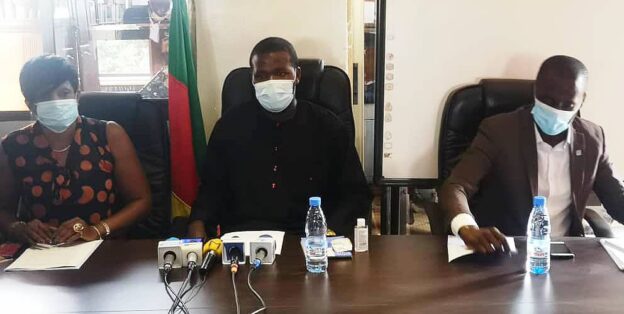
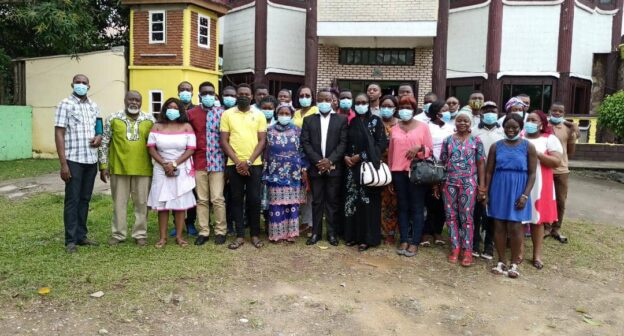
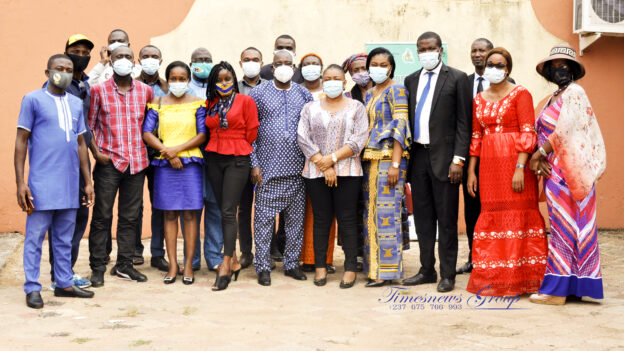
“We are here to look for ways and means based on the existing legal structures for the acquisition of licenses for local communities and be able to make some propositions to the government in order to ease conditions for acquiring these documents.” said Moses Ncho Tabe, one of the participants at the two day workshop organized by Green Development Advocates (GDA). Moses Ncho Tabe, Executive Director of the food and rural development foundation (FORUDEF) was speaking on Monday 22nd December 2020 in Mbankomo, outskirts of Yaounde, where close to 20 participants were convened for a two day brainstorming on the legal framework surrounding the commercialization of Non-timber forest products (NTFPs). He added: “We know that government has laws which need to be respected. First of all, the law of 1994 allows people to use non-timber forest products but it doesn’t give them the room to get those same products in commercializing. And we equally know that the needs of rural people do not end in eating, they need other things to make their lives better. They need to sell in order to have some revenues.” According to the Program Coordinator of Green Development Advocates, there are several incentives put in place by the government to regulate the sector in order to favour rural people, yet, some hinderances appeared. Aristide Chacgom said: “Since the 1994 law, there is a regulatory document that exists but this has been too rigid for local communities who could not easily reap and commercialize NTFPs because they had to obtain an exploitation licence. With the two important decisions signed by the ministry of forestry and wildlife, the sector has been reorganized into three categories. And our advocacy is to lead talks that will help in the effective implementation of decisions taken on the field.” From explanations gotten from experts and organizers of the said workshop, NTFPs are of great importance in most developing countries like Cameroon. As concerns the socio-cultural aspect, they play a key role in feeding populations and contribute to the strengthening of food security. NTFPs are used in traditional medicine and constitute raw materials for crafting as well as construction materials for housing. On the environmental aspect, they help in the biodiversity conservation. It is for such reasons that, a legal framework was adopted on April 2019 by the ministry of forestry and wildlife (MINFOF).  This legal framework outlines two major decisions. Decisions N ° 209/D /MINFOF/CAB and N°210/D/MINFOF/CAB of  April 26,2019 respectively relating to the classification of products notably special forest products and non-timber forest products as well as setting methods of collecting and putting into circulation secondary non-timber forest products. As a civil society organization based in Cameroon with a particular focus on indigenous people, Green Development Advocates works for the legal respect of social and environmental issues. The organization created in 2009 and officially legalized on the 30th of July 2011 has as core mission, that of contributing to the sustainable development of African tropical forests in line with the respect of cultures, rights, interests and needs of African populations.                 Elise Kenimbeni

Read More
 Promo-Entrepreunariat Network Ponders Mining Job Creation

Promo-Entrepreunariat Network Ponders Mining Job Creation

The parliamentary network for the promotion of private entrepreneurship dubbed “Promo Entrepreunariat” was received in audience on December 16, 2020 in Yaounde by the minister of mines, industry and technological development. For close to two hours, the parliamentary group led by honourable Roger Melingui exchanged with Minister Gabriel Dodo Ndoke on promising venues opened in the mining and industrial sectors in Cameroon. Taking the lead, the president of “Promo Entrepreunariat” first made a quick description and presentation of members of the young and dynamic network created on the 5th of June 2020 by an arrêté signed by the speaker of the national assembly. Roger Melingui said the network that brings together MPs and senators is out to curb unemployment through the increase of enterprises and the creation of self-employment. Honourable Roger Melingui seized the occasion to thank Minister Dodo Ndoke who despite short notice and his busy schedule created room for such a crucial encounter. He equally praised the Head of state’s move in creating SONAMINE, a public enterprise that will develop and promote the mining sector. At the end of the meeting, he said: “Our focus at this meeting was to get appropriate information from him on what the ministry is concretely doing and the various plans underway. And as parliamentarians, it was an opportunity to thank him and thank the Head of state for signing this very important decision so that we have a tool to make things real. We also had the opportunity to explain what our network is doing. We are convinced that the government can solve the problem of unemployment in our country and this can be done through private entrepreneurship.” Another point highlighted by Honourable Roger Melingui was the support to be granted to the network by the minister as initiatives have been undertaken to host the first rural entrepreneurial fair of the Kadey to hold from the 3rd to the 4th February 2021 in Batouri, East region. Minister Gabriel Dodo Ndoke on his part, appreciated the transformative approaches put in place by the parliamentary network “Promo Entrepreunariat”. “We told to the parliamentarians that at this moment private investment is the key factor in the development of our industrialization master plan. And as you may know, the mining sector is fast growing with great projects that will be developed as from 2021. We equally talked of issues surrounding quality and standards. It is important for local industries to be competitive and to be competitive, they have to enhance the quality of their products.” He said. As a reminder, several perspectives have been projected in the mining, industry and technological development subsectors as outlined by the Minister recently before the finance and budget committee of the national assembly. The numerous projects undertaken by the government, following the road map prescribed by the Head of State, Paul Biya, will generate funds, boost the country’s economy and help create more jobs. Gabriel Dodo Ndoke said: “ Today, we dream of a sub-sector in which world-class mining projects such as the Mballam project, the Minim Martap and Ngaoundal bauxite, the rutile of Akonolinga, the iron of Akom II, the small gold mine of Colomines, or the agro-industrial technopole and the digital technopole are up and running.” According to Henri Severin Assembe, permanent secretary of the network, “Promo Entrepreneuriat” intends to carry-out in the days ahead more activities on the field after a series of sessions on territorial entrepreneurship.                   Elise Kenimbeni

Read More
 National Assembly: Mayo Sava’s MP, Yacouba Yaya Died

National Assembly: Mayo Sava’s MP, Yacouba Yaya Died

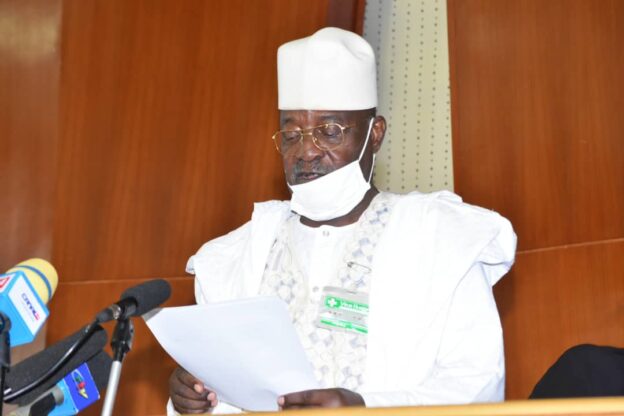
Yacouba Yaya, Member of Parliament of the Mayo Sava constituency in the Far-North region of Cameroon died on Sunday December 13, 2020 after a prolonged illness according to sources. The discrete and calm MP has been absent since the start of the 3rd ordinary session of parliament at the national assembly. Right Honourable Cavaye Yeguié Djibril, speaker of the national assembly who is equally MP of the same constituency announced in a press release signed on the 14th December 2020, that honourable Yacouba Yaya, member of the foreign affairs committee died at the national social insurance fund hospital. The national assembly since the start of the 10th legislative year has already witnessed three death.             TimesNews2

Read More
 Éducation Inclusive : Les Enseignants à l’école des signes

Éducation Inclusive : Les Enseignants à l’école des signes

L’objectif est de faire de l’école ordinaire, un cadre de formation et de socialisation pour tous les enfants quelle que soit leur situation.     L’école ordinaire doit accueillir tous les enfants et devenir inclusive. C’est le crédo des instituteurs qui ont pris part à l’atelier de formation des enseignants des écoles partenaires en langue des signes organisé au quartier Mimboman à Yaoundé. C’était du 08 au 11 décembre 2020 dans les locaux de Promhandicam-Association, un centre spécialisé dans la prise en charge des personnes vivant avec un handicap, en particulier les tout-petits. Ce sont au total 24 instituteurs et institutrices venus des 7 arrondissements du département du Mfoundi, dans la Capitale politique du Cameroun, qui ont été formés sur plusieurs modules : la communication et la langue des signes et sur la surdité ; les paramètres de la langue des signes française ; les formes et chiffres ; le vocabulaire et l’expression thématique ou encore les pratiques communicationnelles et l’environnement scolaire, entre autres. La représentante de madame la déléguée départementale du ministère de l’éducation de base (Minedub) s’est félicitée de ce que les enseignants travaillent à gérer une ou plusieurs classes inclusives, celles dont la vocation est d’intégrer les élèves avec ou sans handicap afin d’apprendre ensemble. L’accent a été mis sur les malentendants victimes de surdité. L’objectif ici est de donner une chance égale à tous les enfants dans le but de participer à la gestion des affaires publiques, a expliqué l’une des formatrices, madame Titcho. La spécialiste du langage de signes rappelle à ce propos que le Cameroun signataire de plusieurs conventions de protection de droits des enfants, travaille en synergie avec les organisations de la société civile (Osc). C’est le cas notamment pour Center Cameroon Cluster Programme (Cccp), initiateur du projet qui jusqu’ici a mené une pléiade d’activités avec entre autres ; les magistrats municipaux, les directeurs des écoles et autres acteurs clés. Claude François Kamen, Coordonnateur du Cccp a souligné le fait ces enseignants formés sont ceux ayant des enfants avec des déficiences auditifs dans leurs salles de classes. « Il est question de renforcer la communication entre les enseignants et leurs élèves. Cela va de soi, on ne va pas s’arrêter en si bon chemin parce que ce n’est que le début. Maintenant aussi, les enfants déficients auditifs vont renforcer leurs capacités pour la communication soit fluide. Lorsqu’on termine cet exercice bien évidement on ne peut pas dire que les enseignants vont rentrer chez eux et ils vont continuer. Il faudrait qu’on s’assure qu’effectivement il n’ya pas de couac sur le terrain et que nous fassions un suivi permanent. Il y’a des agents qui vont descendre sur le terrain pour s’assurer que ce qui a été acquis comme notion est mis en pratique sur le terrain. Cela rejoint d’autres activités que nous menons dans le cadre de la promotion de l’éducation inclusive. Pour se limiter sur la langue de signes, nous allons organiser l’année prochaine, un séminaire de recyclage des enseignants qui ont pris part à cette formation de trois jours» Cet atelier est une réponse des participants en vue d’atteindre l’objectif de développement durable N°4 (1) qui vise à « faire en sorte que toutes les filles et tous les garçons suivent, sur un pied d’égalité, un cycle complet d’enseignement primaire et secondaire gratuit et de qualité (…) » tel que souligné au cours des travaux de trois jours. Les enseignants ont d’ailleurs livré leurs motivations et leurs impressions. C’est le cas de Francine Aurèlie Angeu de l’Esseda et Bertrand Abanda de l’école publique de Kodengui. Selon Francine Aurèlie Angeu, Directrice de l’Esseda, école spécialisée pour enfants vivant avec un handicap, cet atelier est très important. Bertrand Abanda qui prend part à cet atelier organisé par le Cccp pour la deuxième fois se dit ravi des efforts entrepris jusqu’ici et souhaite que ces actions soient pérennisées. Francine Aurèlie Angeu dit : « Nous ne voulons plus que les enfants handicapés soient admis seulement dans les écoles spécialisées. Nous voulons que les enfants quel que soit leurs handicaps soient acceptés et inclus véritablement dans ces écoles. Le tout n’est pas seulement d’accepter ces enfants, il faut que les instructeurs qui reçoivent ces derniers soient aptes, qu’ils maitrisent les techniques et outils de communication. La formation a été bien reçue par ces enseignants maintenant il reste la pratique. » A titre de rappel, le Cccp chapeauté par Promhandicam bénéficie d’un accompagnement financier du CBM.               Hervé Bertrand Ndombong

Read More
 2020 November Session of Parliament Ends with State Budget and 7 Bills Adopted

2020 November Session of Parliament Ends with State Budget and 7 Bills Adopted

  The one month session dedicated to the scrutiny of bills and adoption of the state budget for the 2021 financial year officially closed up on Friday 11th December 2020, at the conference center in Yaounde. The state budget which stands at 4.865 Thousand Billion 200 million CFA francs in terms of revenues and expenditures was adopted as well as 7 bills. In his key address, the right honourable, Speaker of the national assembly has appreciated the overall activities that made up the 3rd ordinary session which kicked-off on November 12. Cavaye Yeguié Djibril said the session which was marked by extra parliamentary activities and diverse discussions organized by parliamentary networks, is a proof of dynamism which characterises the representatives they are. The speaker equally laid emphases on the current battle against the Covid-19 pandemic which has increased in some parts of the country and called on people to keep observing barrier measures. Another key point on which he stressed in his speech was to appease both the Cameroon football federation (FECAFOOT) and the Cameroon professional league (LFPC), following ongoing crisis between the two football bodies. Cavaye Yeguié Djibril on behalf of all the MPs said there is need to exercise restraint and apply wisdom as the country prepares to welcome two football jamborees in 2021(CHAN) and 2022(AFCON). Honourable Abe Michael Ndra from CPDM’s Donga-Matung West constituency in the North-West region, at the end of the closing ceremony praised the quality of discussions and works that took place during the one month session at the national assembly. He said: “We hope that the ministers are going to do their work. They proposed a good number of things for the people of this country. Amongst others, 7 bills were adopted during the just ended session.” CPDM’s MP from the Mayo-Tsanaga constituency in the Far-North region, Dr Djibrilla Kaou said the November session dedicated to the scrutiny of bills and the state budget was quite rich with intensive activities. He said members of parliament have experienced innovative approaches in terms of exchanges with government’s officials. Honourable Kaou said: “The number of parliamentary networks has increased and apart from our normal sessions we had what we called special sessions where government officials were invited for discussions and interactions with members of parliament. These has enriched the 3rd session of the year.” On her part, Honourable Damdam Marie of the Diamaré Center in the Far-North region said there has been great changes during the 3rd session of the National assembly and she is satisfied. “As a Member of Parliament while at home, I will ask my people to keep following measures put in place in order to fight against the Covid-19 pandemic and as citizens, to contribute to the development of the country. You know, populations have the role to fully participate in the payment of taxes which are necessary for the economic development of Cameroon.” She said. Honourable Koupit Adamou from the Cameroon democratic Union of late Ndam Njoya, at the end of the session expressed dissatisfaction with regards to the non-respect of procedures to be followed by the government as concerns tabling the finance bill. Koupit Adamou in the interview granted to the media said: “The budget was voted. We are not totally satisfied because in the opposition camp we were against the stated budget. We asked in the first place that the issue on the non-respect of the time frame set for the arrival of the budget at the national assembly should be reviewed. As usual this was not executed. And we could not contest further because we were faced with the great majority of MPs from the ruling CPDM party. We equally expressed our expectations as to the reduction of government’s lifestyle, fiscal pressure etc.” Honourable François-Xavier Mpon from the Mbam and Inoubou Division of the Center region came up with the call made by the right honourable, speaker of the national assembly who underscored the need for a collective collaboration. For the CPDM MP, this has been the most interesting part of the speech of Cavaye Yeguié Djibril.  “For me, it is a sort of appeal to all the children of Cameroon, in fact the entire country. Because when we are separated, there is a lot of waste of energy. We have to bind our forces to make things move ahead.” François-Xavier Mpon said. As MPs leave the November session being the last of the year, next appointment is taken for March 2021.                     Elise Kenimbeni

Read More
 Yaounde II University Embarks on Strategic Development Plan Worth 154 Billion CFA Francs

Yaounde II University Embarks on Strategic Development Plan Worth 154 Billion CFA Francs

Speaking on December 10, 2020 in Soa, outskirts of the nation’s capital where the university campus of Yaounde II is situated, the Rector said the press conference comes ahead of a session dedicated to the external validation of the strategic development plan (SDP) on the 14th December 2020. Professor Adolphe Minkoa She said the strategic development plan (SDP) is an important pilot tool for any structure or institution willing to master its development. And the government requires from universities the elaboration and setting- up of strategic development plans within the framework of the general development policy in higher education sector. The aim is to further transform projects undertaken within the university’s premises and capitalize on its geo-strategic potentials, its 312 acres of land available, the operational strategies put in place in the 5 training schools or institutions that make up the University of Yaounde II. As announced during the press conference by the Rector, one of the major challenges of the Yaounde II University is to make it the first social science technology centre in Cameroon and even in Central and West Africa. The university currently managed by Professor Adolphe Minkoa She intends to launch for its SDP, a five year plan that will run from 2021 to 2025 with a budget of 154 Billion CFA francs. According to the Rector, 5. 920 250 000 CFA francs are disbursed for skills upgrade as well as the quality of training, teaching and professionalization in an employment perspective. While 2.648 423 829 CFA francs will be injected in the infrastructural  modernization of centres, laboratories just to name these few, the putting in place of a strategic plan for research normalization within the university as well as the scientific production of the institution. During the exchange with media practitioners, Professor Adolphe Minkoa She was questioned on the functioning, operational activities and recruitments undertaken at the level of his university. Concerning recruitments of PHD lecturers, the Rector outlined records made so far. He said the University of Yaounde II has made great strides. In 2019, 135 new lecturers were recruited and are presently on duties. Yet on the list of 135, only 2 from the diaspora have not shown up and procedures are been carried-out at the level of the minister of state, minister of higher education for the replacement of this staff. The question on inclusive education notably that of students suffering from visual impairment was not left aside during the briefing session. The Rector said the university has put in place some means to address the issue. He took as case study, the recent PHD defence of Dr Achille Mongang Djoumeni, visually impaired who to him has made an excellent passage before juries. The SDP to be put in place will help ameliorate infrastructures, define the vision and dreams of a futurist university campus as underscored by the Rector. Reason why a memorandum of understanding was signed with Elite Trends for the construction of the first phase of 2500 rooms proper to the university as he said to the press.     Elise Kenimbeni

Read More
 MINAS: 710 Millions de Francs CFA pour les Communes

MINAS: 710 Millions de Francs CFA pour les Communes

C’est dans le cadre de la décentralisation qui suit son cours. L’objectif est de contribuer au bien-être des populations selon la ministre des affaires sociales.     Le processus de décentralisation est suivi de près par le ministère des affaires sociales (Minas). Pauline Irène Nguéné a inscrit ce chantier gouvernemental dans les activités marquant la quatrième édition de la semaine de la solidarité nationale et de l’entrepreneuriat social (SESES), dont les travaux vont du 08 au 11 décembre 2020 à Yaoundé. Le thème retenu à cet effet est « promouvoir le développement social local ». L’événement a bénéficié de l’accompagnement  du ministre de la décentralisation et du développement local (Minddevel). On retient au terme de la première journée que 710 millions de francs CFA ont jusqu’ici été injectés par le ministère dans la mise en œuvre de la décentralisation. « Nous voulons plaider auprès des collectivités territoriales décentralisées pour la mise en œuvre effective et progressive d’une assistance sociale locale », a dit Pauline Irène Nguéné. L’objectif selon la ministre est de « maintenir un  cadre de visibilité dans tous les secteurs de la vie socio-économique » en assurant l’ancrage de l’assistance sociale en matière de décentralisation. Mieux, il s’agit concrètement de  «  s’attacher au développement de politiques de prévention des exclusions sociales sous toutes les formes »  , affirme la ministre. Il est question d’améliorer les conditions de vie des populations avec leurs contributions et à tous les niveaux. Le Minas veut également faire d’elles des bénéficiaires et des acteurs de l’assistance sociale. Le ministre de la décentralisation et du développement local (Minddevel) a quant à lui insisté sur la synergie d’actions et de la solidarité gouvernementale qui permet à l’État, et donc au MINAS, d’assurer sa mission. Georges Elanga Obam a précisé que le Cameroun est résolument engagé dans le processus d’accélération de la décentralisation à prescrite par le président de la République. A ce propos, le Minddevel note que l’exercice du transfert de compétences dans le secteur social depuis 2010 est effectif. Trois compétences transférées par l’État aux CTD sur soixante-trois sont dévolues au MINAS. Il s’agit de « l’attribution des aides et des secours aux nécessiteux et aux indigents », « la participation à l’entretien et à la gestion des centres de promotion et de réinsertion sociales » et enfin « l’assistance aux établissements sociaux ». Contributions Augustin Tamba, le président de l’association Communes et villes unies du Cameroun (Cvuc), a indiqué que le choix du thème atteste de ce que l’assistance sociale est « une préoccupation majeure qui met cette problématique au cœur de la décentralisation » ; « une synergie agissante », selon le maire de Yaoundé 7. Pour lui, Cvuc compte jouer son rôle car les maires doivent intégrer ou continuer de le faire l’assistance sociale dans les plans communaux de développement (PCD). La coordinatrice nationale du programme national de développement participatif (Pndp) a quant à elle précisé que plusieurs projets ont été portés par sa structure. Toutes les Communes en ont bénéficié a-t-elle dit. L’objectif ici est de renforcer les finances locales pour des infrastructures sociales économiques durables. D’après la coordinatrice, le Pndp est par conséquent devenu un partenaire  du Minas.                       Timesnews2

Read More
 Budget 2021 : Gabriel Dodo Ndoke, la Qualité pour réussir les Grands Projets Transformateurs de la SND 2030

Budget 2021 : Gabriel Dodo Ndoke, la Qualité pour réussir les Grands Projets Transformateurs de la SND 2030

Gabriel Dodo Ndoke, ministre des mines, de l’industrie et du développement technologique était face à la commission des finances et du budget de l’assemblée nationale ce 2 décembre 2020.   Comme tous les patrons des différents départements ministériels, le ministre des mines, de l’industrie et du développement technologique (Minmidt) s’est prêté à l’exercice habituel, celui de défendre son budget pour l’année 2021. Gabriel Dodo Ndoke a présenté à la commission des finances et du budget, que préside l’honorable Rosette Ayayi, les grandes lignes qui vont sous-tendre le budget de neuf milliards cent quatre-vingt et seize millions (9 496 000 000) FCFA alloué à son département ministériel. Selon le ministre Dodo Ndoke, il est question de se projeter sur certains grands axes en droite ligne avec les orientations du Président de la République. Il a indiqué, entre autres, la poursuite de la maturation et la priorisation des grands projets transformateurs dans le cadre de la stratégie nationale de développement (SND) 2030. En terme de grands projets figure par exemple le projet de technopôle agro-industriel de Ouassa Babouté qui couvre six régions du pays. Ce projet permettra de créer plus de 2.000.000 d’emplois sur 10 ans. En 2021 il sera question d’identifier et d’organiser les bassins de production, de recruter un promoteur pour la réalisation des études architecturales et d’ingénierie et l’opérationnalisation de ce projet tel que souligné par le ministre dans sa présentation. Durant l’année 2021, il sera également question de développer l’industrie pharmaceutique locale qui va permettre de valoriser la médecine traditionnelle et le patrimoine thérapeutique national ; mettre en œuvre de manière coordonnée les différents piliers du plan directeur d’industrialisation (PDI) en veillant à une plus grande transformation des matières premières locales et des produits de consommation de masse, notamment, dans le domaine de l’agro-industrie, du textile, des mines, de la métallurgie et de l’industrie pharmaceutique et biomédicale ; achever et opérationnaliser les premières zones économiques prioritaires notamment à Douala, Kribi, Limbe et Maroua.  Le ministre Gabriel Dodo Ndoke a tenu à souligner le fait que l’accent sera de mise sur la qualité des produits industriels. Il dit: « nous allons améliorer l’offre de qualité de nos produits industriels à travers le renforcement de l’infrastructure qualité avec l’agence nationale de normalisation. Comme vous devez le savoir peut-être, qui a gagné depuis 2019 de nouvelles compétences à savoir le  contrôle sur le  terrain  de la qualité des  produits. Et nous avons mis en priorité le renforcement de cette offre d’infrastructures de qualité et la construction  d’un laboratoire… » La riposte contre la Covid-19 fait aussi parti des activités que le Minmidt compte poursuivre pour l’exercice 2021.   Malgré les vastes chantiers du Minmidt, le budget 2021 connait une baisse. Le budget initial  pour l’exercice 2020 était de 10 325 millions FCFA. Le collectif budgétaire intervenu le 03 juin 2020 a entrainé une baisse de 1 milliard 988 millions FCFA tous programmes confondus. Six(06) projets ont ainsi été affectés et n’ont pu être exécutés. Le taux d’exécution du budget ainsi ajusté au 10 novembre se présente comme il suit: budget de fonctionnement : 83,19% ; budget d’investissement : 63,46%. Le taux d’exécution globale du budget du ministère des mines au 10 novembre 2020 est de 80,62%.             Elise Kenimbeni  

Read More
 Universal Health Coverage Figures on Top Priorities As Public Health Minister Defends 197 Billion Budget

Universal Health Coverage Figures on Top Priorities As Public Health Minister Defends 197 Billion Budget

Public health minister, Manaouda Malachie has been the first to appear before the committee led by Rosette Ayayi, chairperson of the finance and budget committee of the national assembly. According to the presentation drafted by the ministry of public health, the budget allocation stands at 197.121 billion CFA Francs and of which 84.197 billion CFA francs has been allocated to operational activities and 112.924 billion CFA Francs in the public budget investment. A drop in the budget of this ministerial department compared to the 2020 budget which stood at 213.651 billion CFA Francs. The budget of the ministry of public health focuses on four key programmes notably; Health promotion, disease prevention, case management, governance and institutional support in the health sector. Concerning the health promotion programme, the budget allocated stands at 18 888 591 billion CFA francs with emphasis on the effective implementation of UHC. The disease prevention programme that will help strengthen surveillance of epidemics is estimated at 40.701 607 647 billion CFA Francs; the case management programme on its part stands at 90.491 076 240 billion with stress on the reduction of the hospital and community lethality of priority communicable and non-communicable diseases. And as for the programme on governance and institutional support, the budget allocated stands at 47 039 724 224 billion CFA Francs. Speaking to media after his passage before the committee, Minister Manaouda Malachie said several actions have been carried-out in 2020 and these efforts need to be maintained in order to have more positive results. Public health minister stressed on some priorities that will be scaled up in 2021 despite challenges linked to the Covid-19 pandemic. “We are going to increase our actions as far as infant and maternal mortality are concerned. We shall keep fighting against the Covid-19 pandemic and other pathologies.” He said emphases shall be laid further on the fight against certain diseases not putting aside HIV/AIDS, tuberculosis, malaria, vaccine preventable diseases and the effective execution of the universal health coverage (UHC) which will help improve on the health and well-being of Cameroonians. Manaouda Malachie said: “We have put in place in 2020 the universal health coverage through the signing of a partnership contract and in 2021 we think that focus will be on enrolment with the hope that many Cameroonians will start benefiting from UHC.” From the presentation of the minister of public health, he outlined the fact that his ministerial department will be committed to improving the availability and quality as well as the humanization of health care and services at all levels.                         Elise Kenimbeni

Read More
 Budget 2021 : Gaston Eloundou Essomba Annonce l’Accompagnement des Collectivités Territoriales Décentralisées

Budget 2021 : Gaston Eloundou Essomba Annonce l’Accompagnement des Collectivités Territoriales Décentralisées

Le ministre de l’eau et de l’énergie était ce 1er décembre 2020 devant les membres de la commission des finances et du budget de l’assemblée nationale. Gaston Eloundou Essomba, ministre de l’eau et de l’énergie lors de son passage devant la commission des finances et du budget a exposé les missions de son département ministériel, les projets qui ont été inscrits dans le cadre du budget 2020 et ceux qui vont marquer l’année 2021. Selon la présentation du ministre de l’eau et de l’énergie, le budget du sous-secteur eau et énergie, plafonné en autorisations d’engagement (AE) à ouvrir au titre de l’exercice 2021, est de 228 milliards 482 millions 239 mille FCFA et en crédit de paiement (CP) destiné à couvrir la tranche annuelle desdites AE est de 226 milliards 084 millions 106 mille FCFA. Le budget du MINEE est réparti en 221 milliards 011 millions 106 mille FCFA pour le budget d’investissement public(BIP) et 5 milliards 073 millions FCFA pour le budget de fonctionnement. Aux sorties des échanges, le ministre de l’eau et de l’énergie a dévoilé les priorités pour l’année 2021, qui visent davantage à améliorer l’offre et l’accès à l’énergie, ainsi que l’accès à l’eau potable et à l’assainissement liquide. Des priorités qui sont axées entre autres sur la continuation et l’avancement du projet d’alimentation en eau potable de la Ville de Yaoundé et ses environs à partir du fleuve Sanaga, projet dénommé PAEPYS. Il dit : « Nous pensons que le retard que nous avons eu du fait de la Covid-19 sera rattrapé et nous voulons effectivement booster les activités en 2021. Nous voulons également démarrer le projet de réhabilitation des 350 stations scanwater pour l’amélioration de l’alimentation en eau potable des zones reculées. Naturellement nous allons continuer à soutenir les collectivités territoriales décentralisées pour mieux les capaciter et pouvoir garantir aux populations des ouvrages suffisamment durables et bien fait. En matière d’électricité, les grandes annonces en 2021 sont : la mise en service de la ligne de transport d’énergie entre le barrage de Memve’ele et Nkolkumu à Yaoundé; à travers cette mise en service nous pouvons exploiter de manière optimale le barrage et faire une mise en service commercial de ce barrage. Une autre grande annonce en 2021 est que nous ferons tout pour que la première turbine de 7,5 MW de l’usine de pied soit mise en service avec la ligne de transport qui va évacuer cette énergie de Lom Pangar et Bertoua. Et autres grands projets, nous voulons démarrer effectivement les travaux d’interconnexion des réseaux Sud et Nord. Et en même temps fin 2021 nous pensons que nous allons interconnecter le réseau Sud au réseau Est. » Il faut dire que dans le ministère de l’eau et de l’énergie, dans le cadre du Plan d’Urgence Triennal pour l’Accélération de la Croissance Economique, décidé par le Chef de l’Etat, a reçu pour mission de réaliser quelques ouvrages d’approvisionnement en eau potable dont l’état d’avancement a été décliné par le ministre Gaston Eloundou Essomba. Concernant les 900 forages dans 09 régions et 19 mini AEP dans la région du Nord-Ouest, le taux d’avancement est de 95% pour 826 forages construits et 19 AEP. Relativement à la construction de 588 forages dans le septentrion, 384 forages ont déjà été construits et le taux d’avancement des travaux est de 67,19%. Enfin, s’agissant de la construction de 469 forages, 53 forages ont été construits pour un taux de réalisation de 30,12%. Rendu au mois d’octobre 2020, 1 263 forages et 19 adductions d’eau potable ont déjà été réalisés soit un taux de réalisation de 70,7% pour les trois phases de ce plan d’urgence. Conscient des défis qui l’attendent en 2021, le ministre de l’eau et de l’énergie et l’ensemble de ses collaborateurs entendent mettre les bouchés double pour le bien-être des populations.                 Rédaction TimesNews2

Read More