At Closing Session of AVENIR II Project, Plan International, Key Actors Highlight Success Stories & Challenges

At Closing Session of AVENIR II Project, Plan International, Key Actors Highlight Success Stories & Challenges

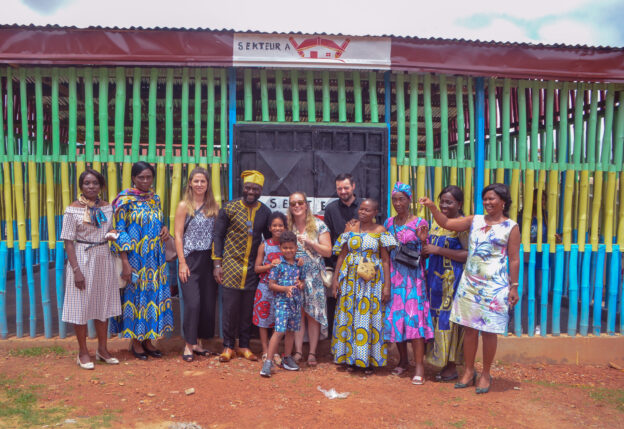
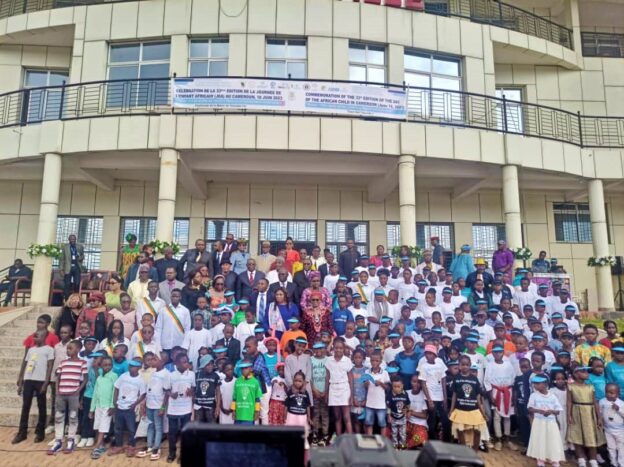
A workshop aimed at disseminating successes and challenges recorded during phase II of the project dubbed AVENIR took place in Yaounde, Cameroon on Tuesday 16th of May 2023. Thanks to Plan International offices in France and Cameroon as well as its key partners which are the French Development Agency, CEFAN, and AJSB, several vulnerable youths have regained hope in life. This is simply due to the project dubbed AVENIR II which laid emphasis on quality inclusive education and socio-economic empowerment of young people notably girls and women in the Yaounde 2 and 7 subdivisions of the Mfoundi division. Fruitful Achievements of AVENIR II During the one-day workshop dedicated to sharing of best practices, hindrances, and perspectives of phase 2 of the AVENIR project, participants convened by Plan International Cameroon at the head office in Bastos, Yaounde have praised the 3-year initiative that drops curtains on May 31, 2023. Field partners such as the Cameroon Education for All Network, CEFAN, and “Amicale des Jeunes Solidaires de la Briqueterie”, AJSB still nourish the will to see another phase of the project in Cameroon. The project to them has saved several vulnerable young girls who lived in precarious conditions. Taking the floor on behalf of the Country Director of Plan International Cameroon, Mr. Fabien Ongono who occupies the post of Programme Implementation Manager praised the numerous achievements registered by the AVENIR project both in its phases 1 and 2. Mr. Ongono said after phase 1 which was mainly focused on inclusive education, the project in its second phase created an ecosystem favorable for self-entrepreneurship in the domains of catering, tailoring, hairdressing, etc., to address some shortcomings witnessed at the end of phase 1. The spokesperson of the country Director said most of the youths schooled during phase 1 of the project were unable to earn a living after. According to Fabien Ongono, the choice bestowed on the Yaounde 2 and 7 subdivisions emanates from the fact that these two parts of the Mfoundi Division have the lowest rates of school enrolment and welcome internally displaced persons affected by the Boko Haram and Anglophone crises, unlike refugees from the Central African Republic. With the implementation of this project in these two subdivisions, the first phase has registered a handful of successes in terms of improvement in end-of-year exams as stated by Mr. Ongono. It was disclosed that during this period, the success rate in the primary education level rose from 74% to 95% in the Yaounde II subdivision for instance. Moreover, 126 youths had access to professional training and among them were close to 79% young women. Speaking on behalf of the Divisional officer of Yaounde II, Mr Ngah Gael said thanks to the project AVENIR several youths have acquired and developed skills that permitted them to be autonomous. Gael Ngah says: “The divisional office of Yaounde II acted more like a watchdog that monitored and followed up the process to be sure that the objectives that were stated at the start of the project were fully implemented. And we were really satisfied because several youths in our district were empowered. We, therefore, seize this occasion to thank Plan International and the French Development Agency, AFD.” On her part, Juliette Voland from Plan International France said the second phase of the project was highly appreciated at the level of France because of its full implementation and positive records. “We are very satisfied with the project at the level of France. This symbolizes what Plan International knows best on the field in terms of strategic thematic like quality education and socio-economic reinsertion. We have observed the engagement of various stakeholders and we believe this is just the beginning of a fruitful journey…” She said. During the closing session of the AVENIR II project, beneficiaries were brought on the spot to showcase their products, and skills and exchange with their young peers and stakeholders. At the esplanade of the head office of Plan International Cameroon in Bastos, Yaounde, we met with two beneficiaries. Success stories Ines Joelle, 32 is now a flower designer. She has been trained thanks to the AVENIR II project. The young lady says she was chanced to be selected among the numerous beneficiaries enrolled by AJSB in 2020. Today, she can better cater for her children and herself with the revenues gained from her art. “I can earn a living today thanks to the training received through this project. I was trained in tailoring and with the skills acquired, I later on furthered my training in flower designing. It is a domain that is not explored but it is quite passionate.” Ines Joelle narrated.  Added to her training in flower designing, Ines Joelle got a scholarship to pursue her studies in digital art. An achievement that she attributes to Plan International which has helped her to realize her dreams. Another success story recorded is that of Sabiya Tahirou aged 18 who is today an owner of a sewing workshop. Sabiya Tahirou said she was informed by her cousin of the enrolment of young girls at the multipurpose youth empowerment center of Yaounde II in Madagascar. When she went there, the number of places was full and enrolment closed, yet she insisted and was later taken into the program. She said: “I didn’t want to stay at home. I wanted to learn something by all means since I could not go to school because my parents did not have money. So, when my cousin told me about these opportunities, I didn’t waste time, I just rushed there directly.” She added: “I followed a 9-month training session in tailoring. Today I have my sewing workshop thanks to Plan International Cameroon. And I have three young persons working with me.” Worthy to note, the AVENIR II project was set up from 2020 to 2023, after the first phase covered from 2017 to 2020. The project focused on 8000 pupils and students of 38 primary schools and 4 high schools with a target of 4200

Read More
 Le Minas reçoit la Directrice Générale de MTN Cameroon

Le Minas reçoit la Directrice Générale de MTN Cameroon

Le Minsitre des Affaires Sociales a reçu ce 16 mai 2023 à Yaounde, la Directrice Générale de MTN Cameroon. Madame MITWA N’GAMBI, Directrice Générale de MTN Cameroon est venue présenter au Ministre des Affaires Sociales, Pauline Irène NGUENE, deux projets en faveur des personnes défavorisées. Le premier appelé “The Dinner in the Dark” pour soutenir les personnes handicapées au Cameroun. Le second dénommé “21 Days of Yellow Care” du 1er au 21 juin de chaque année. C’est une action sociale entièrement financée par les employés de MTN. Ils ont ciblé cette fois une association des personnes handicapées visuelles et moteurs, dénommée AJEVA à Yaoundé,. L’objectif visé cette année est de réhabiliter et d’équiper cette structure qui ambitionne la transcription en braille des décrets et arrêtés officiels. MTN sollicite donc le parrainage de Madame la Ministre de cette activité qui sera lancée le 2 juin prochain.Au cours de cette audience, plusieurs axes de collaboration entre les deux structures ont été envisagés dans le cadre de la RSE du plan d’inclusion sociale de MTN. Pour un partenariat formel…dans un futur proche. Cellcom MINAS

Read More
 MASO ACT III: BE THE OWNER OF A CAB CAR WITH 100 FCFA

MASO ACT III: BE THE OWNER OF A CAB CAR WITH 100 FCFA

Be the amongst the multiple owners of cab cars offered by the MASO ACT III of RENAPROV FINANCE SA just by subscribing to the various options available. Thanks to MASO you can be one of the beneficiaries of the 100 cab cars available within the framework of MASO ACT III. Just register and contribute 100 Francs CFA from Monday to Friday as concerns the MASO CLASSIC option and 500 Francs CFA for the MASO GOLD option. The beneficiary has to present a driving license, his capacity, and documents attesting he is a former driver with a 30% disbursement as a caution. The beneficiaries have up to 24 months to reimburse through their contributions in order to be full proprietors of the cab cars. With the MASO ACT III, RENAPROV FINANCE SA wishes to promote role model drivers. Worthy to note, the grand draw ceremony of MASO ACT 3 will take place on Saturday 9th July 2023 from 2 PM at the Warda multipurpose sports complex (Paposy), with hundreds of mutualists who will take part in tombola win. You can be among those mutualists that will have the chance to win the various packages offered by MASO. Be a witness to the dream come true of many Cameroonians just by registering. Call the following contacts to get in touch with the MASO management pool: (+237) 699.44.29.77/ 674.39.27.46/ 695.33.95.03/690 20 28 40, you can equally go to any of the 27 agencies of RENAPROV FINANCE S.A or also to ROYAL FM Radio situated at the Binam white building just opposite Camair-co office in Yaounde.

Read More
 Un Nouvel Exécutif à la Tête de l’Observatoire des Médias Africains pour une Pêche Durable en Afrique

Un Nouvel Exécutif à la Tête de l’Observatoire des Médias Africains pour une Pêche Durable en Afrique

L’Observatoire des Médias Africains pour une Pêche Durable en Afrique (OMPDA) est dirigé par une nouvelle équipe élue le 13 mai 2023 par les 96 membres fondateurs invités à participer au scrutin. Une nouvelle équipe avec à sa tête comme Coordonnateur Général, le journaliste béninois Léonce Aissoun qui succède à son confrère du Cameroun, André Naoussi. Au lendemain de son élection à la tête de la liste UNIR, le nouveau Coordonnateur général de l’OMPDA a remercié les membres de l’organisation pour cette confiance à lui accordée : « Nous sommes conscients des défis et nous sommes déterminés à travailler dur pour atteindre nos objectifs. Nous nous engageons à travailler en étroite collaboration avec vous, pour promouvoir une pêche responsable et durable en Afrique » a écrit Léonce Aissoun. Le Coordonnateur Général de l’Observatoire a de suite échangé avec son prédécesseur : « J’ai eu avec mon prédécesseur Mr NAOUSSI André une longue discussion constructive et conviviale sur les défis et les opportunités de notre organisation ». Léonce Landry Aissoun et son équipe entendent se mettre immédiatement au travail afin de poursuivre les actions et les projets en cours, la collecte et la diffusion d’informations sur les pratiques de pêche durable en Afrique, sur le développement de l’aquaculture/pisciculture, pour le rayonnement de de l’Observatoire des Médias Africains pour une Pêche Durable créée le 4 mars 2016 à Elmina au Ghana, à l’initiative du Nouveau partenariat pour le développement de l’Afrique (NEPAD), de la Banque mondiale et de l’Union Africaine, avec pour objectifs d’aider à promouvoir une pêche durable et rationnelle en Afrique, contribuer à sensibiliser le grand public et à attirer l’attention des décideurs sur les enjeux d’une exploitation judicieuse des ressources halieutiques et aquacoles en Afrique. Le Béninois Léonce Aissoun, socio-anthropologue des pêches, spécialiste de la pêche artisanale, intéressé aux traditions, croyances et pratiques locales des populations côtières du Bénin a une grande expérience dans le domaine de la pêche durable : il a étudié les dynamiques des communautés de pêcheurs, les techniques de pêche, les espèces les plus pêchées, ainsi que les changements environnementaux et climatiques qui ont des conséquences sur les activités de pêche. Le nouveau bureau de l’Observatoire des Médias Africains pour une Pêche Durable en Afrique est composé des membres issus de toutes régions du continent : Coordonnateur général : Léonce Aissoun (Bénin) Vice-Coordonnateur : Taluck Beeharru Ashok (Île Maurice) Secrétaire général : Naoufel Haddad (Tunisie) Secrétaire général adjoint : Apphia Nyasha Musavengana (Zimbabwe) Trésorier général : Issa Moussa (Togo) Trésorier général adjoint : Blaise Zahinda (RD Congo) Le bureau comptera au total onze (11) membres, avec la désignation de cinq (5) Coordonnateurs régionaux. Les membres de l’Observatoire n’ont pas manqué de rendre un hommage mérité au Coordonnateur général sortant, André Naoussi, qui depuis 2016, a dirigé l’organisation avec tact et professionnalisme, multipliant les contacts avec toutes les organisations du secteur des pêches, de l’aquaculture, avec à la clé, la signature d’un Accord de partenariat avec la Conférence Ministérielle sur la Coopération Halieutique entre les Etats africains riverains de l’Océan Atlantique (COMHAFAT), et dont l’objectif est de fournir un cadre de coopération et d’entente et à faciliter la collaboration afin de promouvoir leurs objectifs communs, à savoir : la conservation et l’exploitation durable des ressources halieutiques, dans leurs domaines de compétence respectifs. Il faut également que le Coordonnateur général sortant, a contribué avec les membres fondateurs de l’Observatoire du Cameroun, à la création en 2019 à Yaoundé, de l’Association des Médias pour la Promotion de la Pêche et des Ressources Animales Au Cameroun (AMEPRAC), avec pour objectifs de réunir les professionnels des médias et de la communication au Cameroun intéressés par les problématiques relatives à la pêche et aux ressources animales, et d’organiser la formation et le perfectionnement de ses membres et d’autres professionnels sur les problématiques de l’exploitation durable des ressources halieutiques, aquacoles et animales, entre autres.

Read More
 Trialogue National : Synergie Entre Acteurs de la Biodiversité pour des Actions Concertées et Efficaces au Cameroun

Trialogue National : Synergie Entre Acteurs de la Biodiversité pour des Actions Concertées et Efficaces au Cameroun

Du 15 au 17 mai 2023, les responsables du PNUD et du MINEPDED réunissent des Experts dans l’optique de trouver les meilleurs moyens d’agir contre les menaces à l’environnement. Placés sous le thème : “Mobiliser les connaissances nationales et mondiales sur la biodiversité pour passer à l’action au Cameroun”, la rencontre tripartite organisée au Cameroun du 15 au 17 mai 2023 par le ministère de l’environnement, de la protection de la nature et du développement durable (MINEPDED) et le programme des Nations Unies pour le développement (PNUD) entend “vulgariser et communiquer sur les recommandations de la Plateforme intergouvernementale scientifique et politique sur la biodiversité et les services écosystémiques (IPBES)”, dixit le ministre délégué auprès du MINEPDED. D’après Nana Aboubakar Djalloh, cette vulgarisation et cette communication se feront entre autres aux niveaux régional et sous-régional. Seront ainsi regroupés dans ce cadre les décideurs (politique), les chercheurs (scientifiques) et les praticiens (ceux qui ont un accès aux ressources telles que les populations autochtones, les communautés locales et les professionnels). Il est en réalité question de mobiliser des connaissances nationales et mondiales sur la biodiversité pour une action appropriée de ces trois acteurs majeurs de cette section dans ce pays d’Afrique Centrale, chacun dans son domaine et de façon coordonnée. Il s’agit concrètement de créer les conditions idoines pour que les rapports entre la Science, les Politiques et les Praticiens soient propices à l’utilisation durable de la Biodiversité et des services écosystémiques au Cameroun. Ce pays, comme l’a rappelé justement Martin Zeh-Nlo, Chargé du développement durable au PNUD, est une référence en matière de processus d’évaluation de la biodiversité et des services écosystémiques car ayant abrité des cadres de concertation et a pris part à de nombreux échanges à l’échelle internationale. Pendant les trois jours de travaux placés sous le thème “Mobiliser les connaissances nationales et mondiales sur la biodiversité pour passer à l’action au  Cameroun”, les échanges porteront entre autres sur les “Principaux enseignements du Cadre Mondial de la Biodiversité post-2020”, l’ “Introduction aux produits IPBES avec un accent particulier sur l’évaluation de l’utilisation durable et l’évaluation de la valeur”, un “Aperçu de la première évaluation nationale de la Biodiversité et des Services Écosystémiques du Cameroun (N-BESA)”. Les participants au trialogue sont issus des administrations sectorielles concernées, du secteur de la recherche, des universités et de la société civile. Il faut noter que c’est depuis 2012 que le Cameroun a officiellement établi l’IPBES qui se veut une interface d’entrées des acteurs impliqués sans la préservation de la biodiversité. Cette initiative s’inscrit dans le cadre du Projet Réseau de la Biodiversité et des Services Écosystémiques (BES-Net) qui est un consortium du Programme des Nations Unies pour le Développement (PNUD) qui vise le partage d’expériences et le renforcement des capacités. Il promeut le dialogue et la coopération entre les acteurs pour une gestion efficace de la Biodiversité et des Services écosystémiques. Le Cameroun, comme l’Éthiopie, le Vietnam et la Colombie, est l’un des quatre pays retenus pour la mise en œuvre de l’initiative BES-Net. Par Herve Ndombong

Read More
 Infertilité chez la Femme : Stigmatisation et Tabous dans les Communautés Camerounaises

Infertilité chez la Femme : Stigmatisation et Tabous dans les Communautés Camerounaises

Au Cameroun, plusieurs femmes notamment dans certaines régions du pays comme à l’Ouest sont victimes de stigmatisation et de discrimination pour des problèmes d’infertilité. Lydie âgée de 48 ans aujourd’hui et mère de deux enfants a souffert le martyr dans sa belle-famille à cause des problèmes d’infertilité. Cette dame issue de la région de l’Ouest Cameroun s’est mariée à l’âge de 30 ans, et a du coup développé l’envie d’être maman. Malgré plusieurs essais, elle n’arrivait pas à concevoir et a dû faire recours à un gynécologue pour un suivi médical. Cependant, dans son couple, il ya quelques anomalies qui sont détectées chez son conjoint, celui-ci rejette la faute sur sa compagne, et décide de la quitter des mois après. « Il a refusé qu’il avait un problème bien que, nous avons consulté un médecin. Nous nous sommes accordés après et avions même organisé un voyage à l’étranger pour qu’il aille se soigner mais pour lui ça été une aubaine pour finalement partir. Il m’a laissé ici au pays, raison qui a été à un moment le déclic derrière notre séparation. C’est lui qui avait introduit la procédure de divorce étant de l’autre côté. » dit-elle. Lydie ajoute que la famille de son conjoint n’a cessé de jeter le tord sur elle pourtant jusqu’à ce jour ce dernier n’a pas toujours d’enfant du fait du déni qu’il a un problème de fécondité. Stigmatisation et discrimination dans la communauté Ayant nourri ce besoin d’être maman à tout prix, du fait des railleries et injures dans sa belle-famille, Lydie n’a pas perdu espoir. Elle a consulté le médecin une fois de plus afin de s’assurer qu’elle n’avait aucun problème et ensuite s’est mise dans de nouvelles relations. Celles-ci n’ont pas produit des fruits et son médecin lui propose la fécondation in vitro et Lydie décide de partager avec ses proches cette nouvelle, qui semble être son dernier recours vu l’âge avancé, mais elle est découragée. Elle dit : « Lorsque je parle de cette option à certains proches de la famille, ils me disent, non ça va aller mais entretemps je vis ma situation personnellement, c’est mon problème. Et ce que les autres savent c’est que je n’ai pas d’enfant et ils ne peuvent pas savoir quels sont les dessous. Qu’est ce qui se dit ?  Est-ce que c’est médical ? Est-ce à la suite d’un avortement ? Qu’est-ce qui s’est passé ? Quels sont les regards que certains me lancent au quotidien ? » Issue d’une communauté où l’on accorde beaucoup d’importance à la maternité, au mariage et en général aux valeurs de la tradition, Lydie nous dit qu’elle a vécu ce problème différemment dans son entourage bien qu’à un moment elle a été un sujet de railleries. « Ma famille regardait sans rien dire. Les collègues de service s’en moqueaint, j’étais parfois un sujet de railleries. Ils parlaient de leurs enfants, démontraient leur fierté. Et lorsqu’ils étaient devant moi ils évoquaient le sujet juste pour me mettre mal à l’aise. Et dans la famille, les attitudes étaient mitigées, entre ceux qui étaient désolés et par respect ne disaient rien et ceux qui se moquaient de moi ouvertement. Ils valorisaient certaines cousines qui ont des enfants. J’ai vécu le mépris à mon endroit, des agressions verbales et j’encaissais des mots déplacés. » Autre victime rencontrée c’est, adèle (nom d’emprunt) âgée de 56 ans aujourd’hui qui est également originaire de la région de l’Ouest plus précisément du département de la Mifi. Celle-ci malheureusement n’a pas eu la chance de procréer mais a été victime de stigmatisation dans sa communauté. « Je viens d’une famille royale dans la région de l’Ouest et durant plusieurs années j’ai subi des pressions de la part de mes oncles et tantes qui m’ont élevé, m’ont envoyé en mariage à l’âge de 26 ans. Durant mes nombreuses années de mariage, je n’ai pu avoir d’enfant. Mon mari a épousé deux autres femmes des années plus tard. Celles-ci ont donné naissance à 4 et 6 enfants respectivement, et je suis devenue durant des années la risée du foyer. Manque de respect et insultes ont été mes repas au quotidien. A l’âge de 38 ans, j’ai dû fuir mon foyer pour avoir la paix. Même ma famille ne m’a pas facilité la tâche, elle m’a déstabilisé et j’étais juste un arbre sans racine pour elle… » dit-elle. Adèle qui n’a pas voulu parler de son cas en profondeur du fait d’un traumatisme psychologique, nous a indiqué qu’elle a perdu goût à la vie et a coupé tout contact avec ses proches. Elle dit : « J’avais tout fait pour sauver mon mariage mais la volonté du bon Dieu n’a pas été exaucée. J’ai perdu espoir et je n’ai plus jamais eu un partenaire bien que partie de mon foyer conjugal. J’ai accepté mon destin… C’est Dieu ! Quoi d’autre ? » Attentes et Espoir Du côté de Lydie, cette dernière nous a confié que sa situation n’a pas été facile à un moment, elle a voulu se rendre en Europe aussi pour un autre suivi médical ou d’adopter des enfants lorsqu’ elle avait atteint l’âge de 40 ans. Elle indique que : « J’ai écrit un livre autobiographique : « Ma beauté, ma souffrance » dans lequel je me pose des questions. Pourquoi je n’accouche pas ? Et lorsque j’ai eu 40 ans en 2014, j’ai pris ma toute petite nièce qui vivait désormais avec moi. Je lui ai donné tout l’amour d’une mère car ma sœur me l’avait donné pour combler le vide que je vivais. Et je me suis dit, si Dieu a fait grâce de me donner un emploi assez bien rémunéré pourquoi pas accompagner un enfant qui est dans le besoin. » Une attente qui n’a pas était de tout repos selon Lydie. Entre prières et actions caritatives, et même de l’amour témoigné à sa petite nièce, ces gestes telle que le dit Lydie, lui ont porté chance. Et trois ans après, le miracle de Dieu survient, Lydie devient maman à 43 ans. Elle donne naissance à des jumeaux. Elle nous a avoué que toutes les personnes qui se sont moquées d’elle étaient

Read More
 MASO ACTE 3 : A PARTIR DE 100 FCFA OBTIENT UNE BOURSE SCOLAIRE OU ACADEMIQUE

MASO ACTE 3 : A PARTIR DE 100 FCFA OBTIENT UNE BOURSE SCOLAIRE OU ACADEMIQUE

Vous souhaitez garantir une éducation de qualité à vos enfants dans des écoles locales et internationales ? Vous souhaitez poursuivre vos études pour une carrière enrichissante ? Pas de panique, la Mutuelle d’Assistance et de Solidarité (MASO) est la solution à tous vos problèmes. La MASO de RENAPROV FINANCE S.A vous offre les options CLASSIQUE et GOLD pour l’obtention des bourses scolaires et académiques. La MASO dans son option MASO CLASSIQUE propose aux mutualistes deux bourses scolaires d’UN MILLION (1.000000) de Francs CFA pour le cycle maternel et DEUX MILLIONS (2.000000) de Francs CFA pour le cycle secondaire remboursables à taux zéro. La cotisation à MASO CLASSIQUE est de 26.000 Francs CFA par an. Pour l’option MASO GOLD, ces bourses sont de 1.000.000 de Francs CFA pour le Primaire, 2.000.000 de Francs CFA pour le Secondaire, 5.000.000 de Francs CFA pour l’Enseignement supérieur au Cameroun et 10.000.000 de Francs CFA pour l’Enseignement supérieur à l’étranger. Il faut rappeler que l’option MASO GOLD est non remboursable. Pour la bourse de 1.000.000 de Francs CFA vous cotisez 52.000 Francs CFA, pour 2.000.000 de Francs CFA c’est une cotisation de 65.000 FCFA et en ce qui concernent les bourses académiques de 5.000.000 de FCFA, c’est 91.000 FCFA et celle de 10.000.000 de FCFA c’est au total une cotisation de 130.000 FCFA. Notez également que ces financements sont disponibles par tirage au sort. Pour être parmi les nombreux bénéficiaires de ces bourses, c’est simple. Souscrivez et participez à la grande tombola du 9 juillet 2023 qui se tiendra à partir de 14heures au Palais Polyvalent des Sports de Yaoundé. Si vous n’êtes pas encore parmi les nombreux mutualistes de la MASO, n’hésitez plus, inscrivez-vous chez un agent MASO / RENAPROV FINANCE S.A ou rendez-vous dans une agence de RENAPROV FINANCE S.A ou encore à ROYAL FM 88.4 au deuxième étage de l’immeuble Binam face agence Camair Co à Yaoundé. Pour plus d’informations voici les contacts du pool gestion MASO :  (+237) 699.44.29.77/ 674.39.27.46/ 695.33.95.03/690 20 28 40

Read More
 Plan International & UNHCR’s DAFI Scholarship Programme Equips 30 Refugee Students with ICT Tools

Plan International & UNHCR’s DAFI Scholarship Programme Equips 30 Refugee Students with ICT Tools

Another cohort of 30 refugee students registered under the DAFI scholarship programme piloted by UNHCR and Plan International has received brand new ICT tools in Yaounde, Cameroon. 25-year-old Abdarahman Ibrahim, from the Central African Republic and who is the current president of the group of DAFI scholarship programme beneficiaries has expressed gratitude to all donors who relentlessly vest efforts on refugee students to achieve their studies. The young student praised the initiative which to him shall improve on his research works. “With the advent of information and communication technologies, ICTs, we need kits such as these tablets that will help us to improve our research assignments because it is not easy to undertake such tasks with a smartphone. The phone is very limited and cannot help us to type our reports at the end of the month. Now, these tablets will ease us in typing and research. It will also help us to renew our scholarships as indicated by UNHCR officials, the DAFI scholarship programme will solely be done online.” Abdarahman Ibrahim said. Abdarahman Ibrahim was speaking on Friday, 5th of May 2023 in Yaounde during a ceremony to officially hand over tablets to the new cohort of 30 refugee students of the DAFI scholarship programme for 2022-2023 academic. There are in total 13 young men and 17 young women from neighbouring countries of Cameroon. Mrs. Koko Boti Felicite, Principal Administrator for Protection in the United Nations High Commissioner for Refugees, UNHCR called on the refugee students to make productive use of these brand-new tablets and challenged them to work hard to be role models for their peers. Speaking on behalf of the Country Director of Plan International Cameroon, Mr Fabien Ongono Program Implementation Manager, in his keynote address said the DAFI programme is out to accompany both female and male refugee youths who merit to follow higher education studies. This programme as he said, permits them to secure their rights and protection. Fabien Ongono stress on the fact that Plan International, partner in the DAFI scholarship programme is a major actor in promoting access to quality and inclusive education as well as entrepreneurial opportunities and decent work. The Spokesperson of Plan International Cameroon also outlined the importance of ICTs nowadays and the key role they play in socio-professional insertion. Mr Ongono indicated that one of the main challenges to address is that of enrolling in the higher education level close to 15% of refugees by 2030. The occasion was equally seized by Plan International Cameroon to salute the collaboration with the government through the Ministry of Higher Education (Minesup). About the DAFI scholarship programme The DAFI (Albert Einstein German Academic Refugee Initiative) scholarship programme offers qualified refugee students the possibility to earn an undergraduate degree in their country of asylum. Through the dedicated support of the German Government, UNHCR and private donors, the programme has supported over 15,000 young refugees to undertake tertiary studies since 1992. The strategic priorities of the DAFI programme are to: promote the self-reliance of sponsored students through opportunities for employment and entrepreneurship; empower students to contribute knowledge, skills and leadership, and facilitate peaceful coexistence with host communities during displacement and upon return; Strengthen the protective impact of education by encouraging lifelong learning; Provide role models for refugee children and youth to demonstrate the impact of education on individuals, communities and societies. The scholarship covers a range of costs, including tuition, fees, study materials, food, transportation, accommodation and other expenses. To amplify academic achievement and skills development, DAFI scholars receive additional support through close monitoring, academic preparatory and language classes based on students’ needs, as well as mentoring and networking opportunities. Elise Kenimbeni

Read More
 Lake Chad Basin: Japan-Regional Stabilization Facility Partnership Extended in Cameroon

Lake Chad Basin: Japan-Regional Stabilization Facility Partnership Extended in Cameroon

On Thursday, May 4, 2023, United Nations Development Programme, UNDP, and the government of Japan officially launched in Cameroon, the Japan-Regional Stabilization Facility partnership. Yaounde, Cameroon played host on May 4, 2023, to the signing ceremony aimed at officially launching the components funded by the Japan supplementary budget under the Regional Stabilization Facility, RSF and advancing strategic collaboration for the project’s implementation. The one-year project dubbed: “Enhancing Stabilization and Human Security in the Lake Chad Basin” is funded by the government of Japan at 3.036 million USD. To officialize this project, key actors were Japan’s Ambassador to Cameroon, Mr Takaoka Nozomu, UNDP’s Resident Representative, Mr Aliou Mamadou Dia, MINEPAT’s Representative and Governor of the Far North region, Midjiyawa Bakary who doubles as chairman of the forum of Governors of the Lake Chad Basin. Through a Zoom video call, Cela Blerta, Head of the RSF project in the United Nations Development Programme expressed the will to see more impactful results from the project prolonged notably for the internally displaced persons who are in dire need of support. UNDP’s Resident Representative in Cameroon, Mr. Aliou Mamadou Dia has praised the outstanding support of the Japanese government as a great move to advance Sustainable Development Goals. In his key address, Mr. Aliou Mamadou Dia mentioned the fact that, UNDP has been the first UN Agency to accompany the elaboration of this strategy, yet under the leadership of different governments and the help of governors of the Lake Chad region. “I wish to thank the Japanese government not only for financially supporting Cameroon with the RSF project these past three years but also for her crucial support programme that is currently underway in the North-West and South-West regions. The government of Japan is indeed standing beside African countries, Cameroon and neighbouring countries of the Lake Chad Basin and gives us the means to assist and support populations and communities affected by crises.” He added. Mr Aliou Mamadou Dia believes the funds disbursed by Japan will positively impact the livelihood of people and create better conditions for the development of affected communities whose hope was shattered. The Ambassador of Japan to Cameroon said his country has been advocating for the past 20 years for issues affecting the human security of people. Mr Takaoka Nozomu said: “We are very much concerned about issues affecting populations and we wish to cooperate, and contribute to the enhancement and promotion of the welfare of local people… Signing the previous phase of this project some one year ago was my first assignment while I arrived in Cameroon and so, I am very glad to sign this second phase, hoping it will make great progress and success as the first phase did.” On his part, the Far-North region Governor has lauded the immense support of the government of Japan. Midjiyawa Bakary said: “On behalf of the government of Cameroon I wish to sincerely express kind regards to the government of Japan for this financial support to the entire crippled regions of the Lake Chad Basin. I wish to reassure the donors that these funds will reach the beneficiaries. The first aid that was granted some two years ago, for instance, served for the reconstruction and rehabilitation of infrastructures, equipment and materials as well as in the financial empowerment of vulnerable groups affected by the Boko Haram insurgency…” Situation of the Lake Chad Basin The Lake Chad Basin region faces a multi-dimensional crisis, with the ongoing insecurity related to violence perpetrated by Boko Haram factions compounded by the climate emergency and natural disasters. This has led to the loss of lives and livelihoods, food, insecurity, forced displacement, and changes in mobility patterns, which have in turn led to competition over scarce natural resources and pressure on public services. The borderland communities in Cameroon, Chad, and Niger have a long history of socio-economic marginalization, limited state presence, and weak governance. In response, UNDP set up the regional stabilization Facility for the Lake Chad Basin area in July 2019 as a time-bound, localized and integrated mechanism to operationalize the RSS, Recovery and Resilience of the Boko Haram-affected areas of the Lake Chad Basin. Regional Stabilization Facility, RSF Going by the explanations of UNDP, the Regional Stabilization Facility (RSF) is a financing facility developed by the United Nations Development Programme (UNDP), with support from governments to facilitate the implementation of the Regional Strategy for the Stabilization, Recovery & Resilience of the Boko Haram-affected Areas of the Lake Chad Basin (RSS) of the Lake Chad Basin Commission (LCBC). The RSS seeks to restore security and bring relief to communities affected by the Boko Haram insurgency in Cameroon, Chad, Niger, and Nigeria. Elise Kenimbeni

Read More
 Abortion Care: ACAC Project Extended to 8 Months, Stakeholders Commit to Intensify Advocacy Talks

Abortion Care: ACAC Project Extended to 8 Months, Stakeholders Commit to Intensify Advocacy Talks

A ceremony to officially launch the next phase of the Advocacy for Comprehensive Abortion Care, ACAC project was organized on May 3, 2023, in Yaounde, Cameroon. At the official launch of the ACAC project extended to 8 months (April to December 2023), government officials, members of the Society of Gynecologists and Obstetricians of Cameroon, SOGOC, and media practitioners have expressed their commitment to intensify advocacy for abortion care services. The 4-year project implemented by SOGOC was extended to 8 months as indicated during the ceremony that took place on the 3rd of May 2023, in Nkol-Eton, Yaounde. ACAC’s Project Manager, Rita Yenjong said the extension phase will be beneficial in the sense that it will pave the way for more advocacy talks on eligible cases that are often complexified due to administrative and legal procedures. Rita Yenjong said: “We will be running from April to December 2023. And in this next phase, we are just going to continue with advocacy. Our focus is on ensuring that administrative and legal procedures for eligible cases to get abortion services are simplified because as it is now, the procedures are not very clear. And what the project has tried to do so far is to state these procedures.” According to Rita Yenjong, focus shall be laid on the timeframe granted to eligible cases to have access to abortion care services in recommended health facilities. She added: “We came up with a book, the referral part with eligible cases. We are also going to vulgarize this book and disseminate it in all ten regions so that all the stakeholders are engaged in ensuring that abortion services are being rendered to eligible cases and know exactly what to do in time. With this document, we also hope that eligible cases can have these services within 72 hours. In this next phase, we are going to strengthen advocacy and sensitization campaigns as well as to intensify our collaboration with the media which has been a fruitful partner…” Speaking on behalf of the president of SOGOC, the Secretary General of this organization, Dr. Mwadjie Darolles, first emphasized maternal mortality as a major public health problem worldwide and in particular in Cameroon, and which is an indirect indicator of the quality of the health system in a country. “The causes of maternal mortality are many and well-identified. Amongst these causes, there is abortion that occupies an important place. And in Cameroon, 1 in 4 maternal deaths are linked to abortion… Mutualizing efforts is very crucial in this endless fight, and that is why SOGOC being a network enriched with different experts working at the national and international levels, strives for the well-being and the amelioration of the reproductive health of populations by assisting the Ministry of Public health in its duties.” She said. Dr Mwadjie indicated that the 8 months extension granted to the ACAC project which is financed by FIGO (the International Federation of Gynecology and Obstetrics) ended in 2022, yet with this new prolongment, there will be a need to improve safe abortion access for eligible cases and accentuate communication. While addressing media practitioners, Dr Mwadjie Darolles, said the media as an ally of SOGOC has a key role to play. She underscored the need to inform women about the existence of legal abortion as concerns some who are victims of rape or who face complications in their pregnancies. SOGOC’s Secretary General stated that: “Legal abortion in Cameroon is possible when the pregnancy is as a result of rape, and when the health of the mother is in danger, that is when the pregnancy puts the health of the mother in danger. Yet in Cameroon, the challenges concerning the law is simply the application of the law because it is not a medical diagnosis to say that someone has been raped or not but the decision of the court of justice and the procedures are very long and strenuous.” Government officials present at this launch ceremony equally reiterated their commitment to work with SOGOC and the media for a positive output in this project. After the launch, members of the ACAC media network took active part in a one-day workshop that focused on mapping out an action plan on how the media can be proactive in reporting safe abortion for eligible cases within the framework of the project. Successes recorded by the ACAC Project Despite the numerous challenges faced by the ACAC project nationwide, several strides were recorded as stated by SOGOC. Among others, there is the creation of a network that has involved 23 member organizations working in areas of sexual and reproductive health and government ministries like public health, justice, women’s empowerment, and the family. There is the creation of a referral document for the management of survivors of rape; the creation of 10 regional offices for SOGOC which greatly helped in the implementation of the project in all the regions of Cameroon. Moreover, thanks to the ACAC project, over 15 health professionals were drilled on comprehensive abortion care techniques, and in return, these trained staff shared their learning with other colleagues. Also, the project successfully embarked lawmakers from the Senate and National Assembly. They have spearheaded discussions at the level of the parliament. In March and June 2022, during oral sessions, the situation on the MAPUTO PROTOCOL and abortion law was posed to the Minister of public health. Added to these records is the collection of abortion data through registers stationed in various district hospitals in Cameroon. And so far over 200 cases have been registered nationwide. The project also funded research focused on morbidity and mortality linked to unsafe abortions in Cameroon-Difficulties in accessing safe abortion. Elise Kenimbeni

Read More