National Assembly: Four Ministers Expected in Today’s Plenary Sitting

National Assembly: Four Ministers Expected in Today’s Plenary Sitting

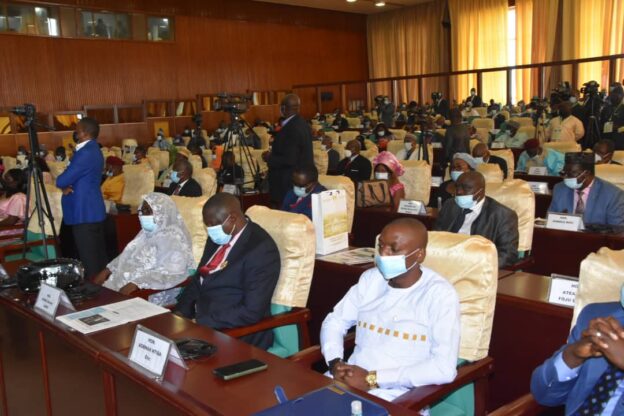
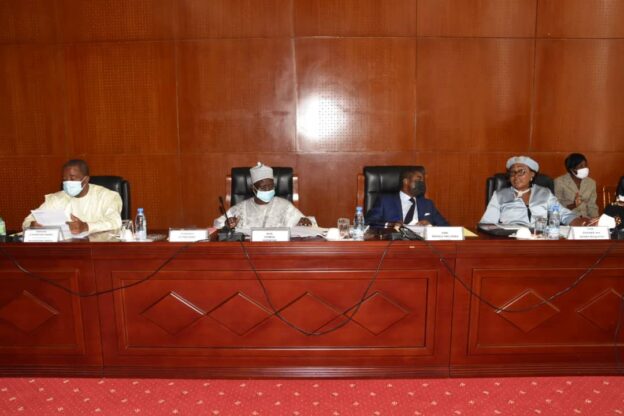
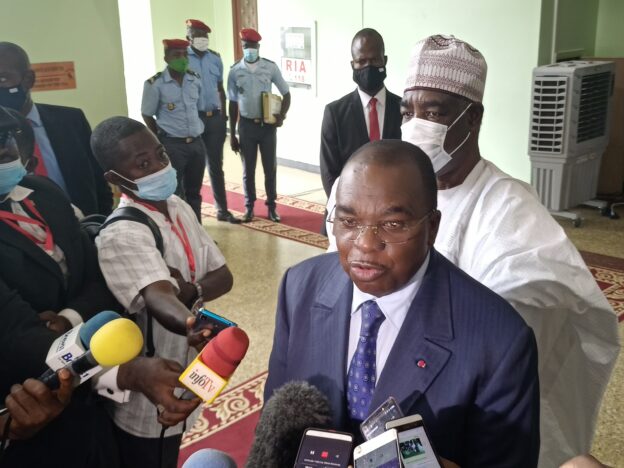
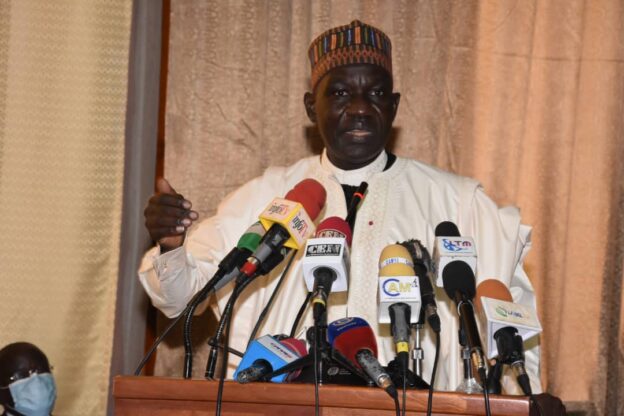
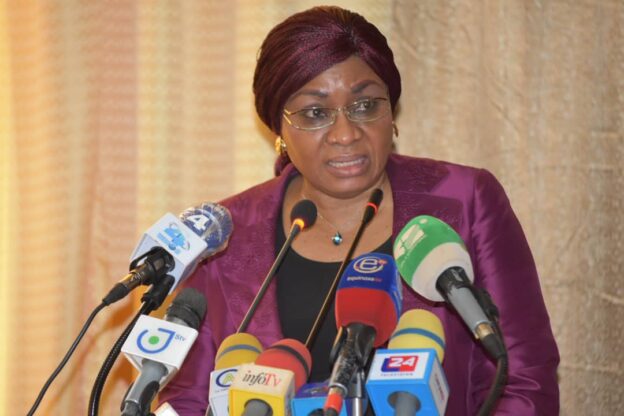
Members of parliament will this Thursday 18th November 2021 in Yaounde as from 10am ask series of questions to some four government officials in a plenary session. According to the release signed by Secretary General of the national assembly, Gaston Komba, the agenda of today’s plenary sitting will be quite busy. Four government officials will be grilled by members of parliament on preoccupying issues affecting their ministerial departments. The four government officials expected are: minister of state, minister of justice and keeper of the seals, Laurent Esso; minister of state, minister of higher education, Pr. Jacques Fame Ndongo; minister of public works, Emmanuel Nganou Djoumessi and minister of territorial administration, Paul Atanga Nji. This question and answer session will once more permit to law makers to have an in-depth look and be informed into current state’s affairs. Elise Kenimbeni

Read More
 November Parliamentary Session: Laws on Freedom of Associations, Inter-Trade Organizations under scrutiny

November Parliamentary Session: Laws on Freedom of Associations, Inter-Trade Organizations under scrutiny

Members of the constitutional law committee chaired by Honourable Zondol Heresse met on November 17, 2021 in order to review laws governing freedom of associations and inter-trade organizations in Cameroon. The ongoing November ordinary session of parliament unfolds with series of bills examined and reviewed by different committees of the national assembly. On November 17, 2021, the committee in charge of constitutional law under the chairmanship of Honourable Zondol Heresse was tasked to amend some provisions of law No. 90/053 of 19 December 1990 relating to freedom of association defended by the minister of territorial administration, Paul Atanga Nji and bill No 2007/PJL/AN governing inter-trade organizations in Cameroon, which was defended by Gabriel Mbairobe, minister of agriculture and rural development. Minister Paul Atanga Nji while addressing the press mentioned the fact that, there was great need to amend some provisions with regards to ongoing changes observed in the functioning of different associations and organizations. Focus in this 1990 law that governs freedom of associations in Cameroon is on section 5 which particularly calls for an amendment. He said:  “Things are evolving and we have the law which is like the mother law that is the law of 1990… We have some specificities governing some organizations… What the government is doing now is to provide them with the ability to carry-out their activities, taking into consideration the realities of their own movements because political parties have their own way of functioning, syndicates have their own way of functioning, inter-trade organizations and so on.” Agriculture and rural development minister, Gabriel Mbairobe on his part emphasized on the relevance of the bill on inter-trade organization, which seeks to open doors for the marketing and procession of products at all levels. Elise Kenimbeni

Read More
 National Assembly: 2020 Settlement Bill Examined, Foreign Affairs’ Committee Scrutinizes series of Bills

National Assembly: 2020 Settlement Bill Examined, Foreign Affairs’ Committee Scrutinizes series of Bills

Members of the finance and budget committee alongside those of the foreign affairs’ committee held series of working sessions with government officials on Monday 15th November 2021 in Yaounde as part of day three activities of the ordinary session of parliament. On Monday 15th November 2021, activities at the national assembly began with the finance and budget committee setting the pace for tight discussions on the upcoming year’s budget. The first step marked by the team of Honourable Rosette Moutymbo Ayayi, president of the finance and budget committee of the national assembly, was the examination of the 2020 settlement bill. Finance Minister, Louis Paul Motaze while addressing members of the finance and budget committee outlined in the first place the total amount allocated for the 2020 state budget, which stood at 4.409. 047 000.000 FCFA. Louis Paul Motaze stressed on the fact that 166 programmes were covered with measurable objectives and if good performances were achieved despite the coronavirus health crisis, these were thanks to revenues gotten from the oil and tax sectors. At the end of discussions with the committee, the minister told media practitioners that despite COVID-19 threats, the 2020 financial year has witnessed some performances. He said:  “We have noticed that the performances were good because it was at the moment the pandemic arrived in our country and we had a lot of fears. And the execution was quite good because all the goals were reached and even with the resources, we got more than expected, meaning that our performance went to a certain, let us say 104 percent. The difficulties are still there and we are looking forward at the future and when we will be back here, we shall focus on the 2022 budget…” As discussions unfold at the tight November ordinary session of parliament, the team of Rosette Moutymbo Ayayi, finance minister and all the General Managers of his department are on hard duty for the 2022 budget to be defended and adopted. In a meantime, foreign affairs’ committee chaired by Honourable Banmi Emmanuel Dingha scrutinized series of bills. One of these various bills examined is that of the bill to authorize the President of the Republic to proceed with Cameroon’s accession to the Agreement on the Establishment of the International Network for Bamboo and Rattan (INBAR), adopted in Beijing, China on 6 November 1997. The bill was defended by the minister of forestry and wildlife, Jules Doret Ndongo. Social affairs’ minister, Pauline Irène Nguene who later on appeared infont of the committee led by Honourable Banmi Emmanuel defended three bills. The bills are that to authorize the President of the Republic to ratify the United Nations Convention on the Rights of Persons with Disabilities, adopted on 13 December 2006; that to ratify the African charter’s protocol for the right of people living with disabilities and that of the African charter’s protocol for the right of elderly persons. The said convention and protocols to be ratified are aimed at promoting, protecting and ensuring equality and equity of Human’s Rights notably for the elderly and people living with disabilities. Elise Kenimbeni

Read More
 November Ordinary Session: National Development Strategy, NDS3O on Discuss at the National Assembly

November Ordinary Session: National Development Strategy, NDS3O on Discuss at the National Assembly

Alamine Ousmane Mey, Minister of economy, planning and regional development during a plenary sitting that took place on Friday 12th of November 2021, outlined the objectives of the 2020-2030 national development strategy, NDS30. As part of activities marking the just launched November ordinary session of parliament for 2021, Members of parliament attended a special plenary sitting chaired by Honourable Hilarion Etong, Vice-president of the national assembly. The session was purely dedicated to the NDS30, which markets key structural projects of Cameroon. Minister Alamine Ousmane Mey was cooked through a series of questions underscored by law makers. In his responses, the minister brought out vital information on the NDS30 which is expected to act as a relief in Cameroon’s economy. According to MINEPAT Boss, much emphases will be laid on the reinforcement of our agricultural produce, taking into account the different challenges that appear in the sector and the ministry of agricultural and rural development has been assigned for a keen follow up. Speaking to the press, Minister Alamine Ousmane Mey said: “Haven elaborated this document, it was important to come again to hear from the national assembly. We had the opportunity to present the four pillars of this strategy. The first one is structural transformation of our economy, the second one is promoting human capital and well-being of the population, the third is about work, job, social economy insertion and the last one is about governance, decentralization. We believe after this participative approach, we have a very strong roadmap to move towards becoming an emerging country by 2035. This has happened before and this has happened today in the national assembly and we hope to continue this conversation with different stakeholders so that ownership and appropriation are really established and then implementation will certainly give the results we are all expecting…”  Priority actions of the NDS30 are centred around, transforming the economy by investing in infrastructure projects; developing human capital by promoting sectors such as education and training, health and social security; promoting employment and professional insertion of young people; improving governance and stepping up decentralization efforts by promoting local development, bilingualism, multiculturalism and living together. Objectives of the NDS30 As stated in the press release of the national assembly, for Cameroon to attain the status of an emerging economy, the various objectives are vital in its national development strategy and goes as follows: An average growth rate that ranges from 4.5% to 8.1% annually between 2020 and 2030  An increase in the secondary sector (non-oil sector) that is more than 8% on average; That the unfavourable terms of trade that represented 8.8% of the GDP in 2018 are reduced to 3% by 2030; That the goods and services it produced or offered reach the threshold of 60%; To scale up its GDP from 28.2% in 2018 to 36.8% by 2030; To increase the funds transferred to local and regional authorities to at least 15% before 2035; To complete all ongoing infrastructure projects;  Finalise terms of payment and commission first generation infrastructure projects such as the Mekin and Lom Pangar hydroelectric dams in order to stave off the shortfall in power supply in Cameroon; To give priority to maintenance of existing equipment and infrastructure, etc. Elise Kenimbeni

Read More
 National Assembly: Social Affairs’ Patroness to Defend 3 Bills for the Well-Being of Elderly Persons & Disabled

National Assembly: Social Affairs’ Patroness to Defend 3 Bills for the Well-Being of Elderly Persons & Disabled

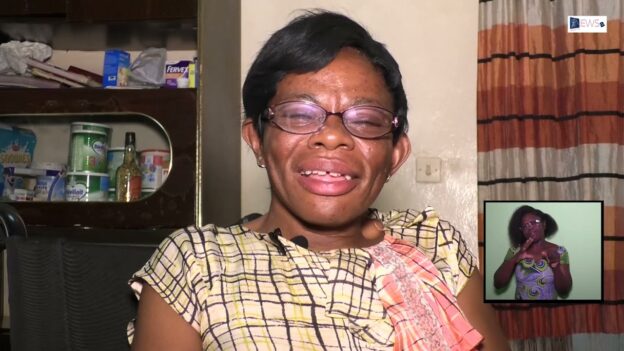
The Minister of social affairs, Pauline Irène Nguene is expected this November 15, 2021 at 2:30pm before members of the foreign affairs’ committee of the national assembly, in order to defend three bills related to the well-being of disabled and elderly persons. The full and tight November ordinary session of parliament unfolds its agenda this day with the finance and budget committee meeting and later on in the afternoon with, the scrutiny of bills. The three bills to be defended by the minister of social affairs, Pauline Irene Nguene are: the bill authorizing the President of the Republic to ratify the United Nations’ convention related to the rights of people living with disabilities; the African Charter’s protocol for the right of people living with disabilities and the African charter’s protocol for the right of elderly persons. Minister Pauline Irène will once more appear in front of members of the foreign affairs’ committee for the improvement and promotion of elderly persons’ welfare. Recently during the March session of parliament, the minister of social affairs defended the bill authorizing the President of the Republic to ratify the Marrakech Treaty. The Marrakech Treaty adopted by parliament is aimed at facilitating access to published works for persons who are blind, visually impaired or otherwise print disabled. Elise Kenimbeni

Read More
 2021 Session of Parliament: Cavaye Yeguie Djibril Nourishes Hopes for a peaceful North-West, South-West

2021 Session of Parliament: Cavaye Yeguie Djibril Nourishes Hopes for a peaceful North-West, South-West

Right Honourable Cavaye Yeguie Djibril, speaker of the national assembly calls for the collaboration of internally displaced traditional rulers who fled from their chiefdoms, to help government restore peace in the crippled North-West and South-West regions. As of tradition, the opening session of parliament was marked by key messages and calls from the speaker of the national assembly, Right Honourable Cavaye Yeguie Djibril.  The November ordinary session of parliament launched on Thursday November 11, 2021 in Yaounde brought in the lime light salient issues at the time the country is entangled in the Anglophone crisis. In his address, the President of the national assembly of Cameroon saluted the field trips undertaken by Prime Minister; Head of Government in the two English speaking regions in order to restore peace. To the speaker of the national assembly, these field trips were a form of demonstration of President Paul Biya’s firm determination to demand peace in the North-West and South-West regions. Honourable Cavaye Yeguie Djibril seized the official opening session to praise the peaceful move undertaken during one week by Prime Minister, Head of government, Chief Dr. Joseph Dion and by the way called on his peers who fled their palaces during the crisis to return home. The speaker of the national assembly who is the Chief of the Mada palace in his native Tokombere, Mayo-Sava Division of the Far-North region appealed to internally displaced chiefs of the North-West and South-West to regain their chiefdoms. He said: “I cannot possibly judge in their stead what is best under the present circumstances, but I wish to humbly remind them that they have the binding duty to work in synergy with government authorities, to contribute their quota in return to normalcy and in the task of restoring the authority of the State in their respective chiefdoms.” Cavaye Yeguie Djibril in his speech said he is convinced that peace will be restored all over the country for the common good of all Cameroonians. The upcoming African football jamboree to be hosted by Cameroon also featured in the speech of Right Honourable Cavaye Yeguie Djibril. He exhorted all commissions implicated in the organization of the 2021 AFCON Total Energies to brace-up challenges for a successful event. And also underscored the need for a befitting welcome on behalf of Cameroonians who are well-known for their legendary hospitality. The full month ordinary session of parliament which kicked-off is expected to put on the table of members of parliament 2022 state budget for scrutiny. As one of the most fastidious sessions of the national assembly, the November ordinary session will be marked by the passage of all ministers who are to defend their respective budgets before the budget and finance committee. Worthy to note as pointed-out by the speaker of the national assembly, the President of the Republic, Head of State, Paul Biya defined the main orientations and priority actions of the 2022 state budget in a circular that was made public on August 30, 2021. “Some of the priority actions are the eradication of the coronavirus pandemic disease and post-COVID-19 economic recovery.” He said. Elise Kenimbeni

Read More
 Violences Basées sur le Genre : Les Agences des Nations Unies Accentuent la Riposte et le Plaidoyer

Violences Basées sur le Genre : Les Agences des Nations Unies Accentuent la Riposte et le Plaidoyer

Une équipe humanitaire des Nations Unies a effectué du 18 au 22 octobre 2021, une série de réunions et d’activités dans les régions du Littoral et de l’Ouest Cameroun. C’est une vingtaine d’humanitaires du staff des agences des Nations Unies qui s’est rendus du 18 au 22 octobre 2021 dans les régions du Littoral et de l’Ouest Cameroun afin de toucher du doigt la mise en œuvre du projet dénommé : « provision of integrated and lifesaving, response services to Gender-based violence ». Le projet piloté au Cameroun depuis décembre 2020 par le fonds des Nations Unies pour la population(UNFPA) aux côtés des autres agences des Nations Unies connait un appui financier de l’Union Européenne à travers la direction générale pour la protection civile et des opérations d’aide humanitaire européenne de la commission européenne(ECHO). La délégation des humanitaires conduite par Siti Batoul Oussein, Représentante résidente de UNFPA et Serge-Tigwende de ECHO n’a point sommeillé durant les quatre jours de terrain. Elle a tenu une série de réunions avec les différentes délégations régionales des ministères concernés par ce projet, des rencontres avec les patrons de régions et par la suite a procédé à la donation des kits dignitaires dans les hôpitaux ainsi que des denrées alimentaires aux survivantes de violences basées sur le genre(VBG) des régions du Nord-Ouest et du Sud-Ouest où sévit depuis  2016 une crise sociopolitique. Dans la ville de Douala, région du Littoral l’équipe de Siti Batoul Oussein composée de l’UNFPA, OCHA, UNICEF et du partenaire financier ECHO a tenu une réunion avec les délégués régionaux des ministères de la promotion de la femme et de la famille, des affaires sociales, d’éducation de base, des enseignements secondaires, de la santé publique et de l’eau et de l’énergie. Une rencontre capitale qui a permis d’évaluer les besoins qui se font grandissant au vu du flux des personnes déplacées interne et des communautés hôtes de cette partie du pays qui accueillent les femmes et les jeunes filles ressortissantes du Nord-Ouest et du Sud-Ouest. Selon Mme Makota Lafortune, Déléguée régionale de la promotion de la femme et de la famille, le projet est bénéfique et est une véritable réponse aux nombreux cas de VBG enregistrés cependant les besoins ne cessent de s’accroitre dans la région du  Littoral. « Nous sommes entrain d’évoluer justement vers d’autres besoins qui sont des besoins économiques. Mais pour le moment c’est beaucoup plus une assistance sur les VBG et leur apporter un petit soutien pour les permettre de palier aux besoins immédiat. Elles ont des besoins de survie. Il y’a des besoins d’appui psychologique, il y a des besoins d’appui économique qui sont les plus criards… » Dit-elle. La délégation des humanitaires s’est également rendue dans les services du Gouverneur de la région du Littoral pour une visite de courtoisie et d’échanges sur le projet. Le Gouverneur de la région du Littoral, Samuel Dieudonné Ivaha Diboua d’entrée de jeu a indiqué que la prise en charge des personnes déplacées interne a toujours au cœur de sa feuille de route et a jusqu’ici collaborer avec de nombreuses associations de ressortissants des régions dites anglophones dans le but d’établir un répertoire de ces populations. Il est difficile selon le numéro un de la région d’avoir des chiffres précis sur le nombre de déplacées interne dans un environnement où plusieurs ont peur d’échanger et parfois ne veulent pas coopérer avec les officiels administratifs envoyés sur le terrain pour le recensement. Samuel Dieudonné Ivaha Diboua a souligné que cela a toujours été une tâche ardue. Et néanmoins, dans ses propos il a indiqué que la situation reste préoccupante avec des familles qui se résument au père, à la mère et à deux enfants, se retrouvent aujourd’hui avec 14 personnes dans  une maison à trois pièces. La Représentante résidente de UNFPA Cameroun, Mme Siti Batoul s’est dite satisfaite des échanges cordiaux avec le patron de la région et a sollicité de sa part une collaboration plus accrue dans le cadre de ce projet qui sauve des vies et restaure la dignité des femmes et jeunes filles survivantes des VBG. Des échanges qui ont été multipliés avec des autorités locales dans les arrondissements de Douala 4ème et Melong dans le département du Moungo, région du Littoral du fait que ceux-ci abritent un grand nombre de déplacés interne. Le même exercice a eu lieu à Bafoussam dans la région de l’Ouest Cameroun les 20 et 21 octobre 202.L’équipe  humanitaire a rencontré tour à tour les sectoriels concernés et ensuite le Gouverneur, Awa Fonka Augustin.  Il a été question de poser une fois de plus sur la table les problèmes cruciaux que font face les personnes déplacées interne et les communautés hôtes de cette région qui est frontalière à celle du Nord-Ouest. Ces descentes de terrain ont été ponctuées par des remises des kits dignitaires au Baptist health center de Mboppi à Douala et à l’hôpital régional de Bafoussam. Et des dons aux femmes et jeunes filles survivantes des VBG qui sont actuellement enrôlées au sein de LUKMEF à Douala et COMINSUD à Bafoussam respectivement dans les régions du Littoral et de l’Ouest. Avec ces dons plusieurs vont débuter une activité lucrative afin de subvenir à leurs besoins de base. Bien que les besoins ne cessent d’augmenter, ce projet qui s’étend jusqu’en Avril 2022 a pour cible 183.503 personnes déplacées interne et membres des communautés hôtes. Et avec entre autres comme  attentes: de faire bénéficier à 104930 personnes d’une première assistance psychologique sur les sites des personnes déplacées interne ; d’attribuer des kits dignitaires et du matériel d’hygiène pour lutter contre la COVID-19 à 10.000 femmes vulnérables ; de faire bénéficier à 4503 femmes survivantes des VBG des soins médicaux et des kits de santé de reproduction déjà disposés dans les centres de santé ciblés ; de faire bénéficier à 500 personnes des soins mentaux notamment dans des espaces sures réservés aux femmes et jeunes filles ; de faire bénéficier à 5100 personnes du recasement dans les espaces sures ; d’impliquer 300 autorités

Read More
 Marche Annoncée du 11 Novembre 2021: La CSTC et les Syndicats des Transporteurs aux Côtés de l’ANOSILP

Marche Annoncée du 11 Novembre 2021: La CSTC et les Syndicats des Transporteurs aux Côtés de l’ANOSILP

Dans une lettre adressée au Président de la République le 05 novembre 2021, la CSTC et les organisations syndicales des transports annoncent leur soutien à l’ANOSILP qui va initier une marche pacifique le 11 novembre prochain à Yaoundé, capitale camerounaise. C’est une dizaine des leaders, présidents et par ailleurs membres de la confédération syndicale des travailleurs du Cameroun et les organisations syndicales des transporteurs qui ont signé la lettre addréssée le 05 novembre 2021 au Président de la République, Paul Biya. Dans leurs correspondance, ils appellent le Chef de l’État à se saisir du dossier que porte depuis des années l’association nationale des opérateurs du secteur informel pour la lutte contre la pauvreté au Cameroun(ANOSLIP). En effet, les signataires de la correspondance indique qu’ils soutiennent l’ANOSLIP pour une issue favorable dans cette affaire qui a déjà fait couler beaucoup d’encre et de salive depuis des années. “Excellence Monsieur le Président de la République, Chef d’Etat, au fur et à mésure que les jours passent, aucune solution n’est trouvée pour regler cette situation.” Les leaders de ces organisations syndicales souhaitent que le Président de la République solutionne le problème avant la date annoncée du 11 novembre 2021. Dans leur lettre ils soulignent: “Y faisant suite, nous appelons vivement à votre intervention avant la date prévue pour la marche le 11 novembre 2021(…)” Selon Moussa Yimga, président de l’ANOSLIP, cette marche pacifique qui va se tenir le 11 novembre 2021 a pour objectif de mettre en exergue les nombreuses frustrations que subissent les opérateurs du secteur informel depuis près de 20 ans, après le détournement des fameux 4 Milliards de Francs CFA du PID, projet lancé en 2009 et qui est tombé en faillite avec l’argent cotisé par les opérateurs du secteur informel. Le PID était censé leur octroyer le financement pour leurs activités. Les membres de l’ANOSLIP étaient face à la presse le 2 novembre dernier à Yaoundé.

Read More
 Gender-Based Violence: UNFPA/ECHO Project Restores Survivors’ Dignity, Grants Consignment of Goods

Gender-Based Violence: UNFPA/ECHO Project Restores Survivors’ Dignity, Grants Consignment of Goods

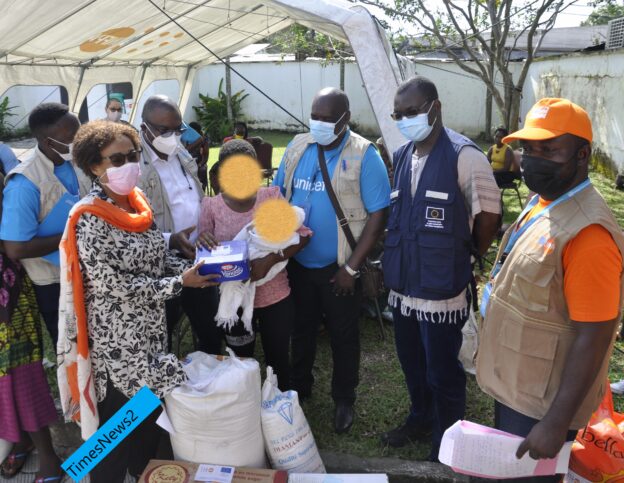
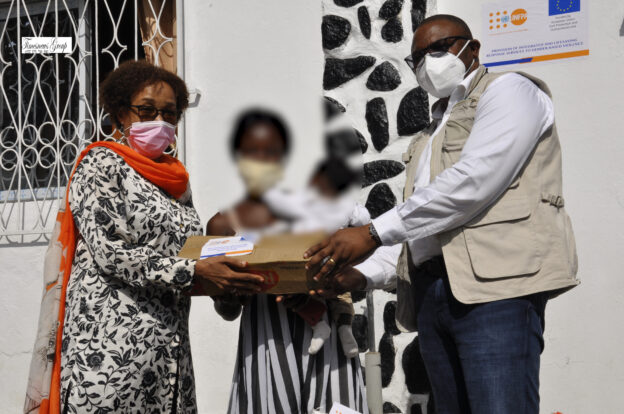
Staff members from the United Nations’ population Fund (UNFPA), Humanitarian Coordination Agency (OCHA), the United Nations children’s Fund (UNICEF) and the European Civil Protection and Humanitarian Aid Operations (ECHO), have embarked in a four day field trip in the Littoral and West regions of Cameroon. The field mission that took place from October 18 to 22, 2021 was aimed at monitoring and assessing key activities carried-out so far within UNFPA’s humanitarian and life-saving gender-based violence project launched in December 2020 in the North-West, South-West, Littoral and West regions. The project running till April 2022 grants support to vulnerable women and young girls affected by the current Anglophone crisis which has crippled the North-West and South-West regions of Cameroon. And therefore causing massive influx of internally displaced persons (IDPs) in neighbouring regions of the country notably in the Littoral and West. UNFPA’s country Representative Siti Batoul Oussein alongside ECHO’s team led by Serge-Tigwende Soubeiga have been at the helm of the delegation of humanitarian staff in various meetings and activities undertaken in the Littoral and West regions. The team’s journey began in Douala with series of in-depth discussions. They met with Regional Delegates from key ministries concerned by the project. The humanitarian team had a clear view on how the project is running and how to fill in the gaps in the next stages. Amongst top officials met in Douala by the team of Siti Batoul Oussein is, Littoral’s Governor, Samuel Dieudonné Ivaha Diboua who showed a lot of interest in the life-saving project. He took advantage of the meeting to expose the galloping rate of needs of IDPs and portrayed the situation in which many live in host communities of Douala. Yet, with the financial support of the European Union through ECHO, the project has so far brought a lot of positive changes in the lives of many survivors. Many young girls and women affected by the ongoing crisis have benefitted from case management in safe spaces, psychological first aid support, medical as well as mental health care as underscored by UNFPA. The visible side of this project in Douala was witnessed at the Baptist health centre situated in the Mboppi neighbourhood, where dignity kits and COVID-19 items were handed-over. And at the Martin Luther King Junior memorial foundation (LUKMEF) safe space in Bonaberi which welcomes GBV survivors, close to 15 women and young girls were donated goods their economic autonomy. Beatrice, mother of 6 children who has resettled in Douala due to threats of the crisis in the North-West has regained confidence in herself thanks to the project as she said. “Since I came from Bamenda, I have been suffering here in Douala with my 6 children who are fatherless. I lost hope in life but through a sensitization carried-out by LUKMEF which I heard, this is how I came in contact with this centre. When I came here I was followed-up. I have learnt many things like the fabrication of soap. This has helped me to start a petty business for my family. And today with the package received from UNFPA, I thank God. I will start selling fish in the market because they told me apart from rice there is fish in the bags…” Just like Beatrice, many beneficiaries expressed happiness and joy for the goods received officially from the hands of Mrs Siti Batoul and UNICEF’s deputy Representative, Arsene Azandossessi. The UNFPA country Representative seized the opportunity to boost the morals of GBV victims and said much more incentives are underway. “I just met one who is 14 year old pregnant by force, which is very heart-breaking to see. So, seeing the joy and smiles on their faces, means that they went through the support that has been put in place by the project. I mean the psychological and medical support put in place for them to be a group of survivors. They are survivors, they strive to become the women they are. As I was telling them; stay as you are, get strong, those who are pregnant look for services you expect around here and provided by the project, they can refer you to where you can get the medical services or psychological support etc.” She said. In Bafoussam, West region, the humanitarian team carried-out the same exercise at the regional hospital where sets of reproductive health kits were granted. The tireless visitors met with the patron of the region, Governor Awa Fonka Augustin in order to get a grasp on the situation of IDPs and host communities. To end their four day tour, the staff from the UN agencies later on commune with GBV survivors sheltered at the safe space of COMINSUD. Goods were granted to the women and young girls as a move to give them hope and begin a new life in spite of the continuous services rendered by the project. Statistically, LUKMEF has offered services to 587 young girls and women while on its part COMINSUD offered services to 810. In terms of expected results, the project targets among others: 104930 persons to benefit from psychological first aid; 10.000 vulnerable women to benefit from dignity kits and COVID-19 hygiene items; 4503 women to benefit from GBV medical care and reproductive health kits; 5100 persons to benefit from case management in women and girls’ safe spaces Elise Kenimbeni

Read More