Health Ethics under Review as CAMBIN Mobilizes African Experts in Cameroon

Health Ethics under Review as CAMBIN Mobilizes African Experts in Cameroon

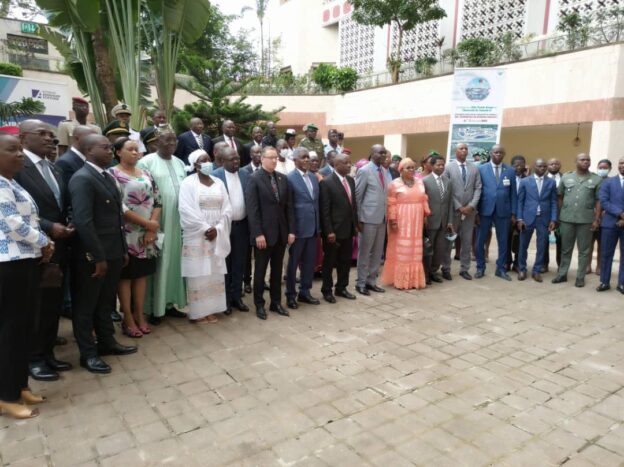
Health experts have been gathered in Yaounde, Cameroon for a three day workshop aimed at building their capacities on health research ethics.     As stated by CAMBIN, the leading organization of this cometogether, the objective is to share experiences but also to address possible gaps in routine and emergency public health evaluation procedures in the evaluation of research protocols.   The said training and exchange workshop that took place from August 25 to 27, 2021 comes within the framework of the Strengthening National Ethics Committees in West and Central Francophone Africa (SNECFA) project, which is part of the European and developing countries clinical trials partnership (EDCTP2) program supported by the European Union.   National Project Coordinator, Pr. Mbih Tosam Jerome says in spite of the rise in the number of clinical and biomedical research in the West and Central francophone Africa region, research ethics review remains a major challenge in many Francophone African countries.         He said: “The objective of this project is to strengthen the capacities of national ethics committee members and even institutions that govern them that is national ethics bodies. The idea behind this initiative comes from an observation that, within West and Central Francophone Africa, the national ethics committees are somehow lagging behind as far as ethics review of research protocols are concerned and the institutions, the national ethics institutions lack certain capacities as compared to national ethics committees in Anglophone Central and West Africa. So the project involves four countries namely: Cameroon, Chad, Mali and Niger.”   Participants at the workshop were equally upgraded on various incentives set up by Cameroon’s government in terms of research ethics. Dr Abong Bwemba Therese, Vice-Chairman of the national committee for research ethics on human health known in its french acronym as CNERSH, recalled that the institution created in 2012 has been carrying-out several activities and follows up all standards and norms governing researches to be undertaken on human beings.   “Normally when any research is carried-out on a human being, there is need to follow his/her rights. Participants in the research process have to be informed of all the risks at stake, their integrity must respected and they have to gain the benefits of the said researches on them. And all these criteria have been underscored during discussions at the ongoing workshop which is very crucial for our organization.” Dr Abong Bwemba said.   The vice-Chairman of CNERSH said the three day meeting is more than a capacity building workshop because of the best practices shared between various participants gathered by CAMBIN. According to information granted to media practitioners, the SNECFA project is coordinated by non-governmental organization known as Cameroon Bioethics Initiative (CAMBIN) based in Yaounde, Cameroon. CAMBIN has an Ethics Review and Consultancy Committee (ERCC), which not only reviews research protocols, but offers consultancy services for biomedical research and ethical review of research in Cameroon and beyond as outlined by Dr Tangwa Godfrey, vice-chairperson of CAMBIN.     CAMBIN was constituted in 2005 and legalized in 2006; with the following broad objectives to: provide a forum for regular meetings and discussions on bioethics; foster education in Bioethics; participate in national and international discussions on Bioethics and preserve and promote African perspectives in bioethics.     Elise Kenimbeni

Read More
 MINAS Explores New Avenues for Promoting the Rights of People Living with Disabilities

MINAS Explores New Avenues for Promoting the Rights of People Living with Disabilities

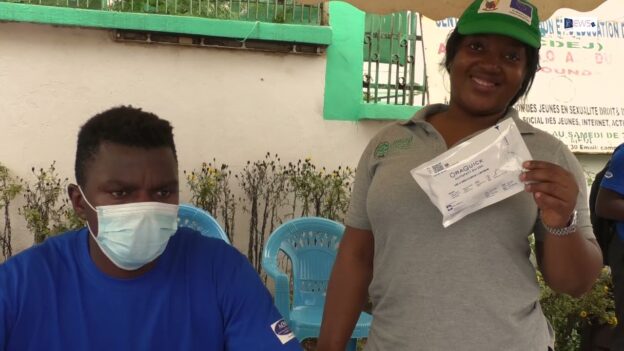
  Aimed at improving on the protection of rights and actions promoting the rehabilitation and socio-economic reintegration of persons living with disabilities in Cameroon, the 2021 session of the national committee for the rehabilitation and socio-economic reintegration of persons with disabilities took place on Thursday August 12, 2021 in Yaounde.       The two day meeting organized by the ministry of social affairs was placed under the theme: « Strengthening the legal basis for the protection and promotion of persons with disabilities, a multi sector based challenge for a more inclusive Cameroon in the context of coronavirus pandemic. »     Social affairs’ ministry, key partner of many organizations fighting for the rights of people living with disabilities (PLWD) has seized the occasion of this cometogether to further advocate for concrete actions that will help this category of persons.     Speaking to all participants present at the session of CONRHA, Secretary General in the ministry of social affairs has pointed-out the numerous projects which have been undertaken so far by government for disabled persons.       Mrs. Panje Itoh Beryl said amongst the multiple initiatives launched for the well-being of PLWD, Cameroon has ratified the Marrakech treaty which will facilitate access to documents for disabled persons.   The meeting that gathered several actors engaged in the protection and promotion of rights of PLWD was hosted by the Cameroon Baptist convention health services.   As key implementer of services for persons with disabilities since the 1952, the CBC health services started providing care to physically challenged persons by setting up the leprosy hospital in Mbingo, North-West region of the country. This was highlighted by Zacchs Yongwa, administrator of CBC Etoug-Ebe who spoke on behalf of Prof. Tih Pius Muffih, the General Director of the CBC Health services.     In his key note address he said: “The CBCHS currently supports the education, healthcare, social and livelihood opportunities for children, youths and adults with disabilities in 9 out of the 10 regions of Cameroon. In 2014, the CBCHS became the strategic partner organization of the Liliane Foundation which is enabling her to support over 3000 Children with disabilities to access education in 110 schools all over Cameroon, in primary and secondary schools, as well as university and vocational training centers. We have partnered with schools across all levels to facilitate inclusive education through the training of teachers, inspectors, setting up of a community of practice for IE implementers, supporting the GCE board with equipment to facilitate inclusion in the conduct of examination; construction and equipping of resource centers in government schools, amongst other.”     According to decree n°2018/6234/PM July 26, 2018 reorganizing the national committee for the rehabilitation and socio-economic integration of persons with disabilities (CONRHA), this inter sector based consultative body is responsible for facilitating, coordinating efforts deployed by public authorities, civil society organizations and other private persons in favour of persons with disabilities, and with their participation.     The decree signed by Prime Minister, Head of government has as main duties: the development of the Referential of the Evaluation of Deficiencies and Incapacities of persons with disabilities in Cameroon in 2010, consolidated and revised during the 2020 session of CONRHA ; the taking into consideration of the disability approach by all the sectors in the area of social life as well as sustainable development programmes and projects; the intensification of information and sensibilisation on the concept of the disability approach and inclusive  education; the promotion of inclusive and integrative education with the putting in place of inclusive Schools throughout the national territory and equipment in adapted didactic material in schools and universities, in order to facilitate the education of students with deficiencies ; the collaboration with MINESEC and MINEDUB for the designation of a representative of CONRHA in the committee of books, school books and didactic material ; one of the recommendations of the 2019 session ; the continuation of the development by specialized commissions, of regulatory specific texts and advocacy for the ratification of the United Nations Conventions on the Rights of persons with Disabilities was the strong resolution of the last 2020 session of CONRHA.                 Elise Kenimbeni

Read More
 Indigenous People Need Consideration & Respect says Minister Nguene

Indigenous People Need Consideration & Respect says Minister Nguene

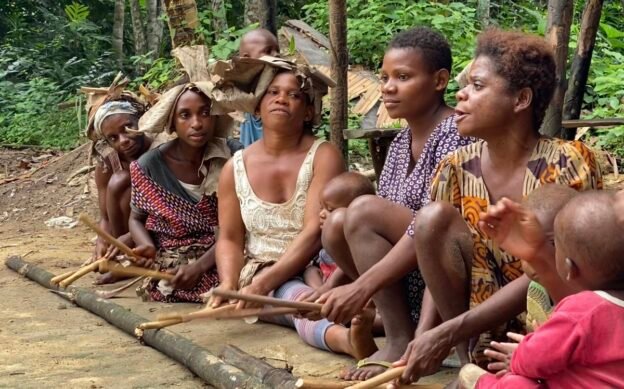
  Pauline Irène Nguene, Minister of social affairs in Cameroon was speaking on Monday, August 9, 2021, in Yaounde during the official ceremony to mark the 27th edition of the international day of indigenous people under the theme: “Leave no one behind: Indigenous Peoples and the call for a new social contract”.       The official celebration was coupled to a national campaign aimed at advocating for the consolidation of peace and the promotion of living together and inter-community dialogue. The caravan is led by the young mbororos and Baka people in the campaign which is one of this year’s innovative aspect put in place by the ministry of social affairs.     The event held in the conference hall of hotel GFAC in the Ngoa-Ekele neighbourhood of Yaounde was another opportunity granted to leaders of associations and organizations of the Mbororos, Baka, Bagyeli and Bakola communities.     National President of the association Mboscuda, Adamou Amadou says they have for the past years suffered from stigmatization and discrimination because of their lifestyle.     He said: “We have farmer Grazers’ conflicts but we have also climate change which reduces a lot of our pastoral areas, added to that there is insecurity in the bushes. Many industries are destroying the forests and destroying the lifestyle of indigenous people.”   As indicated by the Minister of social affairs, the theme chosen at the global level is out to remind us about the commitment of states, including Cameroon, to implement the 2030 Agenda on sustainable development, which focuses on 17 Sustainable Development Goals (SDGs), with the ambition of eradicating poverty, fostering peaceful societies and preserving the planet for future generations.   In her key address, the Minister said the various leaders chosen to lead the advocacy campaign are up to task and many are expected from them in terms of positive results.       “Dear young mbororos, bakas, bakolas and bagyelis. We have chosen you because you are already leading with great satisfaction campaigns to promote the rights of the child or to prevent Covid-19 in your respective municipalities. We are convinced that with the technical tools you will receive during this workshop, you will be able to meet the challenge of inter-community mobilization around the ideals of peace, harmony and national unity. I therefore invite you to show seriousness, dynamism, civility and patriotic commitment for the success of the said campaign.” She said.     Indigenous people need consideration and respect and their voices should be fully heard as underscored by Social affairs’ Boss and other key actors who took part in the activities. Pauline Irène Nguene stressed on the fact that her message was addressed to all Cameroonians and not only to a category of persons.   She said: “This message is also addressed to ordinary Cameroonians, whom we invite to change their outlook and attitude towards indigenous groups who deserve more consideration and respect.   To you indigenous peoples, be assured of the commitment of the government in all its sectors under the very high impetus of the Head of State to guarantee the exercise and enjoyment of your human rights. I encourage you to continue to mobilize and organize yourself to take charge of your own destiny.”   Besides the numerous initiatives already undertaken by the government to protect and promote the rights of indigenous people, there is a vital advocacy instrument put in place, which is the National Indigenous Peoples’ Development Plan.   The vision of the said plan according to social affairs’ ministry is to see, by 2025, Indigenous Peoples enjoy their fundamental rights, have access to basic social services and actively participate in the development of Cameroon through the pooling of resources from the State and technical partners and financial institutions in an environment of peace and social cohesion. In essence, the Indigenous Peoples Development Plan appears to be the instrument par excellence for ensuring that these populations are taken into account at all levels of development in our country.   In Cameroon, activities marking the day which is in its 13th year of celebration took place nationwide after weeklong activities launched on the 3rd of August 2021.             Elise Kenimbeni

Read More
 The Plight of Indigenous People on Discuss As MINAS & Regional Councillors Meet

The Plight of Indigenous People on Discuss As MINAS & Regional Councillors Meet

  Presidents of regional councils from all ten regions of Cameroon met with the Minister of Social affairs on Friday, August 6, 2021 in Yaounde. The one day meeting as indicated during the ceremony, enters within the framework of weeklong activities marking the 27th edition of the international day of indigenous people to be observed on August 9.       And in accordance with this year’s theme being: “Leaving No one Behind: Indigenous People and the call for a new social contract, the ministry of social affairs has included in its roadmap carrying this celebration, different actors who are important in changing the living conditions of indigenous in Cameroon.   In his address, Jean Claude Sanama Nkono, vice-president of the regional council for the center region of Cameroon has praised the initiative of the ministry of social affairs who thought it wise to implicate regional councillors in this important activity.   While officially opening the exchange meeting with regional councils’ heads, the Minister of social affairs, Pauline Irène Nguene stressed on the fact that no one should be left behind at this moment where the train of emergence takes-off in all regions.   “Do not leave anyone behind especially the most vulnerable groups and communities who need our support and actions in order to protect and promote their rights. Leave no one behind especially the Baka, the Bakola, the Bagyeli, the bedzan and mbororos, all indigenous people of Cameroon and whom in terms of international Rights, their specific needs are not always taken into account in  many developmental initiatives undertaken at the national level…” She said.   Highly expected contribution of the regional councils in this process has been pointed-out as significant by social affairs’ patroness, Pauline Irène Nguene.       During the debates that followed up, the various organizations and administrations concerned agreed on a series of recommendations. The ministries of regional planning, finance and that of decentralization and local development were tasked in the first place, to express an urgent opinion on the nature of the benchmarks that will have to be considered in the planning, programming and budgeting process of strategic and operational orientation documents at the regional level while considering the obsolete nature of the statistical data contained in some of the said benchmarks existing in this area which were mentioned in the presentation by the Head of the division in charge of Planning and local development in the ministry of decentralization.   The decentralization and local development was equally recommended to envisage the holding nationwide of capacity building workshops on the methodological guide for the preparation of Regional Development Plans and on other important related aspects.     As concerns the host ministry, it was agreed that officials will clarify or at least define precisely the objectives and expectations of the ministry of social affairs, with regard to the strategic orientations that the regional development plans will have to take for the effective consideration of the specific needs of socially vulnerable groups in general and indigenous people specifically. The ministry of social affairs was equally recommended to mobilize both heads of central and decentralized services of its department, in order to support regional councils in the preparation of their regional development plans.   Added to the aforementioned recommendations, participants notably the regional councillors were called on to take into account the disparity of the Regions, in particular with regard to its potentialities and constraints, in the formulation by the ministry of social affairs of the expectations and objectives assigned to the regional councils with a view to the effective integration of the specific needs of socially vulnerable groups and indigenous people in particular.   Worthy to note, the theme chosen at the global level by the United Nations Permanent Forum on Indigenous Issues is “Leaving No One Behind: Indigenous Peoples and the Call for a New Social Contract”. Through the choice of this theme, experts of the United Nations permanent forum on indigenous issues wish to reiterate the appeal launched to the States Parties for the international consensus of the leaders of one hundred and ninety-three (193) countries including Cameroon, who subscribed in September 2015 to the adoption of the 2030 agenda for the implementation of the Sustainable Development Goals (SDGs) intended to leave no one behind by eradicating poverty, protecting the planet, promoting peace, social cohesion and living together.     Ahead of the celebration of the international day of indigenous people, it should be recalled that, in thirteen years of celebrating the said commemorative day, Cameroon has made its voice heard through a set of activities developed around the themes proposed by the permanent forum on indigenous issues of the United Nations Economic and Social Council.           Elise Kenimbeni

Read More
 Social and Economic Inclusion of Indigenous People in Cameroon under the Spotlight

Social and Economic Inclusion of Indigenous People in Cameroon under the Spotlight

Ahead of the 27th edition of the international day of indigenous people in Cameroon, come August 9, the Minister of social affairs chaired on August 3, 2021 in Yaounde, the official launch of this celebration.   During the official launching ceremony coupled to the 9th session of the intersectoral committee for monitoring programmes and projects involving vulnerable indigenous people (CISPAV) in its french accronym, Social affairs’ Minister, Pauline Irène Nguene said this year’s theme being: “Leaving No one Behind: Indigenous People and the call for a new social contract”, outlines one of the missions assigned to her ministerial department, which is out to tackle social exclusion.     The Minister in her keynote address said the fight against social exclusion in the ministry of social affairs has to do with ensuring that, no socially vulnerable groups are excluded, put aside in developmental projects of the country in line with the application of sustainable development goals.   Pauline Irène Nguene equally mentioned the fact that, the ministry of social affairs has embarked on drawing up a national development plan for indigenous people in Cameroon, which today is in its implementation phase following series of consolidation and validation workshops held in December 2020. The said plan is a tool aimed at organizing, structuring and refining the interventions of technical and financial partners as well as the civil society organizations.   Besides the plan, she said government has set up many incentives to upgrade the living conditions of vulnerable communities and indigenous people. And Cameroon has been promoting several reforms and initiatives put in place at the international level.       Social affairs’ patroness seized the occasion of the official launch and the holding of the 9th CISPAV session to call on various actors to bind efforts in abid to tackle the different challenges faced by indigenous communities.   Executive Director of the Cameroon Indigenous woman Forum, Bouba Alisatu says they have been carrying-out series of advocacy talks in order to ameliorate their status and under the banner of the ministry of social affairs, they will continue to lead this process.     “We still have issues of access to health facilities. Most indigenous people you know live on top of hills and to get to the nearest health center is a very big problem. We equally have problems of access to education, where our children face difficulties to go and attain school because they live on top of the hills and so on. Most of these schools are constructed in the nearby villages and towns. We still have problems of land issues especially for the Mbororos communities who have their cattles and need large spaces to stay with them because that is their culture and that is what makes them to be bororos people. Apart from these, we face forceful displacement without any compensation; the COVID-19 pandemic affecting everybody is another issue due to information which are not made available to indigenous communities. Sensitization campaigns and kits do not reach our communities…”   In an interview granted to media practitioners, the Director of national solidarity and social development at the ministry of social affairs, Henri Nyambi III Dikosso outlined the major steps taken by government in order to alleviate the living conditions of indigenous people who are most often marginalized in our society.       He said: “They are marginalized because they don’t have access to education, health facilities and basic social needs. In fact, they have difficulties in accessing these basic needs. Yet, the first thing the government is doing with its various partners, is to increase the level of accessibility of basic needs for these populations. We have more and more children coming from these social groups who are now scholarized, even at the level of universities. Secondly, government has created room for employment. We have many who are now civil servants in our country. Added to that, many groups and associations have been created and they carry-out some activities that will help in developing their communities…”   According to information granted by the ministry of social affairs, the theme chosen at the global level by the United Nations Permanent Forum on Indigenous Issues is “Leaving No One Behind: Indigenous Peoples and the Call for a New Social Contract”. Through the choice of this theme, experts of the United Nations permanent forum on indigenous issues wish to reiterate the appeal launched to the States Parties for the international consensus of the leaders of one hundred and ninety-three (193) countries including Cameroon, who subscribed in September 2015 to the adoption of the 2030 agenda for the implementation of the Sustainable Development Goals (SDGs) intended to leave no one behind by eradicating poverty, protecting the planet, promoting peace, social cohesion and living together. This theme in its intention also calls on States to further promote the social and economic inclusion of Indigenous Peoples through the definition of a new social contract which would put at the center of priorities questions relating to the citizenship of these populations, access to basic social services and their active participation in decision-making bodies in order to guarantee their harmonious social integration.         Elise Kenimbeni

Read More
 Lutte Contre la Mortalité Maternelle: UNFPA Cameroun Accentue ses Actions auprès du MINSANTE

Lutte Contre la Mortalité Maternelle: UNFPA Cameroun Accentue ses Actions auprès du MINSANTE

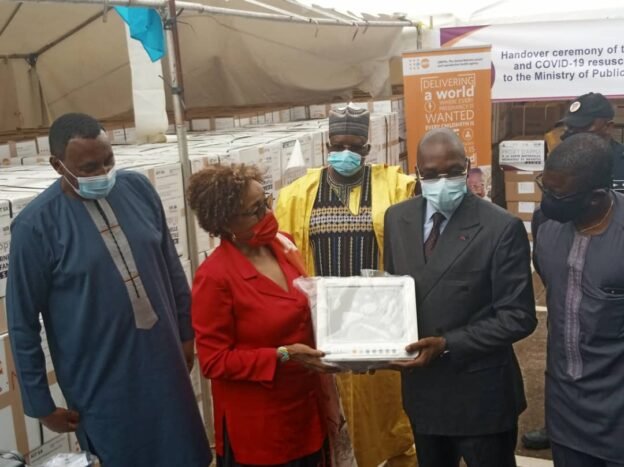
  Des dons constitués des kits de santé de reproduction et équipements de réanimation pour la riposte contre la covid-19, ont été remis ce 30 juillet à Yaoundé au Ministre de la santé publique, Dr Manaouda Malachie, par Mme Siti Batoul Oussein, Représentante Résidente du Fonds des Nations Unies pour la Population (UNFPA) au Cameroun.     Cet élan de cœur est constitué d’un lot de 2481 équipements, issus de 24 variétés et comprenant entre autres des respirateurs de réanimation, extracteur d’oxygène, Laryngoscope, Stéthoscopes, Doppler Fœtal, Horloge Mürale, set de canule de Guedel et des prongs nasals. En cela s’ajoute 423 kits d’intrants/équipements de catégories 6A, 8 et 11A, pour des soins obstétricaux d’urgences. Ces équipements seront distribués dans diverses formations sanitaires plus précisément dans les régions de l’Extrême-Nord, du Nord et de l’Adamaoua. Ces localités enregistrent des indicateurs de mortalité et de morbidité maternelle et infantile les plus critiques.      « Ce don vient à point nommé parce que ça va nous permettre de résoudre certains problèmes dans nos formations sanitaires, de recevoir les femmes et les administrer des soins des qualités. Et ceci à l’espoir dans l’avenir que nous allons réduire drastiquement la mortalité maternelle et infantile dans la région de l’Adamaoua. » se réjouit le Délégué régional de la santé de l’Adamaoua, Dr Yaou Alhadji Zakari.   Ainsi, « ce matériel permet non seulement de rassurer mais d’équiper les structures sanitaires afin de pouvoir répondre aux services, d’assurer la continuité des services néonatales et infantiles en contexte covid. » explique la représentante résidence UNFPA. Le gouvernement, « malgré la baisse de 40% du ratio de mortalité maternelle entre les deux dernières enquêtes démographiques de santé, la réduction du décès maternel reste une priorité majeure » rassure le Ministre de la Santé, Dr Manaouda Malachie.   Ce don a été financé grâce au Projet d’Appui Santé maternelle, Néonatale et Infantile (PASMNI), mis sur pied par le Ministère de la Santé Publique, le Ministère de l’Economie, de la Planification et de l’Aménagement du Territoire  et la Banque Islamique de Développement (BID).       Par Nsangou Yap Ayouba

Read More
 L’ONG WOCOTOMADI Célèbre Ses 10 ans d’Actions au Cameroun

L’ONG WOCOTOMADI Célèbre Ses 10 ans d’Actions au Cameroun

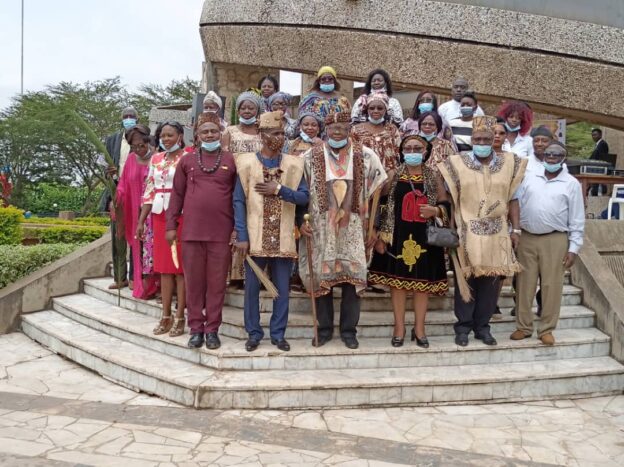
  C’est à travers une série d’activités qui se tiennent à Yaoundé, capitale camerounaise que l’ONG WOCOTOMADI célèbre son dixième anniversaire.       Crée par la camerounaise Julienne Siwe, installée aux Etats-Unis depuis 2008,  l’ONG WOCOTOMADI, INC voit le jour le 31 Juillet 2011 à New Bedford, Massachusetts. D’où la commémoration de ses dix années d’existence à travers une série d’activités lancées le 27 juillet 2021 à Yaoundé au monument de la réunification du Cameroun.     Ce 30 juillet 2021 au musée national de Yaoundé au Cameroun, la journée est dédiée à une projection d’un long métrage qui retrace les multiples activités de l’ONG WOCOTOMADI.  En effet, la projection met en exergue les actions de cet organisme dans différents domaines depuis son existence.     La date du 30 Juillet telle que choisie par les organisateurs de cet évènement met en vitrine la célébration de la journée internationale des Rois et Chefs traditionnels, qui sont en majorité des membres fondateurs du WOCOTAMADI.   Tel que l’indique le comité d’organisation du WOCOTOMADI, cette célébration des Rois et Chefs traditionnels a son historique : « Nous sommes le 30 juillet 2018 à Orlando en Floride ; le maire de cette ville BUDDY DYER, magnifie la richesse culturelle ancestrale de l’Afrique dont ses recherches personnelles lui ont permis de capter un pan. Cette occasion solennelle fait suite à une séance de travail préparatoire avec les équipes de WOCOTOMADI, INC pour le compte des activités du 2e Sommet International sur « l’acculturation des peuples » dont sa ville était hôte d’une des articulations. Ils se sont accordés de la nécessité de semer une graine depuis Orlando en Floride, la faire germer, grandir, occuper les espaces… Avec la prétention de croire que le jeune arbre se hissera un jour comme le baobab géant et servir de mirador, un véritable repère pour rappeler à la conscience collective où se trouve la source à protéger. Ainsi, pendant ce 2e sommet International sur la problématique de l’acculturation des peuples, organisé par l’ONG WOCOTOMADI, INC sous l’encadrement scientifique du Pr. Luc DJOUSSE de Harvard University aux USA, le maire de Orlando acta par une proclamation la journée du 30 juillet comme celle des Rois et Chefs Traditionnels, faisant ainsi honneur à ces nombreux rois et chefs africains qui participaient au Sommet. Cet élan sera soutenu par le maire de Kissimmee Jose A. ALVAREZ et le Sénateur de l’Etat de Floride Victor Manuel TORRES Jr qui profitent aussi l’occasion de ce Sommet pour honorer les traditions ancestrales… »     Les activités du WOCOTOMADI sont placées sous le thème : « chefferie traditionnelle, dans la décentralisation, implication des chefs traditionnels dans les régions et l’opportunité de développement ». Il souligne l’importance pour les chefs traditionnels de réaffirmer une fois de plus leur engagement et leurs rôles dans la nouvelle configuration administrative au Cameroun et, pour WOCOTOMADI, INC, s’inspirer des Objectifs de Développement Durable des Nations Unis (ODD), travailler avec des partenaires pour créer un impact durable pour le bien être des communautés désœuvrées, ceci en réduisant considérablement nos charges de travail grâce au travail des bénévoles, aussi en économisant de l’argent au travers des services gratuits.   Durant la conférence de presse de lancement des activités qui s’est tenue au monument de la réunification, la présidente du comité d’organisation, Sa Majesté Lisette Ndongo a énuméré les différentes actions qu’a mené sur le terrain cette organisation non-gouvernementale qui a pour leitmotiv, accompagner et aider les couches vulnérables. Cet aspect humanitaire est d’ailleurs l’un des points qui a permis de mettre sur pieds le WOCOTOMADI.        Les chefs traditionnels réunis autour de Sa Majesté Ndongo ont décrié les violences que subissent les populations dans notre pays et les conflits dans la région dite anglophone qui entrave la paix et le développement. Et pour la circonstance ils ont fait une procession avec la danse traditionnelle « Essani » afin d’appeler à la paix et au vivre ensemble. D’une seule voix, ils ont dit non à la guerre et à la division de leur beau et tendre pays le Cameroun. En tant que piliers locaux, personnes qui communiquent facilement avec les populations, ils ont réitéré leur soutien à l’Etat camerounais.   Sa Majesté Ndongo Lisette quant à elle, n’a pas failli de souligner les nombreuses activités génératrices de revenues que l’ONG a créées pour certaines cibles ainsi que le souhait de mettre davantage pour les populations nécessiteuses.       Elle a aussi a réitéré l’essence de cette 10ème année de célébration du WOCOTOMADI, qui est couplée à la 4eme année de proclamation de la journée internationale des rois et des chefferies traditionnelles placée sous le haut patronage du ministre des arts et de la culture, Dr. Pierre Ismaël Bidoung Mkpatt et du président d’honneur du WOCOTOMADI.INC, Sa majesté Vincent Tchoua Kemajou, Roi des Bazou dans la région de l’Ouest et sous le haut parrainage des ministres Mbarga Mboa Philippe, Pr. Laurent serge Etoundi Ngoa, Séraphin Magloire Fouda et de la marraine nationale des reines, princesses et femmes des chefferies du Cameroun Célestine Ketcha Courtes.     En terme de perspectives elle dit : « En terme d’engagements, nous comptons accompagner l’Etat de manière transversale dans ses différents programmes pour le développement de notre pays, ceci en collaboration avec les différentes chefferies du pays. »   Il faut signaler que cette journée se veut l’occasion de réunir entre eux et en un lieu les gardiens des traditions ancestrales de tous les horizons, leurs communautés diasporées avec eux, sans oublier tous ceux qui veulent s’abreuver à leurs sources, afin qu’ils soient célébrés, leurs patrimoines valorisés, leurs cultures exposées, et qu’ils réfléchissent et prennent des actions fortes pour se positionner comme acteurs majeurs de la stabilité et du développement de leur peuple.     L’ONG WOCOTOMADI à travers sa vision veut continuer à promouvoir et valoriser la culture d’un monde plus juste en Afrique et dans le reste du monde, au Cameroun en particulier à travers la santé, la culture, l’éducation, l’agriculture etc.           Elise Kenimbeni

Read More
 MINAS Advocates For Social Protection as Structuring Projects Expand Nationwide

MINAS Advocates For Social Protection as Structuring Projects Expand Nationwide

  Close to 30 participants from various organizations, and administrative units were convened by the ministry of social affairs in a one day technical workshop held on July 28, 2021 in Yaounde, Cameroon.   During the meeting chaired by Minister Pauline Irène Nguene, the scope of activities assigned to the national brigade for the social compliance of projects were reviewed as well as the draft of the Reference Framework for the social compliance of projects, which was presented to the audience.    The draft of the Reference Framework for the social compliance of projects which was presented as a practical guide to be used by promoters, project owners, controllers and other actors involved in this chain is centered on three main components. National controllers of the brigade in charge of its facilitation on the field highlighted key points to be taken into account by all actors who are implicated in heavy and structuring projects in Cameroon.   As indicated, the State has the right to protect its citizens and more over those who might be or are affected by vast projects undertaken on sites where populations are found. The fact that many projects are carried-out on major sites and affect communities is a worry to the government. Despite the interests generated from these construction works the government is conscious of the impacts most of the times felt by populations living around the sites.   Government has put in place many incentives to first protect its people through its social justice policy and normative instruments as underscored by social affairs’ patroness. The creation of the national brigade for the social compliance of projects which is the watchdog of the government is a clear indication of a follow up of activities carried-out by different organizations on the field. Yet, through-out the new draft presented by the national brigade, responsibilities on social protection have been stated-out clearly and strategic points such as displacement, resettlement of populations, compensation and benefits were equally unveiled.   In her key note address, Minister Pauline Irène Nguene said this workshop aimed at building capacities of actors involved in the social compliance of projects enables to share Cameroon’s strategic vision as concerns the integration of the social dimension of projects and to mobilize the national and international community around this concept.   She said: “the ministry of social affairs through its national brigade for the social compliance of projects intends to continue with the sensitization process that has already begun, develop technical tools relating to social compliance of projects, and advocate for the improvement of the related legal framework, in a bid to reduce or even eradicate the social tensions generated by the implementation of projects.” For recall, the national brigade for the social compliance of projects was created by presidential decree on July 18, 2017 under the banner of the ministry of social affairs.  The national brigade is responsible for: drafting and monitoring the implementation of the reference framework for the management of social dimension of projects; drafting and monitoring indicators for preliminary social assessment and social impact studies; monitoring and evaluating social and economic support plans for major structuring projects; monitoring and evaluating social and economic support plans for local populations; monitoring and evaluating the implementation of the protection plans for vulnerable indigenous peoples affected by projects; monitoring the application of national regulations and international standards in force as concerns management of the social impacts of projects; monitoring compliance with the social provisions in the specifications by project promoters and owners.     The national brigade for the social compliance of projects has since its creation focused its activities essentially on sensitization of various actors involved in the chain. From April to May 2021, the brigade carried-out in all ten regions of the country series of sensitizations with all stakeholders concerned by developing projects.   Elise Kenimbeni

Read More
 Peace Building in West and Central Africa: Experts Reflect on Strategic Approaches

Peace Building in West and Central Africa: Experts Reflect on Strategic Approaches

  Close to a hundred participants from West and Central African states are meeting in Yaounde, Cameroon’s nation capital as part of a three day regional conference initiated by the Konrad Adenauer Stiftung foundation and the University of Yaounde II.     The meeting launched on July 21, 2021 at the Hilton hotel is aimed at reviewing the level of inclusiveness in the production of peace in the West and Central Africa Region, in line with political and social responses adapted.       Amongst others, the conference has as main objectives: putting in place a cartography of various actors in the production chain of peace; engaging a dialogue between Europe and Africa on the new mechanisms for military assistance; identifying key factors hindering peace consolidation just to name these few.   The three day regional conference gathering various academicians, experts, parliamentarians, foreign affairs’ officials, military officers, gendarmes, policemen, traditional and religious leaders as well as independent consultants from 25 countries paves the way to scientific reflections on how to create an inclusive peace in the West and Central African Region.     In his key note address, the Rector of the University of Yaounde II praised the initiative which comes at a right moment, with regards to the numerous conflicts and crises in which the Sub-region is entangled. Prof. Adolphe Minkoa She equally hailed the Konrad Adenauer Stiftung foundation which has for the past three decades through its different programmes played a crucial role in improving peace on the African continent in general, and in the Sub-Saharan region in particular.         Prof. Adolphe Minkoa She reiterated in his speech, the firm engagement of the University of Yaounde II described as the future technopole of social sciences and which currently operates as an interdisciplinary and collective research centre with high-profile academicians from various socio-professionals backgrounds.     Talking on behalf of the Konrad Adenauer foundation, Regional Director for security policy dialog in Sub-Saharan Africa, Roland Stein said discussions are mainly focused on diagnosing solutions to the various conflicts, crises and post conflicts.     He outlined the fact that despite successes from defence and security forces, the questions on how to create enduring peace and how to support nation building are essential during discussions.   Roland Stein said: “We hope to find answers to part of these questions during the conference. We are basing on three international research papers at the programme this year, where we try to find out who should be included in producing peace? The other one is dealing with the mechanisms which should be implicated to create peace. And last but not the least is on a new research paper which is regarding the new European Union peace facility and combining these three research papers we will start to table the question of a strategic approach to nation building and the creation of lasting peace in Sub-Saharan Africa.”   Speaking to media practitioners, Vice-Rector of the Yaounde II University, Prof. Nadine Machikou added that, this regional cometogether is a pace setter for the Yaounde II university which will facilitate conversation for peace.       She said: “What is very important to affirm here, is the fact that the university is at the centre of reflections on peace processes in our societies…Having people from different countries with different capacities to remise peace.  At the initiative of this conference, there is a study/research that was produced on how to frame peace in an inclusive way. So, if during these three days, in an inclusive way people are gathered together, to speak and give ways or tools that could help to rebuild peace, I think that will be a great achievement. And in a more sustainable way, we expect at the end of this conference that there will be networks for peace and more research initiatives for the University of Yaounde II as the technopole of social sciences, whose ambition is to bring out solutions for the various challenges that our country is facing.”   As deliberations unfold till the 23rd of July 2021, participants are expected to move out with sustainable responses and recommendations for this crucial issue of peacebuilding in Sub-Saharan Africa.       Worthy to note the Konrad Adenauer Stiftung foundation through its programme for the promotion of dialogue on security policies in Sub-Saharan Africa, known in its French acronym as SIPODI, which was put in place on November 2015, has been working on problems linked to peace and security in countries covering its project.             Elise Kenimbeni

Read More