Programme Seeds For the Future de Huawei: Fin de Formation pour les Lauréats de l’Acte 6

Programme Seeds For the Future de Huawei: Fin de Formation pour les Lauréats de l’Acte 6

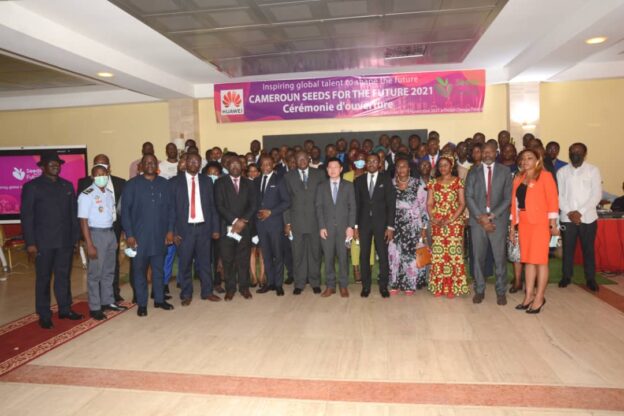
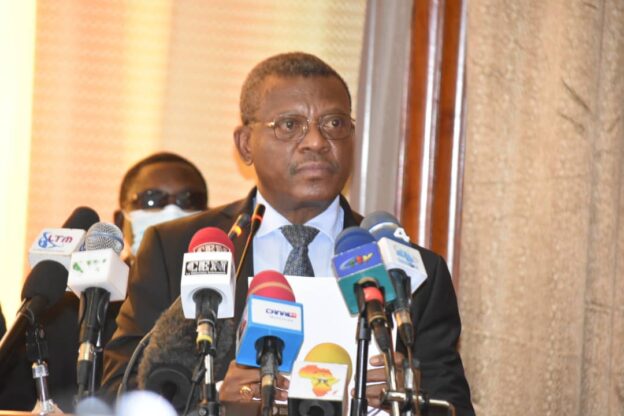
Les 40 lauréats de la 6e édition du programme « seeds for the future » du Huawei ICT Academy ont achevé leur formation de courte durée avec satisfaction. C’est une nouvelle cuvée nantie des connaissances et du savoir-faire, prête pour rivaliser dans le monde de la digitalisation. En effet, ce sont 40 étudiants camerounais triés récemment sur le volet et présentés officiellement comme ceux faisant partie de la 6e édition du prestigieux programme dénommé : « Seeds for the future » de la Huawei ICT Academy. Ces étudiants issus des écoles des TIC partenaires du programme initié par la firme chinoise, Huawei, se sont distingués parmi les 90 shortlistés au départ et le clou était leur participation à cette formation de qualité. La formation qui s’est achevée le 29 novembre 2021 a permis aux lauréats d’acquérir des rudiments nécessaires afin de se frotter également au marché de l’emploi. Durant huit jours très chargés, les étudiants ont suivi en mode virtuel, des cours de TICs sur des aspects tels que : la sécurité informatique, les réseaux informatique, l’intelligence artificielle et bien d’autres notions clés. L’une des enseignantes à ce programme, dont la qualification l’a propulsé, a tenu à indiquer que l’accompagnement dans cette initiative louable se fait avec des étudiants bien moulés. Lauraine Tiogning, enseignante certifiée de Huawei dit : « Nous enseignants chercheurs,  accompagnons Huawei dans cette initiative de formation des talents qualifiés, et ne pouvons qu’encourager cette collaboration avec les universités. » Le leader de cette 6 e promotion, Alice Tonzock indique que, ses camarades et elle vont faire valoir les connaissances acquises pour l’édification du Cameroun. Elle s’exprimait au cours de la cérémonie virtuelle en ces termes : « Notre ambition en tant que sixième bénéficiaires de ce programme, est d’utiliser ces différentes connaissances acquises pour participer activement à la mise en place du développement des TIC au Cameroun. Nous sommes déterminés à nous engager pleinement dans ce domaine très ouvert… » Selon la porte-parole des lauréats a tenu à souligner que : « ce programme sera l’une des principales voies par lesquelles passera le développement des TIC au Cameroun, lesquelles TIC nous paraissent très opportunes pour garantir l’émergence du Cameroun à l’horizon 2035. Merci aux autorités camerounaises d’avoir mis en place ce partenariat avec la société de télécommunications Huawei… » La Directrice des relations publiques de Huawei dans la zone CEMAC, Edmonde Djiokeng Teboh a pris part à cette cérémonie virtuelle et cette dernière comme il est de coutume a tenu à partager avec les 40 lauréats des paroles de sage afin de leur booster davantage dans les prochaines étapes. S’exprimant Edmonde Djiokeng Teboh a indiqué que : « Nous donnons la possibilité aux étudiants camerounais de partager, communier avec leurs paires d’ailleurs pour mieux apprendre. La Huawei ICT compétition par exemple, permet aux meilleurs de dévoiler leur savoir-faire dans une compétition à l’échelle mondiale. Et le Cameroun y fait également notre fierté, puisque l’année dernière, l’équipe de l’université de Douala a remporté le 3e prix au niveau mondial… » Elle a poursuit dans ses propos en disant que Huawei a également un projet d’accompagnement de ses étudiants pour l’emploi et l’auto-emploi. Elle a révélé que les étudiants que Huawei forme ont l’opportunité d’être recruté au sein de la firme chinoise, géant des télécommunications. Huawei ICT Academy est un programme déjà implanté dans huit(8) grandes écoles des TIC au Cameroun à savoir : l’École Nationale Supérieure Polytechnique de l’Université de Yaoundé 1, l’Ecole Nationale Supérieure des Postes et Télécommunications, des  Technologies de l’Information et de la Communication ( SUP’PTIC), l’Institut Universitaire de la Côte (IUC), l’Institut Africain d’Informatique (IAI), l’Institut Supérieur de Formation aux Métiers des Télécommunications, de l’Innovation Technologique, de Commerce et de Gestion ( IFTIC – SUP), la Catholic University Institute of Buea ( CUIB). Une collaboration qui ne cesse de faire le bonheur de plusieurs apprenants camerounais grâce à un partenariat fruit de l’Accord signé à Beijing entre le Président de la république du Cameroun et son homologue de la Chine. Elise Kenimbeni

Read More
 November Ordinary Session: Third Round of Ministers Defend Budgetary Allocations

November Ordinary Session: Third Round of Ministers Defend Budgetary Allocations

Another group of seven ministers appeared before the finance and budget committee of the national assembly on Tuesday, 30th of November 2021. The team of Rosette Ayayi Moutymbo alongside Minister Delegate in charge of relations with assemblies, Bolvine Wakata, Gaston Komba, Secretary General of the national assembly and other government officials from the ministries of finance, economy and regional development welcomed seven ministers on November 30, 2021. The Ministers programmed for the day defended each their respective budgets as follows: Trade Trade Minister, Luc Magloire Mbarga Atangana defended an envelopeof 7.958 Billion FCFA which according to him will help boost economic operators in promoting events and trade fairs abroad and the export markets. Agriculture Gabriel Mbairobe, Minister of agriculture and rural development has defended a budgetary allocation of 88.642 Billion FCFA. Activities of the ministry of agriculture and rural development shall be prioritized to boost production in the cocoa, coffee, rice and cotton sectors just to name these few and by the way to revamp some programmes. Livestocks, fisheries and animal industry The budget apportioned to the ministerial department of Dr Taiga is 45.532 Billion FCFA. The money shall be disbursed amongst others to boost the animal production and industries development aimed at increasing dairy products and milk and in the livestock and fisheries sectors, much will be vested. Forestry Jules Doret Ndongo, minister of forestry and wildlife said the budget allocated for the 2022 exercise will focus on four main programmes. The Minister defended an envelope of 16.5 Billion FCFA that will serve purposes of rehabilitating and renewing forestry resources, valorisation of wildlife resources and protected species as well as participating in the support of some projects in these domains. Mines and Industries Gabriel Dodo Ndoke, the Minister of mines, industry and technological development on his side defended an envelope of 7.8 Billion FCFA. Small sized enterprises Small and medium size enterprise, social economy and handicrafts’ Minister, Achille Bassilekin III has defended an envelope worth 11 Billion FCFA. Speaking to the media, the minister said a greater part of the budget allocated to his ministry will be used to enhance SMEs which have been affected by the Covid-19 pandemic, an impact felt on economic activities of the country. “Given that there is a prompt recovery in terms of providing them the necessary financial assistance, we have organized the possibility for some technical and financial donors beyond what the state is already doing, to ensure that there are some credit lines opened in specific banks for them. And it amounts today to 18 Billion FCFA harvested, meaning this is what will be channelled to our SMEs in 2022.” He said the implementation of the national development plan on social economy is another vital project to be set in motion in 2022 by his ministerial department. Environment To end the day, the finance and budget committee played host to the minister of environment and sustainable development. Minister Hélé Pierre defended for the 2022 exercise, an envelope standing at 6.5 Billion FCFA. On his flagship, Minister Hélé outlined key issues on which much emphases will be laid on. Issues related to sustainable development, the fight against pollution and climate changes were cited. Elise Kenimbeni

Read More
 VIH/SIDA : Accès aux soins de Santé,  les Populations Clés Marginalisées

VIH/SIDA : Accès aux soins de Santé, les Populations Clés Marginalisées

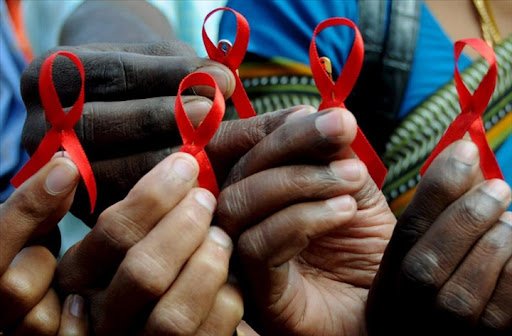
Au Cameroun, les populations clés ou encore key populations s’indignent contre la stigmatisation et la discrimination dont elles sont victimes en matière d’accès aux services de santé. Kevin(prénom d’emprunt)est un jeune homme ayant des rapports sexuels avec d’autres hommes, qui a découvert dans son statut sérologique qu’il avait été testé positif au VIH. Au moment de son ravitaillement en antirétroviraux (ARV), il se rend dans un hôpital de Yaoundé pour la dispensation, mais au niveau de l’unité de prise en charge(UPEC) personne ne le reçoit. Des clients et d’autres patients viennent après lui et sont servis. Lorsque ce dernier va vers l’infirmière, elle lui répond à haute voix et en ces termes : « Je ne suis pas responsable de ton sida pardon attend. Quand on vous dit de ne pas coucher avec les hommes, c’est l’abomination, vous ne comprenez pas ! Voilà, un jeune comme toi, tu as eu la foudre de Dieu et tu voudrais que le seigneur me frappe aussi ? Pardon va attendre là-bas on va te servir le moment venu… » Kevin nous confie que malgré la honte et les regards des personnes présentes au moment des faits, il a pris son mal en patience pour la bonne cause de sa santé. Il a été reçu aux environs de 15heures ce jour après une longue attente. Courroucé et en colère il a décidé de ne plus jamais remettre ses pieds dans cette formation sanitaire mais de se rapprocher des organisations à base communautaires pour une dispensation en communauté. Une scène réelle qui décrit les difficultés que subissent, au Cameroun, les populations clés que sont : les travailleuses de sexe(TS), les Hommes ayant des rapports sexuels avec d’autres Hommes (HSH) et les usagers de drogues  injectables (UDI). Et d’après des études menées sur le terrain par des organismes nationaux et internationaux, les hommes ayant des rapports sexuels avec des hommes ou les professionnelles du sexe vivant avec le VIH expérimentent des situations de rejet social et particulièrement d’auto-stigmatisation. Des données d’enquête récente montrent qu’ils sont peu enclins à dévoiler leur statut VIH, même dans leur environnement personnel. Par exemple, seuls 29% des professionnelles du sexe vivant avec le VIH avaient dévoilé leur statut à leurs partenaires réguliers qui ne les payaient pas. S’agissant des hommes ayant des rapports sexuels avec des hommes vivant avec le VIH, 50% d’entre eux avaient dévoilé leur statut à leurs partenaires réguliers et 20% à leurs partenaires occasionnels (Johns Hopkins University et al. 2017). Selon le Programme commun des Nations Unies sur le VIH/Sida (ONUSIDA), les inégalités économiques, sociales, culturelles et juridiques doivent prendre fin de toute urgence si « nous voulons éradiquer le sida d’ici 2030 ». Un appel qui vient à point nommé au vu de la thématique choisie pour la commémoration de la journée mondiale de lutte contre le sida, placée sous le thème :« Mettre fin aux inégalités. Mettre fin au Sida. Mettre fin aux pandémies. » Dans sa note indicative à la 34e édition de la journée mondiale de lutte contre le Sida qui se célèbre ce 1er décembre 2021, ONUSIDA souligne le fait que la prise en compte des Droits de toutes les populations sans aucune discrimination et stigmatisation est cruciale dans l’atteinte des 90-90-90 et l’éradication du VIH/Sida d’ici 2030. ONUSIDA indique que : « Lutter contre les inégalités n’est pas une promesse nouvelle, mais l’urgence n’a fait que s’accroître. En 2015, tous les pays ont promis de les réduire au niveau national et international dans le cadre des Objectifs de développement durable. Par ailleurs, l’éradication des inégalités est au cœur de la Stratégie mondiale contre le sida 2021–2026 : Mettre fin aux inégalités, mettre fin au sida, et au centre de la déclaration politique sur le VIH/sida adoptée lors de la Réunion de haut niveau des Nations Unies sur le VIH/sida en 2021. Lutter contre les inégalités est essentiel pour éradiquer le sida, mais aussi pour promouvoir les droits humains des populations clés et des personnes vivant avec le VIH, pour instaurer des sociétés mieux préparées pour vaincre la COVID-19 et d’autres pandémies, mais aussi pour favoriser la reprise et la stabilité économiques. Tenir cette promesse, c’est sauver des millions de vies et améliorer la société dans son entier. » Combattre les inégalités Cette thématique fort évocatrice pour bon nombre de défenseurs de droits humains et responsables des organisations communautaires qui œuvrent pour le respect des droits des communautés LGBTIQ au Cameroun, a tout son sens et permet de mettre sur la table les multiples discriminations auxquelles font face ces groupes de personnes dans notre société. Pourtant la Déclaration universelle des Droits de l’Homme (DUH) du 10 décembre 1948, stipule dans son article 1er, que : « Tous les êtres humains naissent libres et égaux en dignité et en droits. Ils sont doués de raison et de conscience et doivent agir les uns envers les autres dans un esprit de fraternité. » L’article 7 de la DUH va plus loin pour souligner le fait que tous ont droit à une protection égale contre toute discrimination. En dépit de l’application de la DUH, les réalités sont autres, la criminalisation des pratiques sexuelles entre personnes de même sexe est une entrave à l’accès aux services sanitaires et publics en général au Cameroun. Le Coordonnateur des droits humains et du plaidoyer pour la Cameroonian Foundation for AIDS (CAMFAIDS), Ebenezer Munkam dans ses propos dit : « Cette criminalisation des rapports sexuels entre personnes de même sexe nourrit la peur chez des Personnes LGBTI vivant avant le VIH ou autres IST et infections. Elles ne se font pas dépister de même qu’elles brisé difficilement le silence sur les pathologies dont elles souffrent et cela complique la prise en charge qui survient très souvent tard. »  Dans le même ordre d’idée, Yves Cyrille Tonkeu, responsable droits humains et plaidoyer pour l’association Humanity First Cameroon plus (HFC+) affirme que  cette journée commémorative pour eux met en exergue dans un premier temps, le travail déjà effectué dans la lutte contre le VIH au Cameroun. Et, est aussi l’occasion de se questionner sur les avancées et entraves qui minent les droits humains

Read More
 Finance & Budget Committee of the National Assembly Welcomes Second Round of Ministers

Finance & Budget Committee of the National Assembly Welcomes Second Round of Ministers

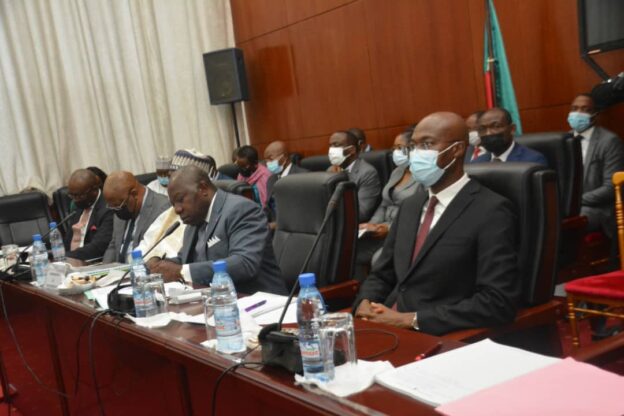
Seven ministers appeared before the finance and budget committee of the national assembly on Monday, 29th November 2021. President of the finance and budget committee of the national assembly, Rosette Ayayi Moutymbo and team have welcomed on Monday November 29, 2021 another group of seven ministers who came to defend their respective budgetary allocations. As usual, discussions take place in the presence of the Minister incharge of assemblies, Bolvine Wakata, the Secretary General of the lower house of parliament, Gaston Komba, the Director General of the budget in the ministry of finance, Cyril Alo’o Edou and other officials who are involved in the process. The discussions which enter within the framework of the 2021 November ordinary session of parliament are expected to wrap up with the final adoption of the 2022 state budget standing at 5762.4 Billion FCFA. Economy & regional planning On behalf of Minister Alamine Ousmane Mey, the minister delegate to the ministry of economy, planning and regional development outlined the various aspects that will make up the 2022 budget of their ministerial department. Paul Tasong said the 59 Billion FCFA allocate to Minepat will serve in the operationalization plans and programmes of the National Development Strategy (NDS30). Public service The ministry that is currently managed by Minister Joseph Anderson Le has an envelope of 13.913 Billion FCFA to carry-out its activities for 2022. While presenting key points of his activities, Minister Le said the money will amongst others be used to pursue changes in administrative reforms, the modernization of the public service notably with the SIGIPES and other unachieved works undertaken in the previous years. Decentralization Minister of decentralization and local development, Georges Elanga Obam defended on his part a budget of 52.1 Billion FCFA. Georges Elanga Obam said much shall be granted on some hanging projects linked to the decentralization policy and engage councils in creating on their own wealth for the functioning. “We have the process of accelerating and deepening and we have the process of promoting local development. Meaning that part of this money will help us to practice and put in place the new competencies that are allocated to councils and transferred to regions. It is also to consider that in terms of local development, local authorities, meaning the regions and councils are producing wealth, are attracting people to invest and ameliorating the conditions of our populations…” Minister Elanga Obam said. Basic education Laurent Serge Etoundi Ngoa, Minister of basic education appeared before the finance and budget committee in order to defend an envelope worth 244 Billion FCFA. Priorities in 2022 as outlined by the Minister will be more focused on infrastructural development in the basic education sector. Accent will equally be laid on the recruitment of teachers. In the last three years, close to 9.000 teachers have been recruited. Secondary education Pauline Nalova Lyonga said flagship programmes in the ministry of secondary education are vast and many projects are to be undertaken. She defended a budget of 400.2 Billion FCFA. She said: “As far as technical education is concerned, our technical schools are not functioning properly. Not the way we will them to function because they don’t have equipments and we are going to look at that…” Labour & social security In the labour and social security department headed by Minister Gregoire Owona, it is an envelope worth 6.8 Billion FCFA that has been disbursed for yearly activities in this ministry. Minister Owona Gregoire said for 2022, his ministry will prioritize the continuous development of social dialogue, training staff delegates in abid to boost dialogue to reality. Employment, vocational training On behalf of his counterpart of employment and vocational training, Minister Jules Doret Ndongo defended the budget allocated for the 2022 functioning. The budget of Minefop stands at 21.4 Billion FCFA. Elise Kenimbeni

Read More
 Programme Seeds For the Future de Huawei: C’est Parti pour l’Acte 6

Programme Seeds For the Future de Huawei: C’est Parti pour l’Acte 6

Le programme dénommé «seeds for the future» de Huawei, géant des télécommunications est officiellement entré dans sa 6e édition au cours d’une cérémonie qui s’est tenue à Yaoundé, capitale camerounaise le 19 Novembre 2021. Ils sont au total 40 étudiants camerounais dont le destin s’annonce fleurissant, ceci grâce au géant des technologies de l’information et de la communication, qui a, à travers son fameux programme « seeds for the future » du Huawei ICT Academy dévoilé sa nouvelle cohorte de jeunes étudiants camerounais issus des prestigieuses écoles de TIC au pays. La firme chinoise Huawei via le programme « seeds for the future », ne cesse de faire des émules qui bénéficient durant leurs formations d’un transfert des connaissances et compétences de qualité dans le secteur des télécommunications. La cérémonie de cette 6e édition a été officiellement lancée le 1e 19 novembre 2021 à l’hôtel Djeuga palace de Yaoundé, en présence de plusieurs autorités, des représentants des ministres de tutelles, du ministre d’état, ministre de l’enseignement supérieur et du staff de Huawei. En sa qualité de représentant du ministre d’état, ministre de l’enseignement supérieur, le Professeur Wilfried Gabsa, Secrétaire Général dudit ministère a apprécié non seulement la qualité et les offres de formation de Huawei depuis son arrivée en terre camerounaise, mais aussi l’impact incommensurable dans le développement technologique du pays. Le Professeur Wilfried Gabsa a également encouragé les 40 lauréats qui se sont distingués à faire montre de leurs compétences digitales au Cameroun après avoir été moulés au sein du Huawei ICT Academy. Il faut dire qu’au départ ils étaient 90 sur les « starting blocs », mais compte tenu de la politique interne et des critères de Huawei, ils sont une fois de plus 40 jeunes brillants étudiants choisis pour cette 6e édition. Réactions clés Armand Claude Abanda, Représentant de l’institut Africaine d’informatique(IAI), a reconnu à son tour le rôle majeur que joue le programme « seeds for the future » dans la formation de ses apprenants. “L’admission de l’IAI Cameroun et l’IFTIC – SUP à ce programme nous fait beaucoup plaisir parce que nos étudiants vont pouvoir bénéficier d’une meilleure convenance des technologies de Huawei. Vous savez que Huawei fait partie des grands leaders dans le monde en matière de TIC. L’IAI étant par excellence l’établissement qui forme les informaticiens, il devrait absolument être présent partout où on parle technologies, et donc lorsque nos étudiants sont impliqués dans ce type de programme, cela permet que leurs compétences soient renforcées et diversifiées… Et vous savez que la Chine vient de signer une convention avec quelques universités africaines, dont l’IAI, pour offrir 75 bourses… Huawei représente donc aujourd’hui l’un des maillons forts de la technologie mondiale.” Dixit Armand Claude Abanda. Le Représentant du Ministre des transports à cette cérémonie, qui est le Directeur des systèmes d’information dans ce département ministériel, n’a pas tari d’éloges à son tour. Il dit : “Je voudrais déjà apprécier ici le partenariat entre le gouvernement camerounais et Huawei. Il y a beaucoup de projets sur lesquels nous travaillons avec Huawei dans le département des transports. Et le programme « seeds for the future », va continuer et permettre à beaucoup de jeunes camerounais d’avoir accès à des études de qualité. Le ministère des transports a déjà bénéficié depuis plusieurs années, des bourses d’études de la part de Huawei pour les responsables qui vont suivre des formations professionnelles en Chine.” Rappel en chiffres A titre de rappel, en mars 2021, le géant des télécoms, Huawei a renouvelé son accord de partenariat avec le gouvernement camerounais, en institutionnalisant les cours de Huawei ICT Academy dans les programmes académiques des établissements de l’enseignement supérieur partenaires. Les huit écoles spécialisées en TIC qui sont partenaires de Huawei sont : l’École Nationale Supérieure Polytechnique de l’Université de Yaoundé 1, l’Ecole Nationale Supérieure des Postes et Télécommunications, des  Technologies de l’Information et de la Communication ( SUP’PTIC), l’Institut Universitaire de la Côte (IUC), l’Institut Africain d’Informatique (IAI), l’Institut Supérieur de Formation aux Métiers des Télécommunications, de l’Innovation Technologique, de Commerce et de Gestion ( IFTIC – SUP), la Catholic University Institute of Buea ( CUIB). Et jusqu’ici, depuis 2008 c’est plus de 5570 étudiants issus de 126 pays et 500 universités dans le monde, qui ont pris part à ce programme bénéfique, « seeds for the future ». Bien que la pandémie à Coronavirus ai paralysé certaines activités, Huawei a fait preuve de son savoir technologique pour la dispensation des cours en ligne tout comme ces nombreux services dans le but de satisfaire bon nombre. Elise Kenimbeni

Read More
 National Assembly: First Round of Ministers Defend Budgetary Allocations

National Assembly: First Round of Ministers Defend Budgetary Allocations

Just after the passage of Prime Minister, Head of government, Joseph Dion Ngute before the finance and budget committee of the national assembly, place was given to public bodies to defend their respective budgets for 2022. After the official presentation of the socio-economic and cultural programme of the republic of Cameroon by the Head of Government, Prime Minister, Joseph Dion Ngute on Friday 26th November 2021 at the national assembly, the way was paved into the defence of various ministries’ budgets. The sessions dedicated to the defence of ministerial budgets opened on Sunday November 28, 2021 but before then 6 ministers appeared on Saturday 27th November on the rostrum to answer in the first place, questions from members of parliament of the lower house of parliament. The plenary sitting chaired by deputy speaker, Theophile Baoro was marked by the passage of the: minister of state, minister of higher education; the minister of planning and regional development; minister of public health; the minister delegate at the presidency incharge of public contracts and minister of mines and technological development. As concerns the first round of budgets presented to the committee of Rosette Ayayi Moutymbo, they include those of the various public bodies like the presidency of the republic, the prime minister’s office, the economic and social council, the supreme state audit, the national delegation for security, the constitutional council, the national committee for disarmament, Elections Cameroon, the national commission on Human Rights, the national commission for bilingualism and multiculturalism just to name these few. On Sunday, seven (7) ministers appeared before the committee to defend the budgets allocated to their different ministerial departments. Tourism and Leisure Minister of state, minister of tourism and leisure, Bello Bouba Maigari solicited 6.985 Billion FCFA to revamp the tourism sector. In 2022, according to Minister of state, Bello Bouba Maigari, focus shall be laid on the rehabilitation of 9 renowned hotels; the renovation of close to 14 touristic sites and by the way work on the promotion of internal tourism and support private initiatives. Justice On his part, Laurent Esso, Minister of state, minister of justice and keeper of the seals has a budget of 64.974 Billion FCFA. Compared to last year, the 2022 budget witnessed an increase which is inclined on the numerous projects to be undertaken in the law sector of the country. Most of the activities of the ministry of justice will be on the construction, reconstruction and rehabilitation works of some prison cells, the building of the OHADA head office, the national school for administration and penitentiary in Buea, the main complexes of the Yaounde and Douala Judiciary services just to cite these few. Higher Education In the field of higher education it is an envelope of 63.9 Billion FCFA that was apportioned to the ministry of Prof. Jacques Fame Ndongo, minister of state, minister of higher education. Prof. Fame Ndongo who convinced the finance and budget team said activities of his ministry in 2022 will grant priority first to digital professionalism, modernisation of some faculties, research and innovation, apart from the routine problems faced in state universities. External relations Before the team of Honourable Rosette Ayayi Moutymbo, Minister Delegate to the Minister of external relation, Felix Mbayu defended an envelope worth 34 Billion 888 Million FCFA for the execution of 2022 activities. At the ministry of relations which is the open door for the country’s cooperation, emphasis shall be laid during the upcoming year on reinforcing bilateral ties, management of the diaspora, migrants and crises said Minister Delegate incharge of cooperation with the commonwealth, Felix Mbayu talking on behalf of Minister LeJeune Mbella Mbella. Defence and Security The ministry of defence, key department which is currently on the frontline with the numerous crises affecting the country has been allocated a budget worth 259 Billion 504 Million FCFA. According to Minister Joseph Beti’s presentation the money will be disbursed on the defence of integrity, protection of the population and environment, retraining etc. Territorial administration The ministry of Paul Atanga Nji has been allocated an envelope of 36.452 Billion FCFA for the year 2022. The money will be spent on the functioning of the ministry, the administration of the territory, civil protection and other internal issues which are of the competency of the said ministry. Public contracts The ministry of public contracts led by Minister Ibrahim Talba Malla will for the upcoming year receive a budget of 14.322 Billion FCFA. Compared to 2021, there is a slight increase of 37 Million FCFA in the envelope attributed to this ministerial department. The activities of day one ended and paved the way to the second round that kicked-off on Monday 29 November 2021 with another group of ministers. Elise Kenimbeni

Read More
 Ending GBV in Cameroon: SOGOC & Media men Commune for Impactful Results

Ending GBV in Cameroon: SOGOC & Media men Commune for Impactful Results

The society of gynaecologists and obstetricians of Cameroon, SOGOC has launched on November 26, 2021 in Yaounde, series of activities to mark 16 days of activism to end Gender-based violence. Within its project dubbed advocacy for comprehensive abortion care, ACAC, the society of gynaecologists and obstetricians of Cameroon has initiated a good number of activities that are in line with worldwide observation of 16 days of activism, running from November 25 to December 10, 2021 under the theme: “Orange the world: End violence against women now!” SOGOC’s vice-chairman, Prof. Nelson Fomulu while officially launching the 16 days against gender-based violence outlined the fact that, violence against women and girls is widespread throughout the globe and in many cases the mere threat of it, is one of the most significant barriers to women’s full equality. “The right of women and girls to live free of violence is inalienable and fundamental. It is enshrined in international human rights and humanitarian law. Violence against women remains one of the most widespread human rights violations, yet one of the least prosecuted crimes. Although equality between women and men is guaranteed in Cameroon’s constitution, all too, often women are denied justice and protection from violence. This failure does not stem from a lack of knowledge but rather a lack of investment and political will to meet women’s needs and protect their fundamental rights. It is time to take responsibility.” Prof Fomulu said. In his address to the media, the Vice- President of SOGOC highlighted other issues most often are minimised in our society and by the way, turn to mentally and psychologically affect victims of gender-based violence. He laid emphasis on some forms of gender-based violence having aftermath effects on women and girls, and which greatly need to be twisted in our communities. He said: “Some of the aftermath consequences of gender-based violence (domestic violence, rape, genital mutilation) on the reproductive health of the woman are usually not carefully considered. For instance, we take the case of pregnancy resulting for rape. This is one of the narrow areas in which the penal code allows for an abortion. In a nutshell, abortion authorization in Cameroon is interwoven with gender-based violence thus we can’t treat each of the above subject in absolute exclusivity…” In order to lead its advocacy campaign to the highest level and strive for a comprehensive approach in preventing unsafe abortions, SOGOC has fully implicated in this year’s activities media practitioners as key allies in their projects. As indicated by Rita Yenjong, Programme Manager of the ACAC project, several incentives have been put in place in abid to accompany media in reporting on gender based violence cases notably on issues surrounding the sexual and reproductive health and rights of women and girls. She said a handful of resource persons working in various regions where the ACAC project has been implemented are available to grant to journalists required information for their different media outlets. The launch that took place at SOGOC’s headquarters, Nkol-Eton neighbourhood in Yaounde was equally marked by a march coined as end GBV walk. The all-round 20 minutes’ walk initiated by SOGOC was to echo the plight of women and girls victims of gender-based violence and pass on to the public the message inscribed on t-shirts: “END The Gender Related Killing of WOMEN”. Elise Kenimbeni

Read More
 National Assembly: PM Dion Ngute Unveils Cameroon’s Socio-Economic, Financial & Cultural Programme for 2022

National Assembly: PM Dion Ngute Unveils Cameroon’s Socio-Economic, Financial & Cultural Programme for 2022

Prime Minister, Head of government Joseph Dion Ngute presented the flagship of government’s 2022 budgetary allocation. The official presentation before Members of parliament of Cameroon’s socio-economic and cultural programmes features on the agenda of the November ordinary session of the national assembly. The task that was undertaken for close to two hours by the Head of government, Prime Minister, Joseph Dion Ngute took place on Friday, 26th November 2021 in the presence of right honourable Cavaye Yeguie Djibril, speaker of the national assembly. Top points of this presentation where on the ongoing execution of some activities and projections for the year 2022. The upcoming 33rd African cup of nations to be hosted by Cameroon with its major highlights were outlined. Joseph Dion Ngute clearly explained to MPs what was done so far, the various sites that were retained by CAF and last adjustments at the level of the Olembe stadium that will play host to the opening encounter between Cameroon and Burkina Faso. PM Dion Ngute talked of reconstruction plans and programmes that are underway in the North-West, South-West and Far-North regions which are rocked by crises. He saluted efforts of the private sector which has decided to accompany the government in restoring the regions affected by aftermaths of the crises. In line with the restoration of the Far-North, North-West and South-West regions, the Head of government preached for peace highly expected after the holding of a major national dialogue in Yaounde. In order to pace up the various policies set up by the Head of state, Paul Biya, the Prime Minister, Head of Government said 2022 will be more accentuated on the acceleration of some vast and giant projects. He equally said 2022 will be devoted to a general population census, the operationalization of the 2020-2030 National Development Strategy (NDS 30) in line with other macroeconomic projects. The reinforcement of barrier measures and vaccination to tackle the COVID-19 pandemic were not left aside in his presentation, knowing the threats of the disease which appears henceforth with several forms of dangerous variants. All these projections are based on a budgetary allocation of 5752.4 Billion FCFA, enclosing government’s overall activities for 2022. Elise Kenimbeni

Read More
 HIV Testing: AFASO Cameroon Scouts Chiefs for Impactful Changes

HIV Testing: AFASO Cameroon Scouts Chiefs for Impactful Changes

As part of activities marking the international testing week, AFASO Cameroon has launched series of initiatives to run from November 22 to 28, 2021 in Yaounde. Community based organization dubbed as “association des femmes actives et solidaires, AFASO” has launched in Yaounde, Cameroon’s nation capital, series of activities to mark the international testing week. The initiative which was set up by Coalition Plus alongside PACE, leading partners of AFASO Cameroon in this project, enters in its 2nd edition this year. 49 community based organizations from 40 countries worldwide are taking active part in this initiative and amongst which is Cameroon’s association AFASO. Within the framework of this international testing week, AFASO Cameroon has with locally based sisters’ organizations`(Positive Generation and Alternative Cameroun) put in place a good number of activities which aimed at inciting the population to go for HIV/AIDS testing. One of the key activities organized by AFASO on November 22, 2021 in her premises was an advocacy workshop with traditional rulers and chiefs of blocs where the association carries-out its interventions on daily basis. The meeting was aimed at schooling traditional rulers on the importance of HIV testing and to create room for mutual collaboration that will ease access of peer educators in the community. Delphine Ngwenyi, coordinator of AFASO said: “Our peer educators face a lot of challenges when going down to the field. So we had to call them in order to discuss on collaborative means that will help us to access population to do community testing. It has been a success because they came in their numbers. We expose our difficulties and they on their part proposed us some solutions. They told us henceforth, they will accompany us on the field.” “The community is very adamant to screening. When they see us coming towards them, they say popularly that what we are looking in their blood we will find it one day and when we find it we will tell them! Curiously those who come for repeated testing are those who already know their status…”She narrated. Despite the various hurdles encountered, AFASO has put in place some strategies to tackle the hostile communities in which she works. AFASO’s Coordinator moreover said: “In the course of the advocacy workshop, these chiefs of blocs said they will sensitize their communities and facilitate things for us. Each chief of bloc for instance has promised us to put at our disposal one person who will accompany us while on the ground as a convincing strategy for people to adhere. It will not be easy for them to resist because they already know who is coming with us.” Key figures According to records from the community based organization, AFASO many of the activities undertaken in different projects has yielded good results. The key interventions to develop systems and services, KIDDS project, carrying a bigger road map in the association has registered 3011 beneficiaries. The project dubbed “solidarité SIDA” has 1050 beneficiaries; the tuberculosis project 2025 beneficiaries while the HIV project carries close to 809 most at risk people. In terms of community dispensation of anti-retroviral, 689 patients have been received by the organization. About AFASO AFASO is an association of women infected and affected by HIV/AIDS, created in 1999 and legalized on July 29, 2000. The association based in Yaounde and Ayos, Centre region of Cameroon is governed by law N ° 90/053 of December 19, 1990. It is a non-profit association which admits women from various backgrounds, regardless of age, religion, or race. From 1999 to 2006, AFASO only admitted HIV-positive women. Yet, to effectively fight against HIV/AIDS, AFASO found it necessary to embody all those who are engaged in the course. Cameroon has witnessed a drop in its HIV prevalence rate which is today estimated at 2.4% thanks to the massive contributions of community workers. And according to the latest Spectrum 2020 estimates, the number of people living with HIV in Cameroon is estimated at 506.432 people in 2019, including 33.289 (6.5%) children under 15 for a sex ratio of 1/1 and 308.079 women among 474.951 persons living with HIV aged 15 to 49, that is an estimate of 65%. Elise Kenimbeni

Read More
 MINAS Calls For More Inclusive Actions towards Disabled Persons in Cameroon

MINAS Calls For More Inclusive Actions towards Disabled Persons in Cameroon

Pauline Irène Nguene, Minister of social affairs was speaking on November 24, 2021 in Yaounde while officially launching activities to mark the 30th edition of the international day of people living with disabilities. The ceremony which gathered various officials from the ministry of social affairs, the Secretary General of the Governor’s office, the divisional officer of Yaounde 4, the mayor and other key actors was aimed at advocating for the well-being of PLWD in Cameroon. For this year’s official launch of weeklong activities to mark the 30th edition of the international day of people living with disabilities, PLWD come December 3, it was the Ekounou centre for disabled women known as Bobine d’or that was chosen as the host of the event. In her welcoming address, the Director of the Bobine d’or said the training and production centre for disabled women which played host to the ceremony was constructed and equipped in 1994 by the Republic of China and later on retroceded to Cameroon. And was officially inaugurated on the 10th of November 1996 by first lady, Mrs Chantal Biya who baptized it as Bobine d’or. Florence Nickaise Tenlep, Director of Bobine d’or said the centre has so far trained more than 210 disabled and vulnerable women. She added that some of these women trained have been recruited as state agents, in private companies and others decided to opt for self-employment due to lack of job opportunities. Mrs Tenlep while addressing the minister of social affairs and other officials seized the occasion to unveil the multiple difficulties which the centre faces. Amongst the issues cited by the Director of Bobine d’or features: the need to rehabilitate installations and equip the centre with up-to-date didactic materials; the need to seek for lasting solutions that will help to accompany some trainees who most of the time do not terminate their training due to several reasons which are linked to the precarious conditions in which they live; lack of transport fare for some as they come from underprivileged families and some get distracted by men etc. Added to the numerous difficulties which affect the smooth functioning of the centre Bobine d’or, Florence Nickaise Tenlep outlined the fact that 40 percent of the trainees are people with sensory disabilities and therefore there is need for sign language trainers as well as a computer science monitor. The mayor of Yaounde 4, Gabriel Bihina Efila on his part said, many initiatives are underway in his council to grant more space for people living with disabilities. Yet, he mentioned the fact that, the council employs some disabled and will proceed to further recruitment. Social affairs’ Minister, Pauline Irène Nguene while officially launching activities, first stated that, the International day of persons with disabilities, is an opportunity to mobilize, each year, the community around the issue of disability or inclusion of the said targets in the society and to promote awareness-raising actions, in view of the construction of an inclusive environment accessible to all. The Minas Boss pointed-out some statistics from the World Health organization and a link with current figures in Cameroon which are very contradictory at a moment government strives for the continuous implementation of the 2030 Agenda for sustainable Development Goals and other international development frameworks such as the Charter on the inclusion of persons with disabilities in the humanitarian action. She said: “The latest World Report on Disability, published jointly by the World Health Organization (WHO) and the World Bank, states that more than one billion of the world’s population live with a disability, that is about 15% of the world’s population; or one in five (05) women. 80% are in developing countries. In 2017, Cameroon’s population is estimated at twenty-three million two hundred and forty-eight thousand (23,248,004) inhabitants. By applying the 15% ratio of the World Report on Disability 4 to the above-mentioned demographic data, it is estimated that, there are nearly three million four hundred and eighty-seven thousand two hundred (3,487,200) persons with disabilities in Cameroon. Often victims of discrimination and marginalization, persons with disabilities do not always benefit from appropriate education or vocational training to promote their empowerment and social integration. According to the official results of the last General Census of Population and Housing (3rd RGPH), the rate of education and literacy among person with disabilities is below average. Person with speech impediments, the mentally retarded and the blind are the most disadvantaged in terms of schooling.” Pauline Irène Nguene further talked of discrimination and marginalization to which these socially vulnerable groups are exposed daily. She said there is great need to promote social inclusion for PLWD. On the part of government as she underscored, there are some strides recorded with first of all, a national law to protect persons with disabilities and two bills tabled at the ongoing November 2021 ordinary session of parliament.  As concerns the theme of this year’s upcoming celebration which is: “leadership and participation of persons with disabilities within the context of covid19 for an inclusive, accessible and sustainable world” the minister said it has been observed that there are existing inequalities which keep plaguing the situation of PLWD.  Social affairs’ Minister said: “Socioeconomic inequalities that were already linked to disability before the crisis tend to be more pronounced because of the effects of this pandemic. It has also been established that the risk of contracting covid-19 is higher among persons with disabilities. Indeed, the deficiency combined with an environment that is not always suitable forces them to seek help from others and, in turn, to be more exposed to the virus. In an inaccessible space, what can a blind person do without his guide?” The minister concluded her key messages with calls on the respect of Human Rights and mainly the Rights of people living with disabilities and the need to intensify sensitization campaigns for the promotion and social inclusion of these vulnerable groups. Elise Kenimbeni

Read More